By Mike Odeh James and Ezinwanne Onwuka
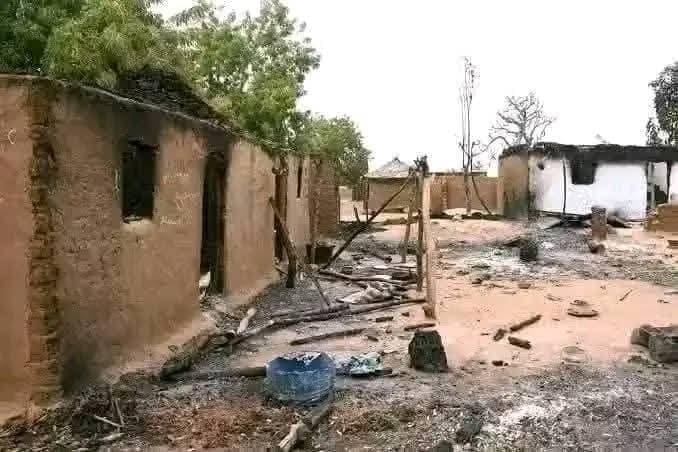
In the blood-soaked villages of Nigeria’s Middle Belt, attacks often begin before sunrise. Fulani ethnic militia sweep through farming communities, homes go up in flames, and survivors flee into the bush. By morning, fields and homes are abandoned, and churches lie in ruins.
Fulani ethnic militias—now widely regarded as deadlier than Boko Haram—have turned large stretches of central Nigeria into killing fields. As President Donald Trump signals a harder U.S. line toward Abuja, an unexpected coalition has entered the fray: America’s National Football League.
NFL Stars’ Urgent Plea
Last week, 82 current and former NFL players, coaches, and chaplains sent a letter to President Trump and top congressional leaders, demanding immediate U.S. action to halt the “relentless attacks, kidnappings, and killings” of Christians in Nigeria.
The signatories, writing under the banner of Sports Spectrum, include Hall of Fame coach Tony Dungy, Houston Texans quarterback C.J. Stroud, and dozens of high-profile players across the league.
The involvement of NFL figures represents a rare escalation in international advocacy. Unlike statements from NGOs or religious groups, the NFL wields enormous cultural and political influence in the United States. Its entry into the debate elevates the Nigerian crisis from a human rights issue to a matter of domestic American concern.
“Religious and ethnic persecution in Nigeria has reached a level that demands immediate, concrete action from the United States,” the letter reads, “…we are grieved and outraged by the mounting violence, and we write to urge you to act now to confront religious persecution in Nigeria and ensure that those responsible are held to account.”
Crucially, the letter challenges the Nigerian government’s long-standing narrative that the violence in the Middle Belt is merely communal or climate-related. Instead, it reinforces the reality of organized, sustained attacks carried out with near-total impunity.
The group noted that for years Nigerians have endured sustained violence by “extremist groups and criminal networks exploiting ethnic and religious divisions,” calling on U.S. leaders to use “the full weight of your offices to defend the fundamental right to live and worship freely.”
A Tipping Point in Washington
The letter lands amid sharp escalation in U.S. policy toward Nigeria. On October 31, President Trump formally redesignated Nigeria as a Country of Particular Concern, a diplomatic rebuke that places the West African nation alongside countries with some of the world’s worst records on faith-based persecution.
President Trump further warned that the U.S. could intervene militarily to wipe out the Islamic jihadist groups if Abuja fails to act.
The NFL players are calling for action to back up those words. “We appreciate previous statements condemning violence and recognizing the suffering, but concern is no longer sufficient,” they wrote.
They recommended the following:
- Boosting U.S. intelligence partnership with Nigerian and local authorities.
- Conditioning U.S. military aid on measurable benchmarks, including rapid response to distress calls.
- Supporting police and local security reforms to strengthen community-based policing and accountability.
- Imposing targeted sanctions on Nigerian officials and non-state actors implicated in attacks or obstruction of justice.
- Expanding humanitarian aid for displaced Nigerians.
- Mandating quarterly public reports to Congress on religiously motivated violence in Nigeria.
- Appointing an Ambassador-at-Large for International Religious Freedom.
Players Confront a Crisis of Kinship
For many NFL players, the crisis is personal. The league includes athletes of Nigerian descent, including Nicholas Westbrook-Ikhine of the Miami Dolphins and Marcellus Johnson of the Dallas Cowboys, who see their ancestral homeland being hollowed out by what the letter calls “unchecked impunity.”
The signatories accuse Nigerian security forces of repeatedly failing to respond to distress calls from attacked communities and demand that U.S. military assistance be tied to accountability and rapid response standards.
Meanwhile, the pressure is already shaping U.S. aid policy. Washington recently approved a $2.1 billion health agreement with Nigeria that, for the first time, explicitly prioritizes support for Christian faith-based health providers—an unmistakable signal that religious freedom now factors into bilateral assistance.
Silence in Abuja
In Nigeria’s capital, official reaction has been notably restrained. While the NFL intervention has received wide coverage in American media, major Nigerian outlets have largely avoided the story, reflecting what analysts describe as official discomfort with mounting international scrutiny.
That silence may soon be tested. There is growing speculation that President Trump will publicly address the NFL letter in upcoming briefings, further intensifying diplomatic pressure on Abuja.
Americans Are Getting More Concerned About Nigerian Christians
Speaking to TruthNigeria, Friday Agbo, Managing Director of Alterconsult Thinktank in Kaduna, said the NFL letter reflects a major shift in American awareness.
“Many Americans are getting to know more about the plight of Nigerian Christians and the atrocious acts of the Fulani Ethnic Militia. This means American public opinion will soon influence the U.S. government to take strict measures against the Tinubu administration if it does not act quickly to stop the killings,” Agbo said.
He added that policy consequences are already emerging: “Just yesterday, the U.S. government signed an agreement to give more humanitarian aid to Nigerian Christians. In the same vein, I foresee sanctions against Nigerian leaders—especially in political, religious, and military circles—for failing to stop the killings.”
Similarly, Lemmy Obeya, a public commentator in Otukpo, Benue State, said the NFL action could accelerate decisive U.S. responses.
“I don’t see boots on the ground, but I see drone strikes on jihadist and Fulani Ethnic Militia enclaves,” Obeya told TruthNigeria. “If the Nigerian government is sincere, I see the U.S. increasing military assistance to combat FEM.”
Mike and Ezinwanne are conflict reporters for TruthNigeria.