What the World Stood to Lose
By Mike Odeh James
(Abuja) When mutinous soldiers briefly seized Benin Republic’s national television station and a military base earlier this month, Nigeria responded within hours—deploying fighter jets and troops to avert what it saw as a dangerous regional rupture.
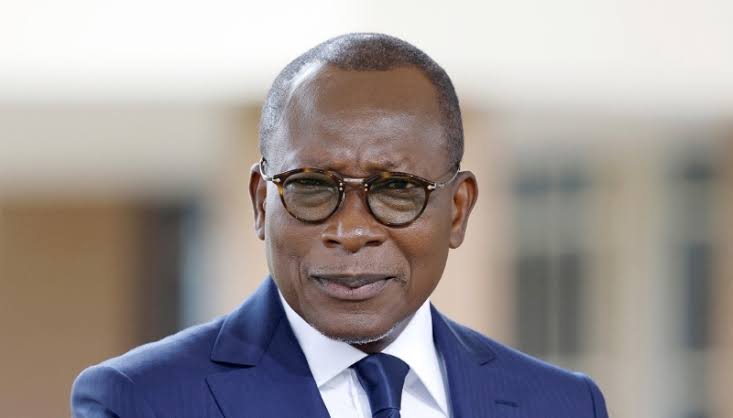
The swift intervention, carried out at the request of President Patrice Talon’s government, underscored Abuja’s determination to prevent another West African democracy from sliding into military rule. It also revealed a quieter layer of international coordination involving France and the United States, reflecting the high geopolitical stakes attached to Benin’s stability.
While the mutiny was reportedly driven by internal grievances within sections of the military—linked to deployments, command disputes, and political frustrations—regional and international actors moved quickly to ensure those fractures did not trigger a wider collapse.
A Rapid Military Response
Nigerian officials say the deployment was driven by fears that clashes between loyalist forces and coup plotters could spill into civilian areas and spiral beyond Benin’s control. Nigerian Air Force jets secured Benin’s airspace, while ground forces helped stabilize key state institutions.
Nigeria’s Senate later endorsed the operation, describing it as consistent with Economic Community of West African States (ECOWAS) commitments to uphold constitutional order.
Unlike the prolonged, sanctions-heavy response that followed the 2023 coup in Niger Republic, Abuja’s near-instant deployment to Benin marked a strategic reset—favoring speed, deterrence, and an African-led security response before facts on the ground could harden.
For Abuja, the stakes were immediate. Benin shares a long, porous border with Nigeria’s southwest—a region already strained by organized crime, arms trafficking, and militant infiltration. Any prolonged instability risked refugee flows and new safe havens for transnational criminal networks.
“Nigeria sees itself as the firewall—strategically and geographically,” a West Africa security analyst said. “If Benin collapses, the shockwaves hit Nigeria first.”
France and the United States: Quiet but Crucial
While Nigerian forces provided the visible military response, Western partners played discreet but decisive roles.
French intelligence, according to regional security sources, supplied real-time surveillance and aerial intelligence during the early hours of the crisis. This enabled Beninese loyalists and Nigerian planners to track mutinous units and secure sensitive installations with minimal civilian disruption.
France also activated diplomatic backchannels. President Emmanuel Macron maintained direct contact with President Talon and key ECOWAS leaders, ensuring political clarity and preventing mixed signals that could have emboldened the coup plotters.
The United States, though not militarily involved, contributed strategic intelligence. U.S. security officials shared assessments confirming that the mutiny was internal and not backed by foreign mercenaries, reducing escalation risks. American diplomatic messaging also helped counter rumors circulating during the crisis.
Together, Nigeria’s rapid action, France’s intelligence depth, and U.S. strategic assessments formed what one diplomat described as a “three-nation shield” against destabilization.
Why Benin Matters
Speaking to TruthNigeria, security consultant Ted Ebute said a successful coup would have completed the encirclement of Nigeria’s western flank by military regimes.
Nigeria is already bordered by the Alliance of Sahel States (AES)—a breakaway ECOWAS bloc aligned with Russia—through Niger, Burkina Faso, and Mali. Niger Republic to the north and Chad to the northeast are governed by juntas with growing ties to Russia and China.
“A hostile junta in Benin would have forced Nigeria into a massive deployment along more than 1,500 kilometers of border,” Ebute warned.
The porous Benin–Nigeria frontier would have become a corridor for arms trafficking, organized crime, and militant expansion—directly threatening Nigeria’s economically vital southwest.
The Pipeline Few Were Talking About
According to Scott Morgan, a Washington-based American security consultant, one of the least discussed but critical factors was the Niger–Benin oil pipeline, which came online in 2024.
The pipeline has already been attacked several times by JNIM jihadists in Niger. China, which holds significant financial and strategic stakes in the project, has pressured both Niger and Benin to ensure its security.
A coup in Benin would have placed the pipeline at even greater risk, threatening Chinese investments and regional energy flows. Morgan argues that this infrastructure quietly elevated Benin’s importance in global calculations.
France’s Shrinking Strategic Space
A successful coup would also have cost France another key partner in a region where its influence is already receding. After being forced out of Mali, Burkina Faso, and Niger, Benin remains one of Paris’s last cooperative partners in Francophone West Africa.
Morgan notes that losing Benin would have further weakened France’s counterterrorism architecture and reinforced perceptions that Paris can no longer sustain strategic partnerships across the Sahel and coastal West Africa.
Morgan also points to troubling signals surrounding the coup attempt, including alleged external links and the seizure of a Nigerian aircraft by Burkinabe authorities during the same period.
Burkina Faso—now aligned with Russia—is part of a Sahelian bloc hostile to Western influence. While China’s interest in Benin remains largely transactional, Russia would likely have seen an opening to expand its security footprint.
ECOWAS Fragmentation and the Rising Jihadist Threat
As ECOWAS fragments, the regional security vacuum is widening—fueling Islamist expansion and escalating threats to Nigeria, France, and the United States.
Ebute notes that while there is no direct evidence linking the coup plotters to China or Russia, the principal beneficiaries of a successful coup would have been Moscow and Beijing, as instability weakens collective security frameworks.
More critically, a compromised Benin would likely have collapsed border controls. “It would have opened the frontier with Nigeria,” Ebute warned, “allowing jihadist groups to surge in.”
Morgan warns that instability in Benin would have expanded militant and criminal activity along Nigeria’s western frontier, creating new corridors for arms trafficking.
He also notes that during the attempted putsch, the United States temporarily halted ISR flights over the Nigeria–Benin border, underscoring Washington’s concern.
In Morgan’s assessment, the failed Benin coup was a near-trigger for regional destabilization. Its success would have threatened Chinese energy interests, weakened French influence, expanded Russian-aligned power, exposed Nigeria’s western flank, and disrupted U.S.–Nigeria counterterrorism coordination.
That the coup failed explains the speed, coordination, and quiet urgency with which regional and international actors moved to stop it.
Mike Odeh James is a conflict reporter and writes for TruthNigeria.