


By Onibiyo Segun
(Isan-Ekiti, Ekiti State, Nigeria) – Sixteen men believed by security officials to be Boko Haram linked fighters fleeing pressure in Nigeria’s North were intercepted Wednesday in Ekiti State as they attempted to melt into forest settlements.
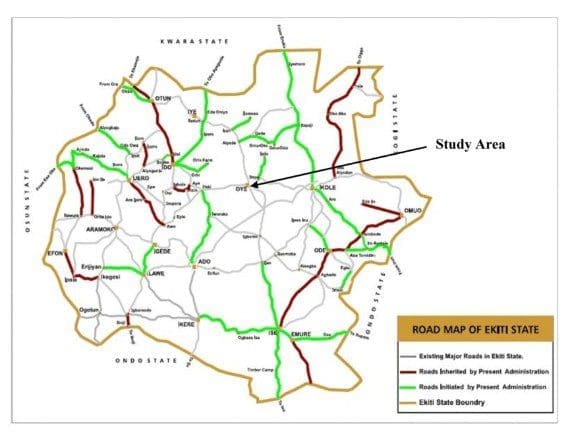
The interception was logged around 4:30 p.m. on January 22, 2026, near Gede Farm settlement outside Isan-Ekiti, a quiet farming community in Oye County, northern Ekiti State, Southwest Nigeria.

The men were stopped by operatives of the Western Nigeria Security Network, a regional paramilitary force known locally as Amotekun (Leopard) Corps.
Ekiti lies in Nigeria’s Southwest geopolitical zone, bordering Kwara State to the north, Kogi State to the northeast, Ondo State to the south, and Osun State to the west.
Once considered insulated from Nigeria’s terror war, the state now sits along an emerging southward transit corridor used by armed groups displaced from the country’s Northcentral and Northeast regions.
Isan-Ekiti is located roughly 15 miles southeast of Oye-Ekiti and about 70 kilometers northeast of Ado-Ekiti, the state capital, an area increasingly exposed to forest-based infiltration routes.
Acting on prior intelligence, operatives stopped the group without resistance and recovered dozens of mobile phones, cattle believed to have been rustled during earlier raids, and assorted charms suspected to be used for intimidation and operational protection.
“These are terrorists fleeing intensified operations in the Northeast and North-Central regions and attempting to hide within forest settlements,” said Brigadier-General Ibukun Olu Adewa (retired), commander of the Western Nigeria Security Network in Ekiti state, to TruthNigeria.
“We received actionable intelligence on their movement, intercepted them, and took them into custody. They will be debriefed, profiled, and prosecuted accordingly,” Adewa said.
A Corridor Under Pressure
Security analysts say the Ekiti interception reflects a broader pattern tied directly to Nigeria’s Boko Haram insurgency, which began in 2009 in Borno State and has since fractured into multiple factions operating far beyond the northeast.
Kwara State, in the north of Ekiti, has increasingly functioned as a staging and transit zone, with armed groups exploiting forest reserves, grazing routes, and lightly policed rural highways.
According to data cited by opposition lawmakers in Kwara State, more than 507 people were killed and at least 377 abducted in terror-related attacks across the state within a 10-month period in 2025.
Several of those incidents occurred along routes linking Kwara to Kogi and Niger States, North Central Nigeria and further south into Ekiti in the Southwest of Nigeria.
In November 2025, a deadly attack on a church in Eruku, Kwara State, triggered temporary closures of churches and schools and heightened security alerts, reinforcing fears that Boko Haram-linked networks were entrenching themselves further south.
“The pattern is clear,” said Dr. Chidi Anozie, a Lagos-based counter-terrorism analyst.
“When pressure increases in one zone, these groups fragment and relocate. Forest belts in North-Central and Southwest Nigeria are increasingly being used as fallback areas,” Anozie said.
From a Northern Insurgency to National Spread
Nigeria’s terror war began with Boko Haram’s Islamist uprising in 2009, which has spread through the Northwest and Northeast and the North Central of Nigeria.
“These are no longer neatly defined insurgency zones,” said Dr. Aisha Musa, a security studies lecturer at Ahmadu Bello University in Zaria, speaking to TruthNigeria.
“What we are seeing is diffusion, terror networks blending with criminal structures, exploiting weak rural security, and testing new territories,” Musa said.
Musa noted that the Ekiti suspects’ movement with cattle and charms reflects tactics commonly used by Boko Haram-linked and affiliated armed groups, combining logistics theft, intimidation, and psychological control to establish local dominance.
A Nation on Edge
The Ekiti interception comes amid a nationwide surge in terror violence stretching Nigeria’s security forces thin.
On January 18, 2026, terrorists abducted 166 Christian worshippers from Kurmin Wali village in Kajuru County, Kaduna State, during coordinated attacks on an Evangelical Church Winning All (ECWA) congregation and two Cherubim and Seraphim churches, TruthNigeria confirmed through on-site reporting.
A follow-up investigation found that the abductees were being moved toward terror camps near Rijana forest, a notorious kidnapping hub along the Abuja-Kaduna highway, despite warning alerts issued before the attacks, according to TruthNigeria.
The escalation has drawn international concern. Speaking in Abuja in January 2026, U.S. Under Secretary for Political Affairs Allison Hooker on Jan. 23 urged Nigeria’s government to take stronger action to protect Christian communities and hold perpetrators accountable.
Meanwhile, Plateau State has continued to witness deadly attacks on rural communities in early 2026, despite advance warning alerts issued by TruthNigeria, reinforcing concerns that intelligence is not being acted upon swiftly.
Local Relief, Lingering Fear
For residents of Isan-Ekiti, the arrests brought momentary relief and deeper unease.
“We saw a large group moving with cows and strange items,” said Folake Adeyemi, a trader in Isan-Ekiti.
“People were scared because we hear what is happening in Kaduna, Plateau, and even Kwara. We don’t want that here,” Adeyemi said.
Chief Folorunsho Ajayi, a farm owner in the area, warned that complacency would be costly.
“This arrest indicates that terror-linked elements are relocating from the North-Central corridor into Ekiti’s forested communities. We must not close our eyes, or else we are finished,” Ajayi said.
What Comes Next?
The 16 suspects remain in custody in Ado-Ekiti, where interrogation is underway.
Security officials say intelligence extracted from their phones and movements could expose supply routes, collaborators, and forest safe havens used by terror cells migrating south.
“Intercepting terrorists is only the first step,” said Anozie.
“Prosecution, intelligence exploitation, and inter-state coordination will determine whether this disrupts a network or merely pushes it further south,” Anozie said.
As Nigeria grapples with an insurgency that now spans multiple regions, the Ekiti interception offers a stark warning: The country’s terror war is no longer confined to the northeast. It is mobile, adaptive and pressing steadily into new ground.
Onibiyo Segun reports on terrorism and conflict for TruthNigeria.