Clergy Abducted, Churches Burned, and Christian Villages Attacked with Few Arrests or Prosecutions
By M. Kiara
(Lagos) – After years of repeated attacks on Christian communities with little consequence, a Nigerian Catholic priest says the country’s security system no longer functions as a neutral protector of life.
That assessment comes as Nigeria’s government continues to insist it is confronting terrorism, even as churches are burned, clergy abducted, and Christian villages attacked without arrests or sustained military presence.
“This Is No Longer Incompetence”
In an interview with TruthNigeria, Emefiena Ezeani, a Catholic priest and political science lecturer, said his description of Nigeria’s security institutions as “captured” reflects years of observed patterns, not political rhetoric.
“When a state repeatedly fails to respond to the same category of victims,” Ezeani said, “it stops being incompetence and becomes structural failure.”
According to him, the imbalance is visible both in enforcement and deployment.
“Unarmed youths asking for self-determination are shot by security agents,” he said. “Yet heavily armed Fulani terrorists move freely, sack communities, rape women, and occupy ancestral lands and the same security forces look away.”
Ezeani said the contrast is evident on Nigerian roads.
“In regions with relative peace, you see checkpoints every few kilometers,” he said. “In areas where terrorism is rampant, you can travel hundreds of kilometers without seeing security presence.”
Violence Without Consequence
Christian leaders say the result has been a pattern of violence followed by silence.
According to the Observatory for Religious Freedom in Africa, at least 16,769 Christians were killed and more than 11,000 abducted between 2019 and 2023, losses unmatched by any other religious group.
In 2025 alone, TruthNigeria documented multiple cases of clergy killed after abduction.
Among them was Venerable Edwin Achi, abducted from his home in Kaduna State. After weeks of negotiations and ransom demands exceeding $400,000, he was killed. His wife and another family member remain missing.
Internal records shared with TruthNigeria by Bishop Mark Maigida Nzukwein of Wukari Diocese document more than 300,000 Catholics displaced since 2015 and over 335 churches burned or destroyed.
“These are not isolated crimes,” Nzukwein said. “They are coordinated and sustained.”
Government Assurances, Repeated
Nigeria’s federal government continues to frame the violence as generalized criminality rather than religiously targeted attacks. Senior officials routinely announce new strategies, military crackdowns, and renewed resolve.
In late 2025, Vice President Kashim Shettima reaffirmed the government’s commitment to defeating terrorism, praising the armed forces and pledging continued reforms.
Nigeria’s Chief of Defense Staff Olufemi Oluyede also issued a warning to terrorist sponsors.
“Our call is for Nigerians, those that are still supporting those insurgents should stop, because they say the friend of a thief is a thief,” he said.
Yet prosecutions of known terror sponsors remain rare, and communities say attacks continue with little interruption.
“Appeals Were No Longer Enough”
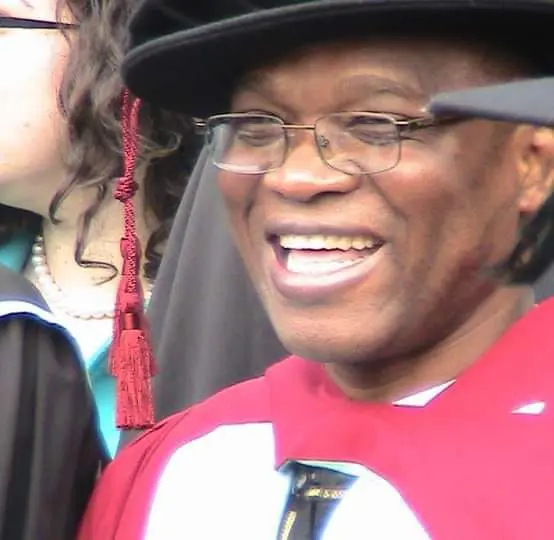
Reverend Ezeani said his tone changed only after decades of engagement with the Nigerian state produced no protection for Christian communities.
“For long time, I believed Nigeria could correct itself,” he said. “From my university days in the early 1980s, I wrote, organized, and advocated for a united and progressive country.”
That belief endured, he said, even as violence mounted. Churches were burned, clergy were abducted, and villages were emptied. Each attack was followed by official statements, not arrests.
Ezeani said he concluded the system itself no longer functioned. That realization marked the point where appeals gave way to blunt language.
“I assumed the failure was leadership; that once the right people came into power, justice would follow,” Ezeani said.
“Nigeria allocates enormous resources to security every year; this is not about overstretched forces or lack of funding. It is about accountability. When justice is postponed indefinitely, moderation becomes meaningless,” he said.
“At that stage, silence stops being restraint and becomes complicity.”
Clergy as Targets
Church leaders increasingly describe kidnapping as a business model.
“It is a business of kidnappers,” said Bishop Gabriel Dunia of Auchi Diocese. “And it has no end in sight.”
Security analyst Dave Oladapo says attacks on priests carry symbolic weight.
“Clergy represents leadership and stability,” he said. “Attacking them weakens entire communities.”
Ransom demands routinely exceed six figures. Negotiations stretch for weeks. Clergy are killed even after contact is established.
A State That Speaks, But Does Not Act
In late 2025, the U.S. House Appropriations Committee warned that Nigeria had become “one of the most dangerous places on Earth to follow Christ.”
Inside Nigeria, however, accountability remains elusive.
When priests, traditionally among Nigeria’s most cautious voices begin speaking of structural failure, analysts say it reflects exhaustion, not extremism.
“This language only emerges when people conclude protection is no longer coming,” Oladapo said.
Nigeria has not collapsed but the trust that once restrained its most moderate voices is eroding.
That, Ezeani warned, is the deeper danger.
M. Kiara is a news analyst for TruthNigeria.