
By Mike Odeh James and Elisha Ayes
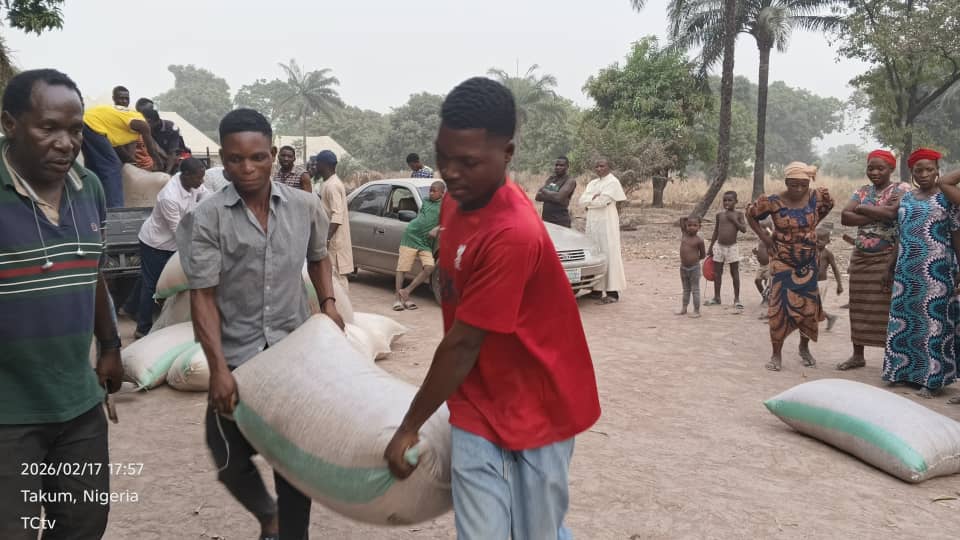
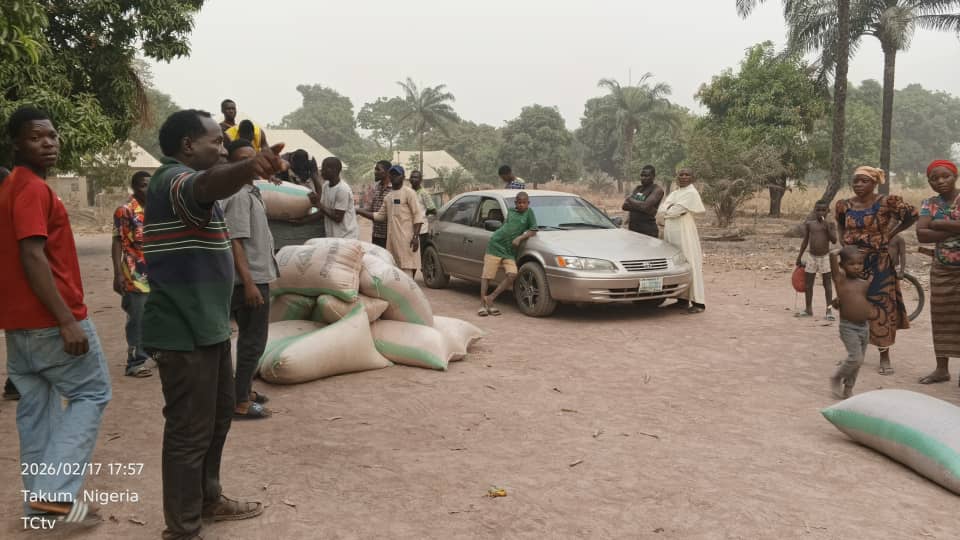
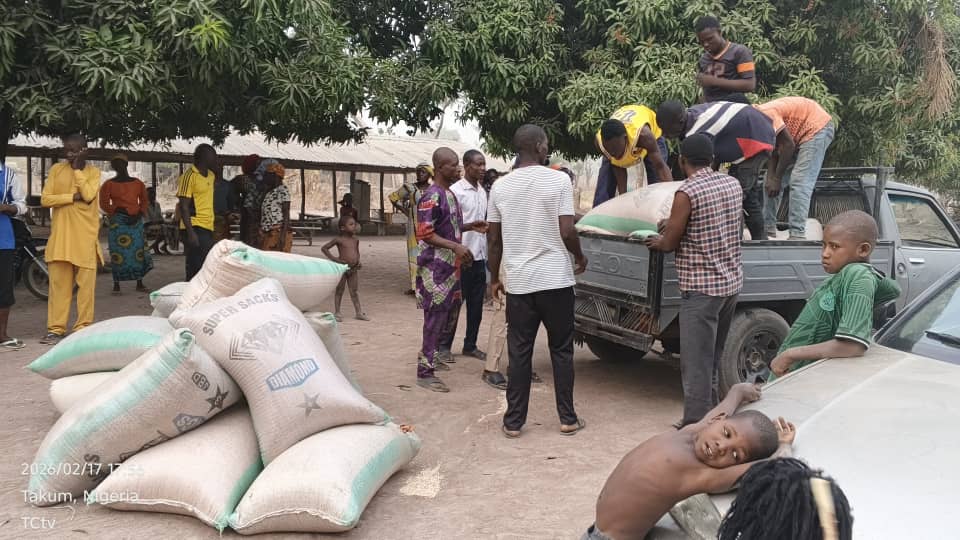
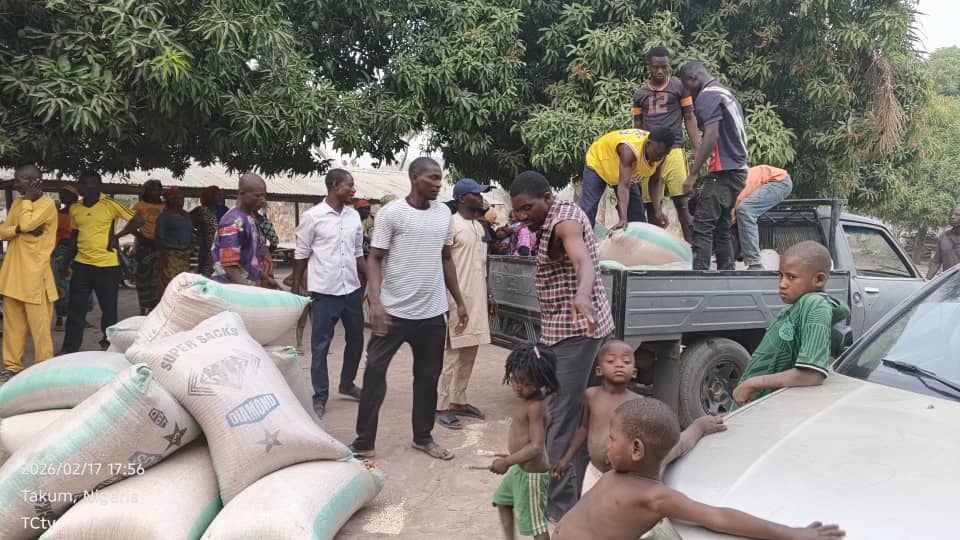
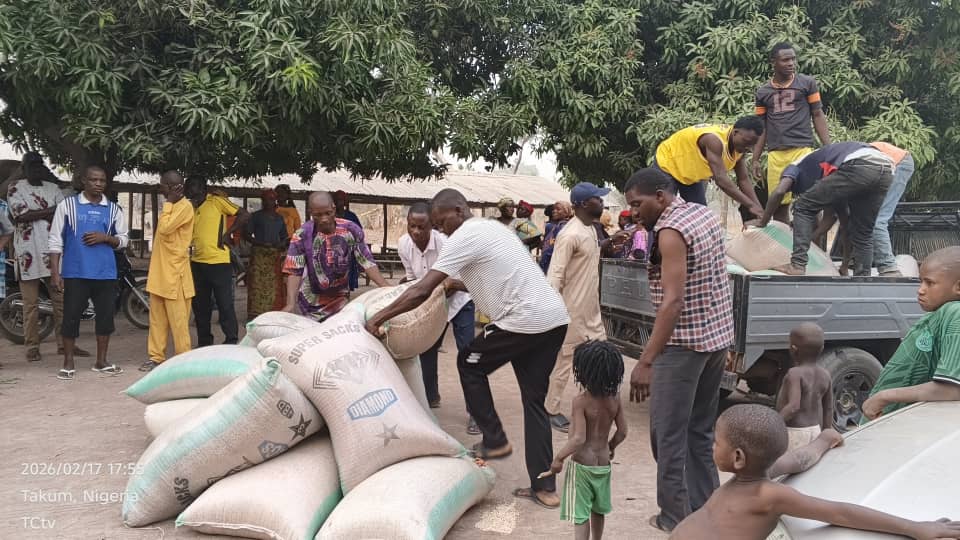
(Takum, Taraba State) Thousands of displaced Christians in the war-ravaged remoted villages of southern Taraba State in mid- February got emergency food distributions from an Iowa-based relief organization, TruthNigeria has learned.
More than 3,500 internally displaced persons (IDPs) in Lisam 2, Ussa, Chanchanji, Amadu, Tor Kegba, Mbajir, Mbatyula, and Fadama received bags of rice, corn, cassava, and guinea corn distributed by Equipping the Persecuted (ETP), an American Christian relief group.
The intervention followed repeated appeals from local clergy who warned of worsening hunger after armed Fulani ethnic militia allegedly seized farmlands across parts of Donga, Takum, and Ussa local government areas. Community leaders claim that more than 500 villages have been affected by an ethnic pogrom stretching back 13 years and linked to attacks by Fulani ethnic militia, referred to a “killer herdsmen” in one Arise TV story. As many as 40,000 predominantly Christian residents, chiefly farmers have been displaced.
“Most of the displaced are Catholics, ECWA, Baptists, and NKST members cutting across the major ethnic groups of Southern Taraba,” said Fr. George Dogo of Holy Family Cathedral, Takum, who escorted TruthNigeria and ETP representatives to several IDP locations across five counties.
“Before this intervention, many families were lucky if they had one full meal a day,” he added. “Now, at least they can eat again.”
In Chanchanji, however, hunger is only part of the crisis. Disease is spreading rapidly in overcrowded makeshift shelters with limited access to clean water and healthcare.
“Ten children died of meningitis within one week,” said Fr. Francis Edward Barau, Parish Priest of Chanchanji, speaking to TruthNigeria. “Many others are showing symptoms—persistent cough, catarrh, and high fever.”
Clergy and community leaders say the combined effects of displacement, malnutrition, and poor sanitation have made disease as deadly as the violence that forced families from their homes.
Southern Taraba, a largely agrarian region near Nigeria’s border with Cameroon, has endured repeated armed attacks in recent years. Residents allege that farmland occupation has prevented displaced farmers from cultivating crops, deepening food insecurity in already vulnerable communities.
The founder of Equipping the Persecuted, Judd Saul, said the organization responded after receiving distress reports describing acute hunger conditions among displaced Christian populations. The group’s February outreach provided structured food distribution across multiple communities over several days.
While the relief has temporarily stabilized food access for thousands, local leaders warn that emergency aid cannot substitute for long-term security and restoration of farmland.
“What our people truly need is safe return to their ancestral lands,” one church leader said. “Without security, this crisis will repeat itself.”
For now, the arrival of food supplies has brought visible relief to families who had exhausted local coping mechanisms. But unless displacement is addressed and farming activities restored, community leaders fear that hunger and preventable disease could once again escalate into a humanitarian emergency in southern Taraba.
Affected Members Speak
Speaking to TruthNigeria, Maria Doshima, noted,” I can feed my family now for three whole months.
” We shall blend this Guinea corn and cassava and then turn it into corn meal, and our children can feed for over three months.
“I don’t know this Mr. Judd from America, but he is doing what the Nigerian government or Taraba State government did not do,” Doshima said.
Maria Torkuma, a beneficiary from Tor Kegba, told TruthNigeria: “This bag of corn and cassava will provide me and my family feeding for over three months.”
Grace Jock echoed the sentiment: “Judd Saul of Equipping the Persecuted has saved my family from hunger. The Fulani terrorists killed my husband and my first son since then, feeding has been so difficult.”
As the scale of anti-Christian violence in Nigeria’s Middle Belt bites deeper, the United States government has taken unprecedented steps to respond.
In December 2025, the U.S. State Department signed a landmark five-year bilateral health Memorandum of Understanding with the Federal Republic of Nigeria, committing nearly $2.1 billion, with dedicated funding allocated to Christian healthcare facilities — an agreement explicitly tied to reforms the Nigerian government has made to prioritize protecting Christian populations from violence.
The deal followed the Trump administration’s redesignation of Nigeria as a Country of Particular Concern in October 2025 (Alliance Defending Freedom International), amid alarming reports that more than 7,000 Christians were killed in Nigeria in 2025 alone (ABC News), with the Middle Belt among the hardest-hit regions.
Analysts, however, have sounded caution. With Nigerian federal and subnational governments long accused of diverting aid meant for vulnerable communities, many fear that the intended beneficiaries may never see the food parcels.
Equipping The Persecuted (ETP) did not wait for agreements to trickle down through bureaucratic channels, distributing large bags of Guinea corn, cassava, and rice to families in need.
“While governments negotiate, ETP acts proving that compassion, when urgent, cannot afford to wait on paperwork. Security analyst, Adakole Adah, an executive of Adakson Security Consultancy outfit in Takum tells TruthNigeria.
The security consultancy echoes three fears to TruthNigeria.
“First, Washington needs to know that Fulani Ethnic Militia is the real danger in Nigeria and to US interests in Africa. So, all the military assets and officers of the US in Nigeria should be channeled to the Middle Belt where FEM is most active.
“Secondly, I call on President Trump not to give financial aid meant for Christians directly to the Nigerian government. It will simply divert it too somewhere else.
“Third, the Nigerian military is infested heavily by Fulanis who are sympathetic to what the Fulanis terrorists are doing. It is therefore imperative that Trump looks critically before being guided by Nigerian military officers,” Adah said.
Mike Odeh James and Elisha Ayes are crisis reporters for TruthNigeria.