By Mike Odeh James
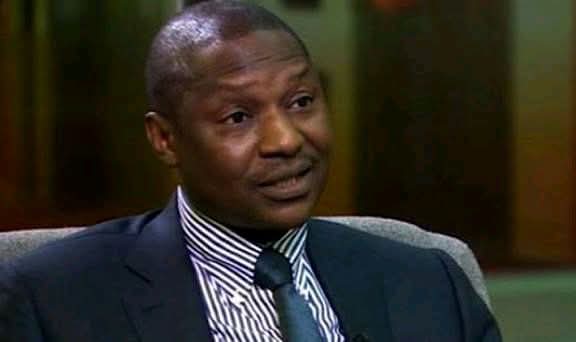
(ABUJA) Abubakar Malami spent eight years as Nigeria’s chief law enforcement officer, publicly vowing to dismantle Boko Haram’s financial networks and prosecute terrorism financiers.
Instead, Nigerian prosecutors now allege he became their shield.
In February 2026, Malami was formally charged with knowingly abetting terrorism financing, accused of deliberately refusing to prosecute suspected financiers whose case files reached his desk in November 2022. He has pleaded not guilty to charges that carry long prison terms.
The indictment marks a dramatic fall for the 56-year-old lawyer who served as Attorney General from 2015 to 2023 under Presidents Muhammadu Buhari and Bola Tinubu. For security analysts, the charges represent not a surprise but a reckoning years in the making.
The UAE Connection
Nigeria’s terrorism-financing problem drew international scrutiny in 2019 when the United Arab Emirates convicted six Nigerians for transferring $782,000 from Dubai to Boko Haram.
In September 2021, the UAE formally designated the men—Abdurrahman Ado Musa, Salihu Yusuf Adamu, Bashir Ali Yusuf, Muhammed Ibrahim Isa, Ibrahim Ali Alhassan, and Surajo Abubakar Muhammad—as global terrorism financiers.
The move embarrassed Nigerian authorities and exposed what critics described as willful blindness to financial pipelines sustaining an insurgency that has killed more than 350,000 people since 2009.
The Vanishing 400
Following the UAE revelations, Nigerian security agencies announced a major crackdown. In April 2021, about 400 Bureau De Change operators suspected of funneling funds to Boko Haram were arrested nationwide.
Malami said prominent individuals and businessmen had been targeted for prosecution.
But by September 2021, Sahara Reporters alleged that more than 300 powerful suspects had been quietly released, leaving only minor operatives in detention.
Months later, no significant prosecutions had commenced, according to security insiders.
The Falana Accusation
In March 2022, the organization of human rights lawyer Femi Falana’s accused Malami of shielding 800 suspected terrorists and 400 financiers.
Malami blamed court strikes. Yet even after the strikes ended in June 2022, no charges followed.
Operation Service Wide: Inside the Breakdown
Retired General Danjuma Ali-Keffi, who led Operation Service Wide, later accused Malami of sabotaging prosecutions.
Ali-Keffi alleged prosecutorial interference, pressure to downgrade terrorism-financing cases, and the release of at least 20 top suspects. He said two detainees had business links to Malami but stopped short of accusing him of direct financing.
The Numbers Don’t Add Up
Malami repeatedly claimed terrorism funding had been crippled.
Yet public records show fewer than a dozen terrorism-financing convictions between 2015 and 2023, despite hundreds of arrests.
Amotekun and the South-West
In 2020, Malami declared the South-West’s Amotekun security outfit illegal.
Though later reversed, critics say the move weakened regional counter-terrorism efforts.
Islamist Influence Allegation
Speaking to TruthNigeria, David Onyilokwu Idah, Director of the International Human Rights Commission, Abuja, alleged that Abubakar Malami and former Communications Minister Isa Pantami were Islamist sympathizers embedded within the administration of former President Muhammadu Buhari. According to Idah, their conduct emboldened Boko Haram, Fulani terrorist groups, and other Islamist networks.
He warned that many Islamist ideologues are packed into President Bola Tinubu’s Administration, arguing this internal sabotage explains why counterterrorism efforts continue to yield limited results.
Idah urged defense Minister Chris Musa to advise President Tinubu to cooperate fully with the U.S. government to identify and remove officials undermining Nigeria’s security from within.
The Defense and What Comes Next
Malami denies wrongdoing, citing evidentiary complexity and judicial delays. While experts acknowledge the challenges, they say years of inaction remain unexplained.
His trial is expected later in 2026. Prosecutors allege he chose inaction over duty in November 2022.
For families of victims, the question remains whether lives could have been saved if those suspects had faced justice.
Mike Odeh James is a conflict reporter and writes for TruthNigeria.