
Eight Years, Two Presidents, Zero Rescue: Leah Sharibu and the Collapse of Nigeria’s Hostage Strategy
By Mary Kiara
Dapchi, Nigeria — When Islamist militants returned 104 abducted schoolgirls to their families in 2018, one child did not come home.
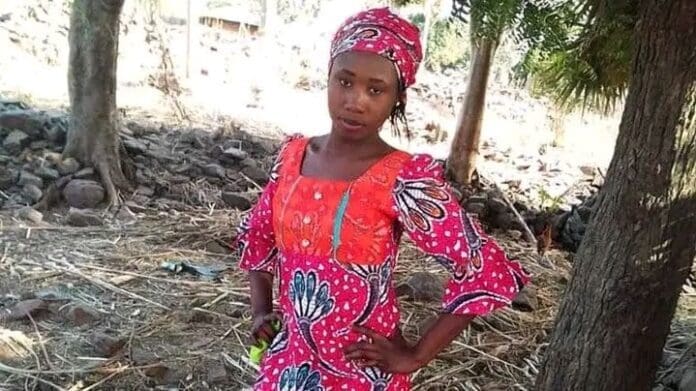
Leah Sharibu was 14 when she was separated from her classmates and held back for refusing to renounce her Christian faith. Eight years later, she remains in captivity, one of the longest-held Christian school hostages in the modern jihadist conflict.
Her continued detention has evolved beyond a singular tragedy into a strategic test of Nigeria’s hostage recovery capacity, and whether the government has built any durable doctrine for rescuing faith-targeted captives since mass school kidnappings began.
A Captivity Spanning Two Presidencies
Sharibu was kidnapped on February 19, 2018, from the Government Girls Science and Technical College in Dapchi, northeastern Nigeria, during a raid by Boko Haram insurgents later aligned with Islamic State West Africa Province (ISWAP).
Then-President Muhammadu Buhari pledged in 2020 to “redouble our efforts” to bring her home but left office without doing so.
Leah’s father, Nathan Sharibu, said in a public appeal, “I have not heard anything from federal or state governments since my daughter was abducted.”
Her mother, Rebecca Sharibu, has repeatedly called for renewed rescue action, asking what became of years of official assurances.
President Bola Tinubu’s administration inherited the case, yet no proof-of-life communication has been publicly produced, no rescue operation announced, and no recovery timeline articulated.
Dr. Gloria Puldu, president of the LEAH Foundation, told TruthNigeria, “It is a national tragedy that we are still demanding the release of this young child who refused to renounce her Christian faith.”
Negotiations Collapsed
Emmanuel Ogebe, International human rights lawyer said intermediaries once established contact with Leah’s captors.
“The ransom amount requested for Leah was almost triple the amount reportedly paid for the Chibok girls,” Ogebe told TruthNigeria.
Nigeria is widely reported to have paid roughly €3 million tied to negotiated settlements for the 2014 Chibok schoolgirl releases. A tripled demand would approach €9 million; an escalation analysts say reflects strategic hostage pricing.
“The amount demanded was excessive and the talks collapsed,” Ogebe said.
“Incidentally, all three Boko Haram leaders involved in the negotiations for Leah have since died.”
In a further assessment, Ogebe described Leah’s prolonged detention as diplomatically consequential.
“Leah’s protracted captivity is a poignant indicator of state failure and Christian persecution,” he said.
“When a Nigerian National Assembly delegation visited U.K. parliamentarians to argue there was no persecution, they were asked to explain Leah Sharibu’s case.”
He added, “That the government could negotiate the release of over 100 Muslim girls within one month but not the release of the sole Christian within eight years speaks volumes. There is no indication of recent rescue attempts, much less by the government.”
Meanwhile, School Kidnappings Continue
Sharibu’s captivity persists against a backdrop of continuing mass abductions.
Save the Children reports at least 10 school kidnappings across Nigeria in under two years affecting approximately 670 students, citing Armed Conflict Location and Event Data Project data.
In March 2024, 137 students were abducted in Kaduna state.
In November 2025, 303 students and 12 teachers were seized from St. Mary’s Catholic school in Niger state.
Most were freed through negotiation rather than rescue operations.
Nearly 19 million Nigerian children; 27 percent are currently out of school, according to Save the Children, with abduction fears a major driver.
“These alarming figures must be a wake-up call,” Duncan Harvey, Save the Children’s country director in Nigeria said in a statement.
“When a school is attacked, it’s not just walls that fall; a child’s safety, dreams, and future fall with them.”
Rescue vs Ransom
Security observers note a pattern: negotiated settlements outnumber documented military recoveries.
No publicly confirmed state-led operation has rescued a high-profile Christian captive held specifically for refusing religious conversion, according to advocacy monitors.
Aba Anuhe, a retired journalist, said transparency is overdue.
“The Nigerian Government has to transparently communicate the status of its search and rescue efforts, accept international assistance already offered, and prioritize Leah’s release with urgency,” he told TruthNigeria.
Government Response
Officials maintain recovery efforts continue.
At a 2025 anti-kidnapping conference in Abuja organized with the United Kingdom’s National Crime Agency, Major General Adamu Laka, National Coordinator of Nigeria’s National Counter Terrorism Centre, said efforts are ongoing.
“We haven’t given up hope on Leah Sharibu and the other Chibok girls,” Laka said. “Negotiations were done… operations were conducted.”
International Pressure
Sharibu’s captivity continues to draw Western diplomatic scrutiny.
“The UK strongly condemns Leah Sharibu’s abduction and has repeatedly called for her release,” said Hamish Falconer, Parliamentary Under-Secretary at the Foreign Office in a statement.
Nigeria remains designated by the United States as a Country of Particular Concern under the International Religious Freedom Act, a classification that can influence security cooperation and sanctions policy.
Advocacy Beyond Policy
Faith-freedom advocates have sought to sustain global awareness.
Dede Laugesen, president of Save the Persecuted Christians, released a song titled Leah, Did You Know? to dramatize recovery advocacy.
“I believe if the Nigerian government wanted to rescue Leah, they could do so today,” Laugesen told TruthNigeria. “They know where she is held. They have no will to rescue her.”
Leah Sharibu’s captivity now spans two presidencies, collapsed negotiations, dozens of school raids, and hundreds of student’s abductions.
Anuhe said her case has become a national benchmark.
“Until Leah returns home, her captivity remains not only a symbol of faith but a benchmark of Nigeria’s unresolved hostage crisis.”
Mary Kiara reports on terrorism and religious-freedom policy for TruthNigeria.