By Onibiyo Segun
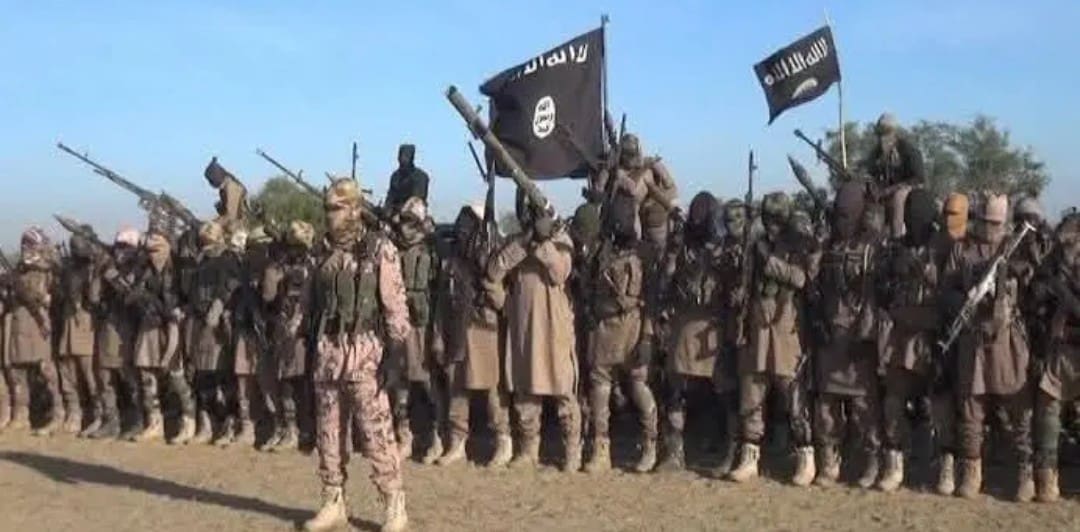
Woro, Kwara State — A threat to kill 176 abducted women and children has escalated into a critical crisis in Kwara State, as Nigerian security analysts warn of a credible risk of mass execution if ransom demands are not met. The women and children are believed to have been abducted by Boko Haram or its affiliates on Feb. 3, 2026.
The abductors are intensifying pressure through a tight deadline strategy designed to force a large ransom payment.
Defense and counterterrorism experts say the standoff could still end through negotiated release, covert intervention, or a staged demonstration killing aimed at enforcing credibility.
Adamu Pindar, a defense and security analyst in Abuja, said “insurgent groups often shift between these options depending on negotiation progress and perceived state response.”
Pindar added that “such high-profile threats can also create an operational paradox for the state.”
Bassey Okon, a defense studies expert in Lagos, noted that, “sustained hostage crises often increase federal response visibility and political urgency, even if not intentionally welcomed” as a strategy.
“The pressure forces action and concentrates authority,” Okon said.
Residents said armed men arrived on motorcycles, fired into the air, and moved from house to house, forcing families out before marching captives into nearby forest routes.
On Thursday, April 22, the attackers issued a warning: pay a “substantial ransom” or face mass execution.
Execution Threat Signals Escalation Phase
Danmusa Ibnin told TruthNigeria that “the language reflects a familiar coercion cycle used by Boko Haram-linked factions and allied armed groups operating across Nigeria’s North-Central forests.”
“When they set a deadline for mass execution, it means they are entering a pressure phase,” Ibnin said.
“It forces negotiations to accelerate through government or informal intermediaries.” Ibnin explained.
Ibnin warned that such threats often follow escalation logic rather than immediate action.
“In past incidents, once deadlines were missed, selective killings were used to demonstrate seriousness,” Ibnin said.
“That is the point where the risk becomes real,” he added.
Security analysts say patterns documented by the Nigeria Terror Tracker show a progression from ransom demand to intimidation, then limited killings, and sometimes wider violence when negotiations collapse.
Intelligence Points to Expanding Corridor
Security sources familiar with counterinsurgency operations told TruthNigeria the attack reflects growing movement along forest belts linking Kwara, Niger, and Kogi States toward the Abuja axis.
Woro lies about 90 kilometers from Ilorin, near rural forest routes increasingly used by armed groups moving between settlements and highway corridors.
Analysts describe this as a widening Kwara–Niger–Abuja Forest corridor, where limited surveillance and dense terrain allow rapid cross-state movement by armed groups.
Recent abductions across Niger and Kogi States reinforce concerns that insurgency is increasingly networked across the North-Central region.
Hostages Likely Dispersed
Intelligence assessments indicate the captives may already have been split into smaller groups and moved into separate forest and riverine locations.
“Once hostages are dispersed, it becomes a multi-layered problem,” retired Lt Col Tony Nyam explained to TruthNigeria in a chat.
“Each group requires separate intelligence and carries separate operational risk,” Nyam explained.
Nyam say dispersion reduces the likelihood of a single coordinated rescue and increases pressure on authorities to engage in negotiation or indirect mediation.
Ransom Pressure and State Dilemma
Experts say the execution threat is primarily designed to force rapid payment through psychological pressure.
“Time is the weapon,” said Darlington Abdullahi.
Abdullahi explained that “fear builds with every passing day, and that increases the chances of informal settlement.”
Nigeria’s federal government does not officially confirm ransom payments, but analysts say indirect negotiation through intermediaries is common in mass abduction cases.
Retired Major Dele Jerome based in Abuja said, “military rescue options remain constrained.”
“In forest environments, visibility is limited and insurgents can execute captives quickly if they detect movement,” Jerome noted.
Security analysts outline three possible outcomes:
· Negotiated release through intermediaries, with or without official acknowledgment.
· Limited military disruption operations targeting mobility and supply lines.
· Escalation into selective executions if deadlines are ignored or negotiations fail.
“In most large-scale abductions of this nature, some form of negotiated resolution eventually occurs,” Jerome explained.
However, he warned the most dangerous phase comes when abductors feel ignored.
“That is when they execute captives to prove credibility,” Jerome said.
Communities Under Pressure
In Woro and surrounding villages, fear has reshaped daily life.
Markets are operating at reduced levels. Night movement has nearly stopped, and several families have reportedly relocated children to safer towns.
“We don’t sleep anymore,” said Barki Daniel.
Local vigilante groups – informal community defense networks with limited training and weapons – have increased patrols but remain outmatched by heavily armed attackers.
Boko Haram, an Islamist extremist group, has historically targeted both Christians and Muslims it considers non-compliant.
International Scrutiny and State Pressure
The crisis is unfolding amid growing international concern over Nigeria’s security capacity.
U.S. lawmakers have recently proposed stricter conditions on security assistance, citing accountability and effectiveness concerns.
Analysts say external pressure may accelerate response efforts while complicating discreet negotiation channels often used in hostage recovery operations.
As the implied deadline approaches, analysts warn the risk of execution rises sharply.
“Delay increases pressure on all sides, but it also increases danger for the captives,” Ibnin said.
“At some point, the group may act simply to maintain credibility.” Ibnin added.
Onibiyo Segun reports on conflict and terrorism for TruthNigeria.