432 Killed, 115 Attacks in 14 Years; 91 Schoolgirls Still Missing From 2014 Abduction
By Mary Kiara
(Borno) – More than a decade after the Chibok schoolgirl kidnapping drew global outrage, community leaders now accuse Nigerian authorities of complicity as Boko Haram attacks continue almost weekly.
“It seems as though the people in authority don’t want the insurgency to finish,” Nkeki Mutah, president of the Kibaku Area Development Association (KADA), told TruthNigeria.
“The handwriting of the authorities suggests they are in support of Boko Haram,” Mutah said, pointing to repeated attacks that occur without prevention or response.
The Promise That Didn’t Hold

In 2014, Islamist militants abducted 276 schoolgirls from Chibok, a rural Christian community in northeastern Nigeria, sparking international campaigns and pledges of rescue.
But for residents, the attention faded while the violence continued.
“There is hardly a week without an abduction or killing,” Mutah told TruthNigeria.
“Since 2012, at least 432 people have been killed in more than 115 documented attacks on the community, while ninety-one of the kidnapped schoolgirls are still missing.” he added.
The attacks fit a wider pattern across Borno State.
A Pattern of Attack and Retreat
Residents describe a repeatable cycle: militants strike villages, overwhelm defenses, withdraw, and return days or weeks later without consequence.
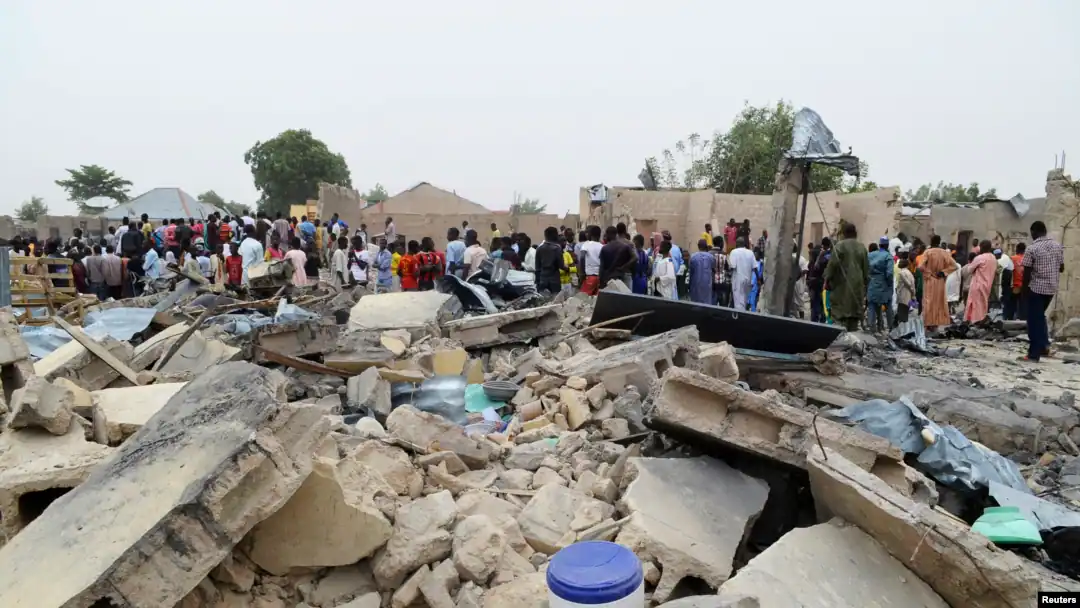
In late March, 11 people were killed in Kautikari, including a local vigilante leader. Churches and homes were burned as residents reported delayed or absent security responses.
On March 4, 2026, Boko Haram overran a poorly defended army base in Gwoza, killing 200 people, including 50 soldiers and abducting at least 300 civilians in the chiefly Christian town of Ngoshe.
“They burned the military vehicles and seized their weapons,” Sulieman Ayuba told TruthNigeria after the attack.
Government Admits Gaps
Even state officials have acknowledged the scale of the problem.
“The renewed attacks… signal that Borno State is losing ground,” Gov. Babagana Zulum said during a security meeting in Maiduguri.
“The numerical strength of the military is not enough to cover everywhere,” Zulum said at the meeting.
He called for “new deployments and the creation of local forest guard units to protect vulnerable rural communities.”
For Chibok leaders, however, the issue is no longer capacity, it is intent.
“We request permanent military formations in strategic border areas, increased troop deployment, and proper equipment for local vigilantes,” Mutah told TruthNigeria.
With attacks continuing and rescue efforts stalled, trust in government protection has eroded.
A National Pattern
Security analysts say the persistence of Boko Haram attacks reflects deeper structural weaknesses in Nigeria’s counterterrorism strategy.
“Such violence may be intended to undermine public confidence in government protection,” Umara Ibrahim, a professor of strategic studies, told journalists in an interview.
Nigeria now ranks fourth on the 2026 Global Terrorism Index, with attacks and deaths rising sharply over the past year.
Washington Raises the Stakes
The accusations from Chibok leaders come as U.S. policymakers intensify scrutiny of Nigeria’s response to militant violence.
“Nigerian officials have been, unfortunately, complicit in facilitating these atrocities,” Sen. Ted Cruz said during a Senate Foreign Relations subcommittee hearing.
“I will judge their commitment by the results,” he added. “Those results have yet to materialise.”
With 91 of the original Chibok schoolgirls still missing, local leaders are no longer describing government failure; they are questioning whether the failure is intentional.
Mary Kiara reports on terrorism and religious freedom policy for TruthNigeria.