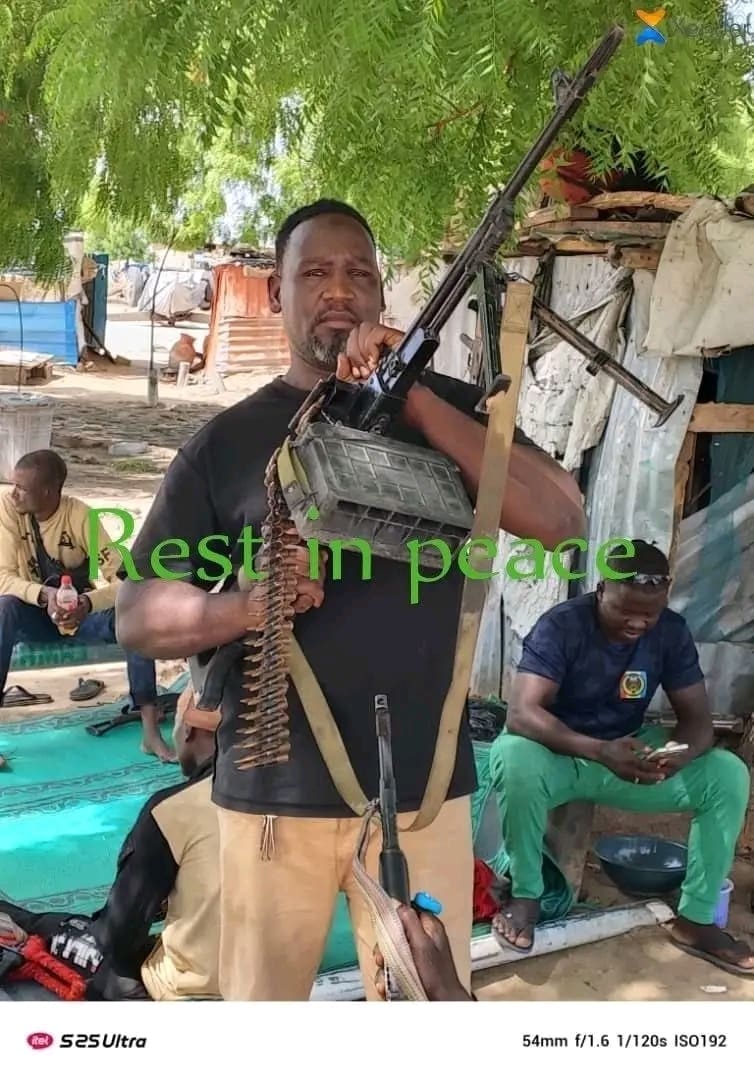
BAGA, Nigeria — A commander in the Civilian Joint Task Force (CJTF), the volunteer security network supporting Nigeria’s counter‑insurgency operations, was killed on Wednesday, 27th May 2026, when a powerful Improvised Explosive Device (IED) planted by suspected fighters of the Islamic State West Africa Province (ISWAP)—a violent extremist group responsible for severe civilian harm and human rights abuses—detonated beneath his vehicle near Baga in Kukawa Local Government Area of Borno State.
Suspected ISWAP fighters struck with deadly precision, detonating the device along a vulnerable route on the Lake Chad axis. The blast destroyed the vehicle and killed the commander instantly, leaving behind a scene of twisted metal and debris.
Local outlet Sky Daily also reported the incident.
The name of the commander was not released to TruthNigeria nor any of the other outlets reporting the death.
A Calculated Assassination Strategy
The killing underscores ISWAP’s entrenched strategy of planting IEDs along critical roads to weaken local resistance, disrupt military logistics, and instill fear among communities already traumatized by years of insurgency. These attacks are deliberate, targeted efforts to dismantle the human infrastructure of counter‑insurgency in the Lake Chad region.
A Pattern of IED Carnage Across the North-East
ISWAP and rival factions have repeatedly used roadside bombs to target both civilians and security personnel.
- Multiple IED attacks on soldiers and vigilantes have been recorded along the Maiduguri–Damboa corridor, as documented by HumAngle.
- Civilian massacres have occurred on major roads and farm paths in Marte, Dikwa, and Gwoza, where farmers, traders, displaced persons, and Christian returnees have been killed by hidden explosives.
- Security-force ambushes in Guzamala, Mobbar, and around Lake Chad islands have claimed the lives of soldiers and vigilantes, with ISWAP often deploying secondary devices to target first responders.
These incidents illustrate an insurgency that thrives on asymmetry, embedding explosives in everyday routes to make routine travel a life‑or‑death risk.
Eyewitness Confirmation and Local Insight
A CJTF membe confirmed the attack to TruthNigeria in a phone call. For security reasons, he requested that his name not be prominently featured in public reporting.
The source described the incident as “devastating,” linking the commander’s death to persistent gaps in anti‑IED equipment, inadequate route‑clearance capabilities, and the difficult terrain that allows ISWAP cells to plant devices undetected. He warned that despite ongoing military offensives, routine movements remain high‑risk for both CJTF and military convoys.
Another confirmation was posted by Zuker Nation on Facebook.
Expert Analysis: ISWAP’s War of Attrition
Zagazola Makama, Lake Chad conflict reporter
Makama documented the attack, noting ISWAP’s long history of deploying sophisticated roadside bombs along key supply and transit routes. His report is available via Zagazola Makama.
Nimi Princewill, Sahel security analyst
Princewill has previously warned that ISWAP’s IED campaign is designed to “bleed the system slowly,” targeting local commanders who provide intelligence and community coordination. His analysis appears in Al Jazeera.
Brig. Gen. Peter Aro (rtd.), military analyst
Aro notes that IED ambushes expose gaps in route clearance, electronic warfare, and small‑unit mobility. His commentary is featured in ADF Magazine.
A Region Still on Edge
The killing of the CJTF commander adds to a growing list of targeted attacks that have destabilized communities across the Lake Chad Basin. For many residents, especially displaced families attempting to return home, the renewed wave of IED incidents reinforces fears that key routes remain unsafe and that insurgent cells continue to operate with lethal reach.
As security forces and local volunteers press on with counter‑insurgency operations, the loss of experienced community leaders like this commander deepens the strain on already fragile networks of local defense. In a region where trust, mobility, and local intelligence are essential to survival, each targeted killing leaves a void that is not easily filled.