A six‑year review finds Fulani Ethnic Militia responsible for four times more civilian deaths than Boko Haram and ISWAP combined — yet U.S. counterterrorism doctrine still ignores them.
By Mike Odeh James
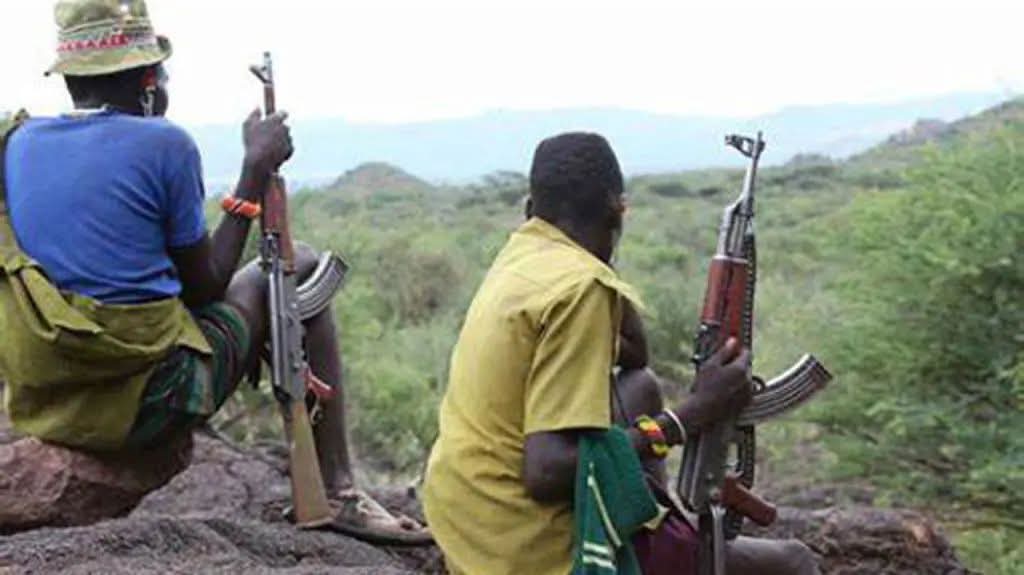
ABUJA — Fulani Ethnic Militia (FEM) killed four times as many civilians as Islamic State West Africa Province (ISWAP) and Boko Haram combined, according to a landmark six‑year study that challenges long‑standing Western assumptions about Nigeria’s violence. The analysis, conducted by the Observatory for Religious Freedom in Africa (ORFA), cross‑referenced nationwide attack patterns and found FEM to be the single deadliest armed network in the country for Christians — despite receiving little attention from U.S. counterterrorism policy.
Between October 2019 and September 2025, researchers recorded 79,323 deaths in terror-related violence — an average of 36 people killed every day. More than 42,000 of the dead were civilians.
Boko Haram and ISWAP, the groups most often blamed for Nigeria’s bloodshed, together accounted for 12 percent of civilian killings. Fulani Terrorists accounted for 44 percent, a toll ORFA puts at four times the two jihadist groups combined.
“Violence linked to Fulani militia is the dominant force behind Nigeria’s death toll. The Western preoccupation with Boko Haram is, at best, misleading,” said Frans Vierhout, a senior research analyst at ORFA.
“Nigeria is incubating a terror network which the outside world has yet to acknowledge,” he added.
The study also found a stark religious imbalance. Twice as many Christians as Muslims were killed — 28,551 against 13,224. Measured against state populations, Christians died at 4.4 times the rate of Muslims in affected states.
A Hierarchy of Human Worth

Some 34,773 civilians were abducted over the six years, most seized during armed raids on their homes. Muslim abductions rose sharply, bringing the two communities near parity — 15,932 Christians against 15,272 Muslims. But ORFA’s field research, drawn from survivor testimony, found the experience of captivity diverges sharply along sectarian lines.
Christian hostages face higher ransoms, longer negotiations and a greater risk of execution even after families have paid in full. Christian women face sexual violence, forced conversion and forced marriage. Muslim captives face lower ransoms and less violence.
“From the moment of capture, Muslim and Christian hostages enter different realities. It is a system — consistent across multiple states, armed groups, and multiple years of survivor testimony,” said Steven Kefas, a senior research analyst and author of the study’s section on hostage treatment.
A Blind Spot in U.S. Doctrine
For advocates of Nigeria’s Christians, the findings sharpen a question Washington has yet to answer: why does U.S. counterterrorism doctrine still not target the deadliest actor on the field?
The United States maintains a roster of designated Foreign Terrorist Organizations that includes Boko Haram and ISWAP. No Fulani militia appears on it. Nigeria designated kidnappers and violent armed groups, including Fulani militants, as terrorists in December 2025, but U.S. doctrine has not followed.
Scott Morgan, a Washington, D.C.-based security consultant with Red Eagle Enterprises who spoke to TruthNigeria, traces the omission to how Washington ranks armed groups.
“The reason the Fulani have not been designated is due to their position in the pecking order. Groups aligned with either al-Qaeda or the Islamic State always dominate the designations, due to legislation that allows for both military and financial measures to be taken against them,” Morgan said.
He pointed to a second factor: the data reaching Washington from its own mission in Abuja. Several people who shared data points with the U.S. Embassy, he said, were met with polite thanks delivered in a way that signaled it was not what officials were looking for.
Judd Saul, founder of the humanitarian organization Equipping the Persecuted, has long argued that Fulani Terrorists kill more Nigerian Christians than any jihadist group, and that Middle Belt Christians have borne the heaviest losses.
“The U.S. government has no operational directive to investigate Fulani ethnic militia as the prime agent driving terrorism against Christians in Nigeria’s Middle Belt,” Saul said.
He wants U.S. troops and drone bases deployed to the Middle Belt across Benue, Plateau, Taraba, Nasarawa, and parts of Adamawa and Kogi states, and aid for displaced families channeled through credible Christian organizations rather than the Nigerian and Benue State governments.
“It has been proven, not just in Nigeria but in other parts of Africa, that faith-based groups have been more efficient at distributing aid than host governments. Successive Nigerian governments have proven inept at providing necessary aid to victims of violence; however, they have been keen, sometimes, at arresting them,” Morgan said.
Is the U.S.–Nigeria Alliance on the Right Track?
Washington re-designated Nigeria a Country of Particular Concern in October 2025 over religious-freedom violations — a status it first held in 2020 before being removed in 2021 . A bipartisan congressional delegation has since visited Benue, and lawmakers have introduced the Nigeria Religious Freedom and Accountability Act of 2026 (H.R. 7457), which would mandate the CPC designation, impose targeted sanctions on Nigerian individuals identified as responsible, and route U.S. humanitarian aid through faith-based organizations .
That bill’s own findings echo ORFA’s: it states that Fulani militias carried out massacres killing more than 9,500 people, mostly Christians, between May 2023 and May 2025.
Abuja rejects the framing. Foreign Minister Yusuf Tuggar has dismissed accusations that the government facilitates attacks on Christians, arguing that resource-driven clashes have been recast as religious persecution to suit outside narratives.
“One key point that the Foreign Minister forgets is that data doesn’t lie,” Morgan said.
ORFA’s authors urge governments and international bodies to engage seriously with the data. Without a full accounting of the religious dimensions of the violence, they warn, efforts to end it will remain incomplete.
For Saul, the stakes are plain: whether Washington’s alliance with Abuja is built on an accurate reading of who is dying — and who is doing the killing.
Mike Odeh James is an award-winning conflict reporter and the author of a 15-part series on Rijana Forest Camp. He writes for TruthNigeria.