Security Analysts Warn of Escalating Violence Launched as Reprisals
By Ekani Olikita
At least 21 Christians were killed in related attacks across three Counties (local government areas) of Nigeria’s central Benue State, officials said.
According to local officials, residents and community leaders, the attacks followed 10 days after the deaths of two leaders of the Miyetti Allah Cattle Breeders Association of Nigeria (MACBAN)
The attacks, which occurred in Kwande, Okpokwu, and Katsina-Ala local government areas, have heightened fears of another cycle of retaliatory violence in a region that has experienced years of deadly clashes between armed Fulani militias and predominantly Christian farming communities.
The violence follows the June 26 killing of MACBAN Chairman, Ardo Mohammed Risku and his associate, Yakubu Isah, in Okudu community, Otukpo County, after they attended a peace and security meeting in neighboring Ohimini County, according to local reports
Nigerian civil society groups and several U.S. lawmakers have urged the United States to consider designating the MACBAN as a terrorist organization, citing persistent insecurity linked to armed Fulani militias
Fulani ethnic militia are the 4th most deadly group, killing more than Boko Haram and Islamic State according to the Global Terror Index, Christian Solidarity Worldwide has reported.
Four Killed in Kwande County
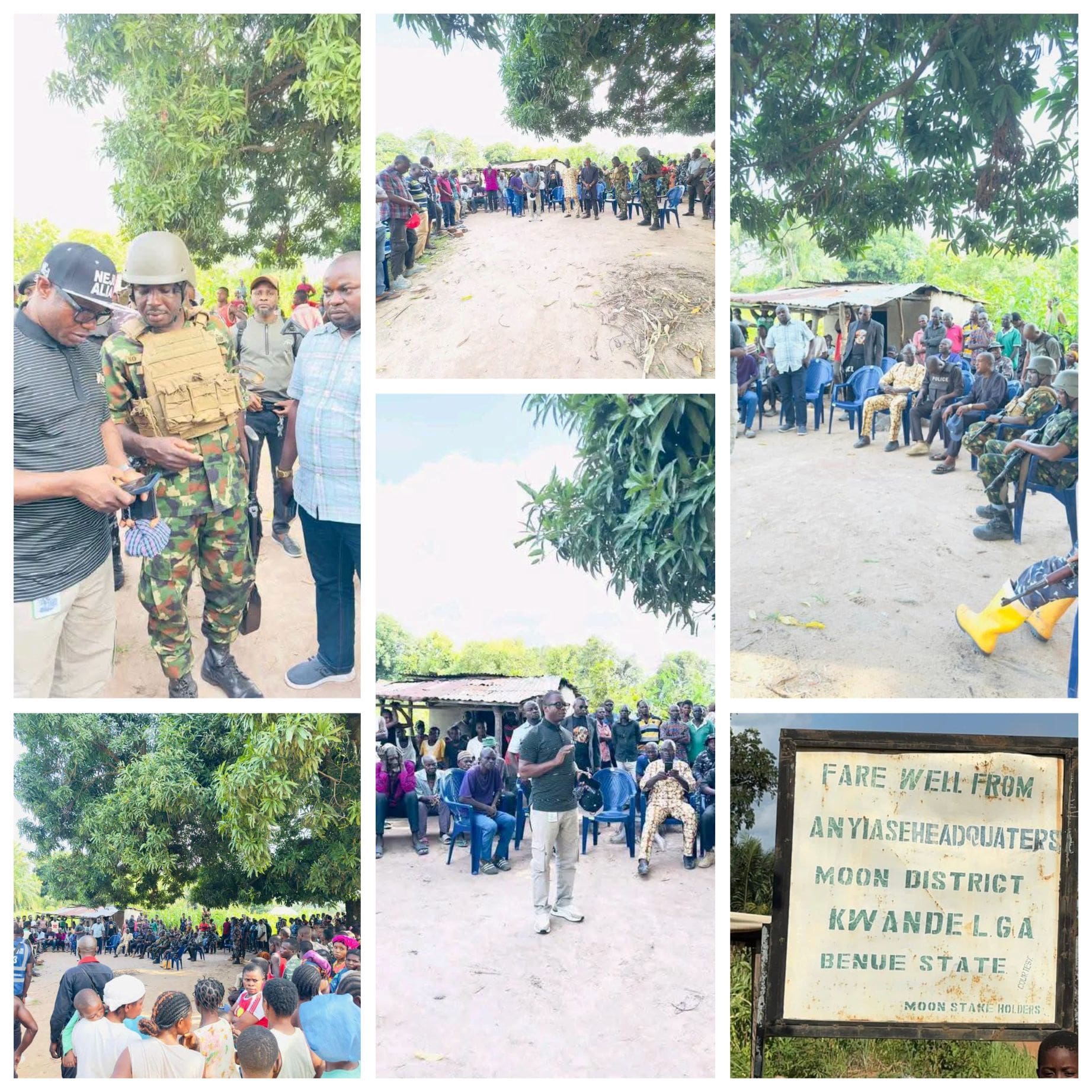
Residents said armed Fulani militia attacked Christian farmers in Anyiase community, Moon Ward, Kwande Local Government Area, on July 2, killing Asongo Nagwebe and Tarzan Agbahegh and injuring more than 10 others. A third victim later died while being transported for medical treatment
The following day, a group of Fulani reportedly blocked the Anyiase-Ikyogen road and opened fire on a commercial vehicle carrying civilians fleeing the violence, killing another passenger.
Kwande County Chairman Vitalis Terhile confirmed the attacks in a telephone interview with TruthNigeria.
“I received reports about the killing of four of my people by armed Fulani terrorists in Anyiase. I immediately mobilized military personnel to the affected communities and security has since been reinforced. I also met with residents and assured them that additional measures are being taken to protect lives,” Terhile told TruthNigeria
Two Killed in Okpokwu
On Tuesday, June 30, armed Fulani attackers invaded Okpafie community in Okpokwu County, killing two residents and making away with more than 40 cattle, according to residents
Lawrence Okoh, a resident of Okpafie, told TruthNigeria the attackers struck while many local volunteer guards were watching a FIFA World Cup match.
“More than 20 armed Fulani militia attacked our community around 8 p.m. Benjamin was killed during the assault. Our youths later mobilized to confront them, but the attackers had superior weapons. One of our volunteer guards was also killed and over 40 cattle were taken.”
Fifteen Killed in Katsina-Ala
The deadliest attack occurred in Sai community, Mbajir Ward, Katsina-Ala Local Government Area, where residents said about 100 armed Fulani terrorists launched coordinated assaults between June 30 and July 1 killing 15 locals.
At least 15 Christians were killed and 10 others injured.
Hyacinth Alia condemned the attack, describing it as “a senseless assault on innocent citizens.”
“This attack is an ugly, cowardly and unacceptable act of violence, particularly at a time when our farmers have returned to their ancestral lands,” the governor said in a statement issued through his Chief Press Secretary, Tersoo Kula.
Security analyst and conflict researcher, retired Deputy Superintendent of Police, Abichele John said the killings illustrate a dangerous pattern in Nigeria’s Middle Belt, where unresolved attacks often trigger retaliatory violence.
“Whether the initial killings were criminal or targeted, reprisals against entire communities deepen the conflict and make reconciliation more difficult. The inability to identify, arrest and prosecute perpetrators fuels impunity and encourages further attacks. Breaking that cycle requires timely intelligence, rapid security deployment, and credible justice for victims.”
He added that attacks on farming communities also threaten food production, displace civilians, and further destabilize one of Nigeria’s most volatile regions.
Why It Matters to the United States
The renewed violence has implications beyond Nigeria.
Nigeria is Africa’s most populous nation and one of the United States’ most important strategic partners in West Africa. Persistent insecurity in the country’s Middle Belt contributes to humanitarian displacement, weakens regional stability, and complicates counterterrorism efforts against extremist organizations operating across the Sahel.
The violence also remains a subject of concern in Washington, where members of Congress, religious freedom advocates, and human rights organizations have repeatedly called for stronger U.S. engagement to address attacks on vulnerable civilian populations and improve accountability for perpetrators. Continued instability could affect U.S. security cooperation, humanitarian assistance, and broader efforts to promote stability in West Africa.
Ekani Olikita is a conflict reporter for TruthNigeria.