By Ekani Olikita
An al-Qaeda–linked armed group active across the Sahel has claimed responsibility for an attack in central Nigeria State of Kwara last week that, it says killed a soldier — its first known operation in the country, according to Premium Times.
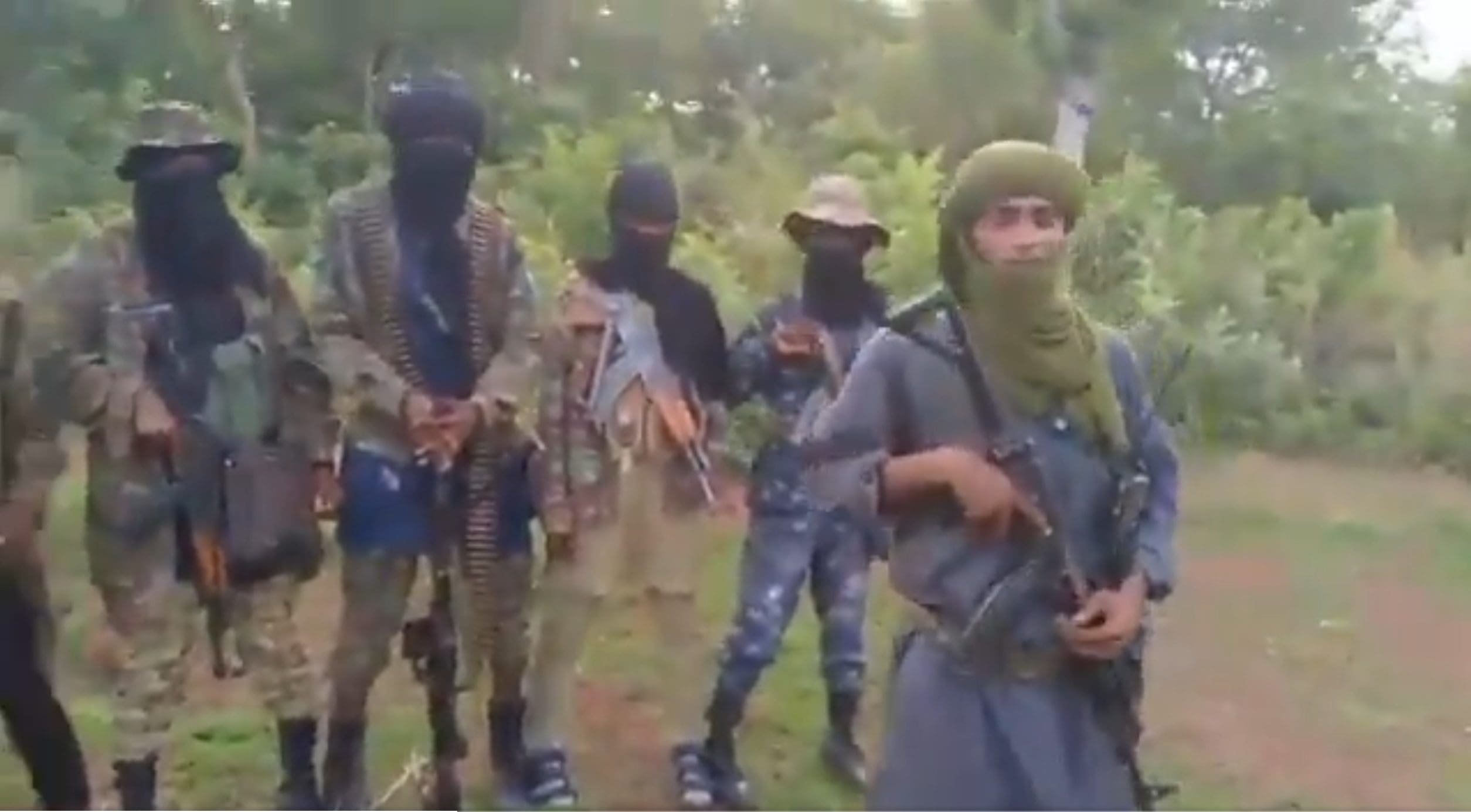
In a video posted to its Telegram channel late on Thursday, Jama’at Nusrat al-Islam wal-Muslimin (JNIM) said it struck in Kwara State in the early hours of Wednesday, killing a soldier and seizing ammunition and cash.
Philip Brant, a jihadist expert with special focus on the Sahel, noted that JNIM’s propaganda medium, az-Zallaqah, has not confirmed the attack. However, he said the person in the video explicitly claimed the attack was from JNIM.
A Nigerian military source confirmed to Reuters that soldiers on patrol were attacked and one soldier was killed. The army did not respond to an official request for comment.
JNIM is one of several militant organisations operating in West Africa and the Sahel. The group has previously declared that it seeks to establish an Islamic caliphate and to expel governments it regards as influenced by the West.
Formed in 2017, JNIM’s operations began in Mali and later spread to Burkina Faso and parts of Niger. It has also claimed attacks in the northernmost areas of Ghana, Ivory Coast, Benin and Togo.
In Mali, JNIM recently declared a blockade on fuel imports from neighbouring countries, a move that has disrupted daily life in parts of the country and forced schools and universities to close.
In Burkina Faso in May, the group launched a major assault on the town of Djibo that reportedly killed around 200 soldiers, and last year it attacked Barsalogho, killing about 200 civilians.
JNIM’s apparent advance into Nigeria comes as the federal government already contends with separate insurgencies led by Boko Haram and the Islamic State West Africa Province (ISWAP).
Years of fighting in the north have left tens of thousands dead and more than two million people displaced.
President Bola Tinubu last week, named new service chiefs and inaugurated them on Thursday, an action described as “a sweeping overhaul of the military high command”.
During the decoration ceremony at the State House Aso Rock, the seat of power similar to the White House of the United States, President Tinubu said, the changes were intended to strengthen national security. Tinubu warned of the emergence of new armed groups in the north-central and north-west regions as well as parts of southern Nigeria, urging decisive action.
“We must not allow these new threats to fester. We must be decisive and proactive. Let us smash the new snakes right at the head,” he said.
Appearance of JNIM and Regional Implications– Security Expert
The appearance of JNIM in north-central Nigeria, marks a worrying geographic shift in militant activity that could deepen instability across West and Central Africa.
“The move into Nigeria’s middle belt reflects both operational opportunism (gaps in local security provision) and the wider fragmentation of insurgent networks that now cooperate across borders”, a Security Analyst John Anthony Ikwulono in an interview with TruthNigeria.
“North-central states are grappling with an unprecedented terror attack by Fulani Ethnic Militia (FEM), displacement and economic disruption; the arrival of a transnational jihadist formation risks militarising those conflicts further, complicating local peace efforts and stretching national security resources already focused on the northeast”, Ikwulono said, mentioning three impacts
“If sustained, the group’s footprint could first, widen the Sahel-to-Gulf insecurity corridor; second, create new sanctuaries for arms and illicit trade, and third, pressure neighbouring states to reallocate forces — potentially undermining cross-border counter-terrorism cooperation and humanitarian access,” he added.
Analysts warn that uncontained spread will raise the cost of peace and development across several countries.
Global Security Concerns Beyond Africa
The expansion highlights how localized conflicts can transnationalize, complicating international counter-terrorism strategies, refugee flows, and regional supply-chain security. Donor countries and multilateral institutions may face growing demands for funding, intelligence sharing, and stabilization missions.
Vision of Humanity
A combined approach is essential: stepped-up local protection and policing, renewed regional intelligence and border cooperation, targeted development to reduce recruitment drivers, and coordinated international support that prioritizes civilian protection and state capacity building.
Ekani Olikita is a Conflict Reporter for TruthNigeria.