By Onibiyo Segun
(Abuja, Federal Capital Territory) Christian thought leaders- pastors, professors, community elders, are rocking between trepidation and hope after President Donald Trump placed Nigeria back on the Country of Particular Concern (CPC) list for “systematic, ongoing and egregious violations of religious freedom.”
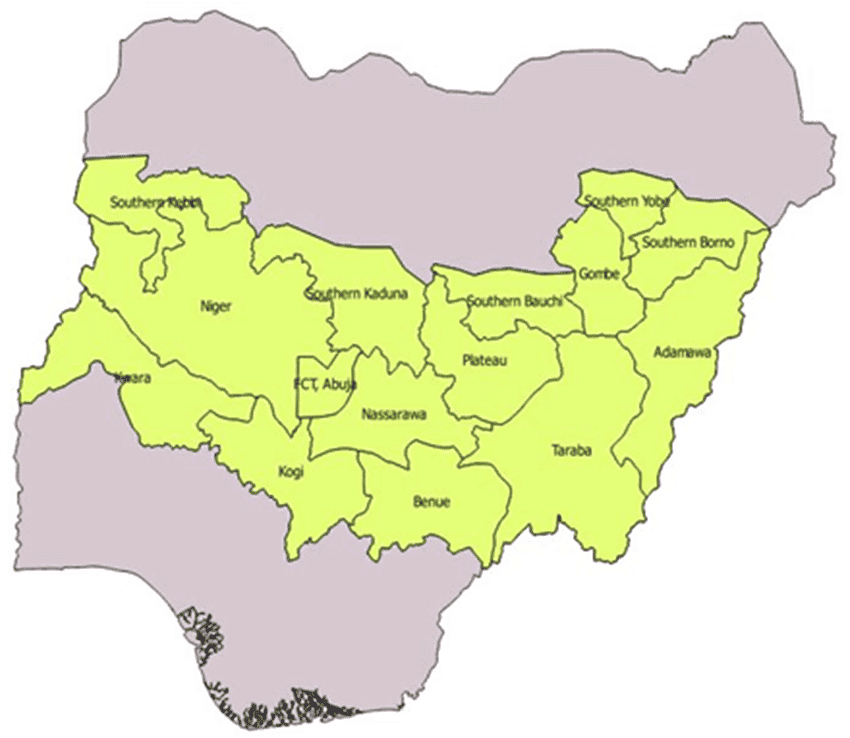
In Southwestern Nigeria the leaders have good reason for a volatile mix of relief, caution, and rising fear: Fulani Ethnic gangs continue to press steadily southward. Their voices highlight the big picture: an expanding wave of religiously targeted violence that has shattered the Middle Belt and now threatens the communities of the coastal south. These leaders see the U.S. redesignation of Nigeria as a Country of Particular Concern (CPC) not only as vindication for years of outcry but also as a call to prepare churches and civic structures for what may be coming.
The killings rarely make national headlines anymore. For years, coordinated attacks by Fulani Ethnic Militia terrorists have torn across Nigeria’s Middle Belt, burning villages, razing churches, and forcing families into forests with nothing but their children and God. Survivors describe nighttime raids carried out with military precision- motorcycles roaring in, rifles cracking like thunder, homes set ablaze before dawn.
The U.S. President’s surprise move on October 31 electrified many across the country’s embattled heartland. For thousands who have lost family, farms, and churches, the CPC designation felt like the first recognition of their suffering in years. Predictably, elite media, including Punch, reflected the Nigerian government’s pique (“Trump Hammers Nigeria Again!”
Reason: The Night They Came – Kogi and Kwara
Egbe, Yagba West County, Kogi State. Isanlu-Isin, Isin County, Kwara State.
Farm folk are still reeling from recent attacks by radicalized Fulani Ethnic Militia (FEM), who are every bit as much terrorists as the armed soldiers of Boko Haram. When the FEM arrived in Egbe in mid-September, they came at dusk. Villagers say dozens of gunmen fanned out through farmland, firing as they advanced. One farmer, Sunday Ajawe, was alone tending his crops when attackers slashed him repeatedly with machetes. He lived but only barely.
In Isanlu-Isin, across the state line in Kwara State, the story reads the same: motorcycles, gunfire, torched homes, families running through thickets to survive. Entire compounds are now deserted, their occupants either dead, displaced, or unaccounted for. Residents describe the violence as routine “like harvest season,” one man said bitterly.
TruthNigeria reporting shows a spread of militia activity along forest corridors shared by Kogi and Kwara – evidence, experts say, of coordinated southward expansion rather than random banditry.
Anyiin, Logo County, Benue State
On a smoldering patch of farmland near Anyiin, farmer Titus Iorver remembers returning as fires still burned. His neighbors some of them children, lay scattered across their compounds. He and other survivors dug hurried graves in the darkness.
“We buried them before sunrise. There was no time to pray,” Anyii said.
His account echoes testimony delivered before the U.S. Congress by Bishop Wilfred Chikpa Anagbe, who documented more than 1,000 Christians killed and 160 churches destroyed across Nigeria’s Middle Belt.
Once known as Nigeria’s cultural crossroads, the North-Central Middle Belt is now a corridor of abandoned farms and hollowed-out towns. The region feeds the nation, yet its food stores, livestock, and infrastructure are now controlled or destroyed by Fulani Ethnic Militia terrorist networks.
Security analyst Funsho Adeyemi, based in Abuja, told TruthNigeria: “the country may not understand how close it is to catastrophe. If the Middle Belt collapses, Nigeria’s food supply collapses too.”
Communities Speak Out
Local leaders reject Abuja’s repeated claims that the violence is the result of “farmers-herders clashes.” They insist what’s happening is organized conquest.
“This is ethnic cleansing disguised as conflict,” said Joseph Bayo, a community spokesman in Kogi State.
Across Nasarawa and Kogi states, clergy such as Rev. Beyioku Adekunle say centuries-old communities are being erased.
“We are becoming refugees on our ancestral land. We run from holes to holes, without help from government like rats. We can’t even worship anymore,” said Rev. Beyioku, to TruthNigeria.
In Lagos, Ogun, and Oyo states, Christian thought leaders say the south must wake up.
Pastor Emmanuel Afolabi of Lagos told TruthNigeria, “We watched the killings in the Middle Belt for years. CPC gives us hope, but it also demands that we prepare our churches to receive displaced families.”
Professor Morenike Akinola, a theology lecturer in Ibadan, added: “Prayer without policy is not enough. We must build early-warning networks and legal protection for rural Christians.”
Bishop Samuel K. Adeyemi in Ogun said, “If we allow these corridors to reach the southwest, our churches will be next. This is not abstract; it is a test of conscience.”
Seventeen people were killed in coordinated attacks across communities in Plateau and Kaduna states late Friday October 31st. The killings, reported by TruthNigeria, renewed pressure on the federal government to respond decisively as militias strike multiple states simultaneously.
Conflict researcher Dr. Rachael Danladi told TruthNigeria the CPC designation is more than symbolic, it is political leverage.
“Abuja can’t pretend this isn’t happening anymore. CPC forces acknowledgment, and acknowledgment is the start of accountability.”
She warns that failure to respond could result in sanctions or targeted interventions.
“International pressure is the only language Abuja responds to. Without accountability, the killings will continue, and the Middle Belt will starve.” She concluded.
Appearing on Arise News TV, security consultant Dr. Kelvin Bakinde said militia groups are advancing through unmanned forests and establishing weapons corridors.
“If this continues,” he said, “Lagos or anywhere in the Southwest will not be immune.”
Rev. Joshua Omole in Kogi State told TruthNigeria: “For the first time, the world is listening. CPC gives us moral ground to demand action.”
In Niger State, Prof. Salihu Gimba added, “This Fulani Ethnic Militia assault is not random violence. It is systematic displacement of Christians.”
Dr. Agnes Oladipo, a public analyst in Lagos, warned: “CPC is an opportunity. But without implementation, it’s just paper. Let’s pray it forces government to protect Christians.”
Legal specialist Dr. Samuel Obande based in Lagos is blunt: “When killers face no prosecution, violence becomes a career path. Years of selective silence have normalized the bloodshed.”
Onibiyo Segun reports on terrorism and conflict for TruthNigeria.