By Mike Odeh James
(Abuja) Joint U.S.-Nigeria air strikes near Metele, a remote village in Borno State near the border with the Republic of Chad, killed more than 20 Islamic State and Islamic State West Africa Province (ISWAP) fighters on May 17, 2026, according to Nigeria’s Defence Headquarters, and Africom.
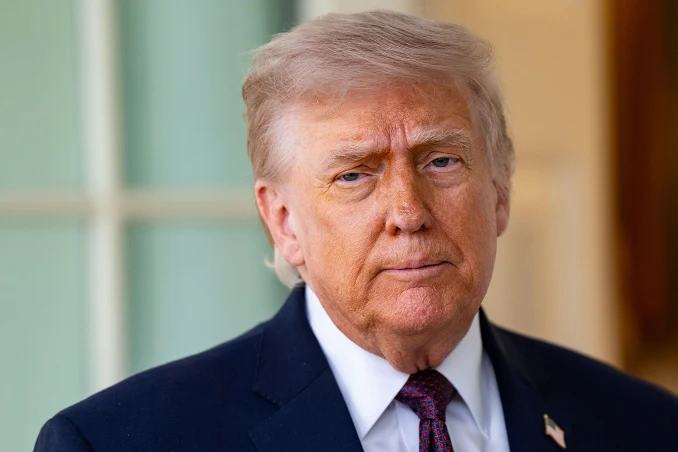
It was the second such assault in 24 hours, again shaking northern Borno State. The operation followed the killing of Abu-Bilal Al-Minuki described by AFRICOM as ISIS’s director of global operations and by President Trump as the group’s second-in-command globally
Kill List and Arsenal
According to Nigeria’s Defense Headquarters, the May 17 strike killed Abd-al Wahhab, an ISWAP leader responsible for cross-border raids; Abu Musa al-Mangawi, a senior operational commander; and Abu al-Muthanna al-Muhajir, the group’s media production manager.
The U.S. Africa Command deployed MQ-9 Reaper drones and AC-130 gunships — assets capable of devastating firepower with surgical precision. The Nigerian Air Force provided intelligence support, according to U.S. officials cited by The New York Times via Antiwar.com.
The target was the dusty village of Metele in Borno State, a notorious hideout for the Islamic State of West Africa Province (ISWAP).
Middle Belt Leadership Raises Alarm over Neglect of Region

Middle Belt leaders urged President Donald Trump to extend recent U.S. strikes against terrorists in Nigeria’s Northeast and Northwest into the country’s central region.
“While the attacks in those regions are commendable, we are calling on President Trump to immediately extend similar operations to Benue, Plateau, Taraba, Kogi, and Nasarawa,” said Adakole Adamson, of Adakson Security Consultancy in Takum.
“The number of people being killed in the Middle Belt is far greater than the casualties recorded in the Northeast and Northwest combined,” he told TruthNigeria.
“This means he has decapitated the leadership of the jihadi groups, but the real danger lies in the Middle Belt,” said Rev. James Pam Gyang, a Plateau-based Christian cleric and leader of the Association of Middle Belt Conference, referring to Trump’s recent strikes on an ISIS base in Sokoto and on ISWAP leaders.
“There are many Fulani Ethnic Militia (FEM) camps in Nasarawa, Benue, and Taraba,” Gyang told Truthnigeria. “Almost daily, Fulani Terrorists are killing people in Plateau and other Christian-dominated states. We are therefore calling on Trump to extend drone attacks and boots on the ground to the Middle Belt,” Gyang added.
A Different perspective from Washington
“The justifications for the strikes in Northern Nigeria are based in the AUMF — the Authorization for Use of Military Force enacted after 9/11 — so the Trump administration has legal standing for these strikes,” said Washington-based security consultant Scott Morgan, of Red Eagle Enterprises.
The same does not apply to the Middle Belt. “There currently is no such law that allows for strikes against the Fulani terrorists at this time,” Morgan told Truthnigeria.
Days earlier, AFRICOM commander Gen. Dagvin R.M. Anderson testified before Congress. “The success of the Islamists in West Africa and the presence of the Russians, Turkey, Saudi Arabia, and the Emirates are signs of the lack of Western presence,” Morgan said.
“Save for exercises, this may be the first U.S. military action outside the Horn of Africa for several years,” he added, calling it a development to watch closely.
Sahel Importance
Africom’s mission extends far beyond Nigeria. The Sahel — especially Mali, Burkina Faso, and Niger — has become global terrorism’s epicenter, with ISIS shifting approximately 90 percent of its external operations to sub-Saharan Africa.
Al-Minuki was a financial conduit between Sahelian affiliates and ISIS “core” in the Middle East. His death, followed by the elimination of his support staff, disrupted coordinated attacks across the Lake Chad Basin.
“No U.S. or Nigerian forces were harmed,” AFRICOM stated, confirming American personnel were on the ground during both operations. This sends a chilling message to the Sahel’s military juntas. For Mali, Burkina Faso, and Chad, the presence of U.S. special forces near their borders signals a new era of U.S. power projection.
Regional implications
Mali finds itself isolated. Its turn toward Russian Wagner mercenaries has cost it Western intelligence sharing that enabled the Metele strikes. Burkina Faso, overwhelmed by internal jihadist violence, now faces terrorist sanctuaries shifting across its unguarded borders. Leaders in Chad, a nominal U.S. ally, are learning that cooperation yields results — whereas defiance breeds vulnerability.
As Nigerian troops continue clearing splinter cells, the message is clear: the United States is not leaving West Africa. It is reloading.
Mike Odeh James is a conflict reporter and he writes for TruthNigeria.