Communities on Edge as Fulani Militia Regroup in Kwara After Commander’s Death
By Onibiyo Segun
(Ilorin, Kwara State) – The killing of suspected kidnapping kingpin Kachalla Ibrahim Battijo during a military operation in Kogi State on June 10, 2026, has triggered displacement of armed criminals into Kwara South. This has raised fears of retaliatory attacks across rural communities already struggling with persistent kidnappings and armed raids.
Failed School Attack and Killing Operation
On June 10, 2026, armed attackers stormed Government Secondary School, Iluke, Kabba/Bunu County, Kogi State, targeting students sitting for the West African Senior School Certificate Examination (WASSCE).
Troops intervened, engaging the attackers in a gun battle that killed Battijo and several members of his group.
At least three people were killed, including a school vice principal.
Governor Ahmed Usman Ododo confirmed that the deployment was based on prior intelligence and successfully stopped the mass abduction attempt.
Battijo Network: Decentralized Forest Corridor Structure

Kogi state authorities and security assessments indicate that Kachalla Ibrahim Battijo operated as a cross-border kidnapping contractor within a decentralized criminal network spanning Kogi, Kwara, Niger, and Zamfara forest corridors. He was not a conventional gang leader, according to TruthNigeria sources.
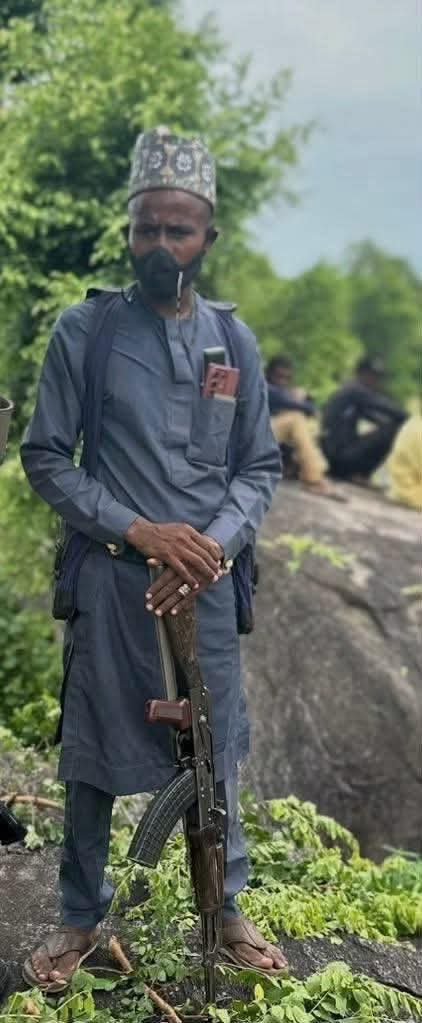
Security sources describe Battijo’s group as “a fragmented network of Fulani Ethnic Militia terrorists (FEM) cells” operating across forest routes and highways, designed to evade detection and survive military pressure.
A military intelligence officer, Lt. Col. Ibrahim Sani (rtd), Defence Intelligence Consultant based in Abuja, told TruthNigeria: “His core armed loyalists likely numbered 10–25 fighters, while broader affiliated groups may have reached 50–200 loosely connected operatives.”
Battijo’s network was linked to repeated kidnappings, highway attacks, church abductions, and school raids between 2025 and 2026.
Follow-Up Military Operation
Troops of the Nigerian Army’s 12 Brigade in Lokoja conducted a follow-up operation on June 16, 2026, in the Iluke forest axis, where Battijo’s remains were reportedly recovered.
Displacement Into Kwara South Forest Belt
Military sources say remnants of Battijo’s network have moved into forested areas in Ifelodun, Isin, and Ekiti Counties of Kwara State, where dense vegetation enables concealment and cross-border movement.
“The terrorists are regrouping, and there is concern they may carry out retaliatory strikes,” according to a military source, Maj. Fajola Amoo, speaking to TruthNigeria.
Kwara State Government security source, Mr. Taiwo Alabi, Chairman, State Security Council, told TruthNigeria in a chat that, “coordination with vigilante groups and security agencies has been strengthened due to increased armed movement across forest terrain.”
Ransom Economy and Scale
Ransom flows tied to Battijo-linked criminals are dispersed across multiple cells and intermediaries.
“Ransom demands typically range from ₦100 million to over ₦1 billion ($66,700 to $667,000 USD), depending on high-value targets such as traditional rulers, clergy, and business owners,” according to a financial-security analyst, Dr. James Ojo, Ibadan-based researcher.
He added: “These flows are fragmented across multiple cells and intermediaries rather than a single command structure, forming a distributed ransom economy.”
Security Interpretation: Forest Corridor Economy
Kogi State Commissioner for Information, Kingsley Fanwo, told TruthNigeria:
“Security agencies have intensified surveillance across forest corridors to prevent regrouping.”
Analysts describe Battijo as ‘a node’ in a broader kidnapping network linking multiple states.
Security analysts who spoke to TruthNigeria criticized official reporting on the killing of Kachalla Ibrahim Battijo, saying the official explanations often obscure key operational realities.
“When authorities rely heavily on terms like ‘intelligence-led operation’ without offering any real detail, it becomes difficult for the public or researchers to understand how the operation actually unfolded or to independently verify the facts on the ground,” said Dr. Olumide Fashola, Security Studies Lecturer, University of Lagos, Lagos, Nigeria said.
“There is also a recurring problem in how armed groups are broadly labeled as ‘terrorists’ or ‘bandits’ without clear differentiation between the two,” according to a conflict researcher at the University of Ibadan.
According to Nigerian conflict observers who spoke to TruthNigeria on background, the Nigerian government routinely blurs the boundary between the two types of criminals – one seeking venal reward (cash) and the other, a true insurgency seeking to establish an Islamist Caliphate, such as Boko Haram – by giving all rifle-carrying criminals the blanket term “terrorist.” Under this protocol of explanation, Western readers of Nigerian media rarely find out the ethnic identity of 90 percent of the bandit terrorists operating kidnap gangs in Nigeria. Kachalla Bottijo was ethnic Fulani, and all of his cohort members were Fulani ethnic militia.
Some critics of the policies of the Bola Tinubu Administration argue that its police spokesmen bend over backwards to avoid offending the sensibilities of millions of Fulani Muslim ethnics who comprise a powerful bloc of Nigeria’s ruling All Progressives Congress Party. At the same time, a small faction of Nigeria’s Fulani tribe are zealous Christians.
Onibiyo Segun reports on terrorism and conflict for TruthNigeria.