Catholic and Protestant leaders abandon restraint, declaring that government denial and fear‑driven silence have failed to stop systematic massacres.
By Mary Kiara
LAGOS — Senior Catholic and Protestant leaders across Northern Nigeria have ended decades of quiet restraint, publicly declaring that fear‑driven silence has failed to stop the systematic killing of Christian communities. The unprecedented shift comes amid rising Fulani militia and jihadist attacks, mounting international pressure, and a growing belief among clergy that the government has neither the will nor the resolve to protect vulnerable populations.
The institutional shift marks a total break from past ecclesiastical strategy in West Africa. For years, church authorities urged congregations to maintain quiet compliance and trust government security forces.
However, escalating raids by armed Fulani militias and jihadist factions have forced church leaders to adopt a unified stance of active public confrontation and legal resistance.
End of Passive Restraint
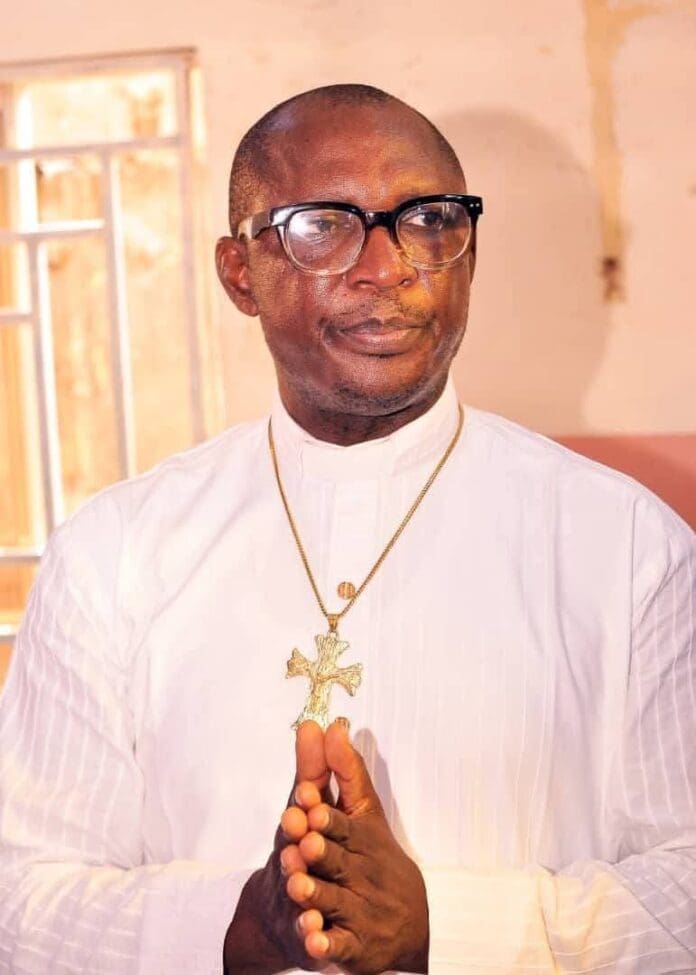
“Even those of us who come out to speak up against the ills Christians face sometimes do not find it easy because a larger group have been intimidated into silence,” Rev. Joseph Hayab, Chairman of the Christian Association of Nigeria (CAN) across the 19 Northern States and the Federal Capital Territory, told TruthNigeria.
“We don’t blame any Christian for being timid, but the laws won’t protect them,” Hayab told TruthNigeria.
As armed Fulani terror groups continue to attack Christian communities across Nigeria, Hayab says northern Christians have reached a breaking point.
“Enough is enough of this,” he told TruthNigeria. “We must fight to defend our rights, and this is what we have resolved to do now as Christians of northern Nigeria.”
His remarks align with data from the Observatory for Religious Freedom in Africa (ORFA), which found that armed Fulani militants kill civilians at four times the combined rate of Boko Haram and ISWAP, targeting Christians at a 4.4-to-1 ratio compared with Muslims.
Human Toll of Policy Failure

The human cost of this security vacuum remains catastrophic across central Nigeria.
In Kaduna State’s Kagarko District, Fulani terrorists raided the rural community of Kutaho on February 9, 2026, abducting a newly arrived catechist, Victor Paul.
“Tragically, Victor Paul, his pregnant wife, and their son were among those kidnapped,” Fr. Linus Bobai, parish priest of St. Joseph’s Catholic Church in Kutaho, told TruthNigeria.
“The terrorists refused to spare him. On April 5, 2026, after ransom was paid, only his wife and child were released. Victor Paul was murdered in the forest.”
The violence has expanded across the Middle Belt.
On July 26, 2026, armed militants executed 30 civilians, including eight children during a late-night assault on Naridon Village in Kaduna State.
Similar massacres in Plateau State’s Mushere District left 22 Christians dead in June 2026, followed by a July raid that wiped out nine family members of a prominent regional pastor.
“When a people are targeted because of their religious identity or ethnic background, and there is an agenda to wipe them out or erase their presence from a region, what else do you call it?” Archbishop Matthew Ishaya Audu of the Catholic Archdiocese of Jos told TruthNigeria.
“Those experiences are heartbreaking, and the tears of victimized families still haunt me,” Archbishop Audu added, noting that entire family lineages have been wiped out across Plateau, Southern Kaduna, and Benue states.
Capitol Hill and Global Repercussions
The internal shift inside the Church coincides with growing international anger over Abuja’s failure to stop the violence.
U.S. Representative Riley Moore, West Virginia Republican, estimated following a fact-finding mission that over 600,000 predominantly Christian farmers now live in squalid displaced-persons camps in Benue State alone.
On July 9, 2026, the European Parliament passed a resolution with 510 member votes demanding independent investigations into Middle Belt massacres and urging structural security reforms.
Military analysts emphasize that Nigeria possesses adequate state machinery to neutralize armed factions but lacks political resolve at the executive level.
“Nigeria definitely has the capacity to do this,” former U.S. military officer Antonio Graceffo told TruthNigeria in an earlier interview. “You have intelligent people, dedicated people, and structures in place, but the attacks are happening every single day, and people are becoming numb to it.”
Amid the worsening national crisis, a profound moral fracture has emerged within Nigeria’s security and political apparatus, where some high-ranking government and military personnel have frequently resorted to shielding or downplaying the actions of terrorists by publicly referring to them as “our brothers” and “prodigal sons”.
This dangerous rhetoric has drawn fierce condemnation from Bishop Anthony Adaji of the Catholic Diocese of Idah who delivered a blunt rebuke to this normalization of violence.
“If you hear people defending terrorists as ‘our brothers,’ then you ask yourself: if your brother is a terrorist and you cannot challenge him, you are enabling terrorism,” Bishop Adaji told TruthNigeria.
“Terrorism has become a problem in this country, a seemingly insurmountable problem, but God does not create it, it is man-made.”
Strategic Policy Implications
As Washington prepares for bilateral security talks, northern clergy emphasize that statements of condolence from government officials will no longer suffice.
“The church needs to unanimously speak out, not just one person or one group” Rev. Hayab told TruthNigeria.
“Anyone who threatens our members, pastors, or churches must now have a united Christian body to contend with.”
Mary Kiara reports on terrorism and religious-freedom policy for TruthNigeria.