By Mike Odeh James
(KADUNA) Nigeria’s fiercest critics in Congress survived the November 3 Democratic wave, but their bill to ban Abuja’s paid lobbyists now races a January 3 deadline.
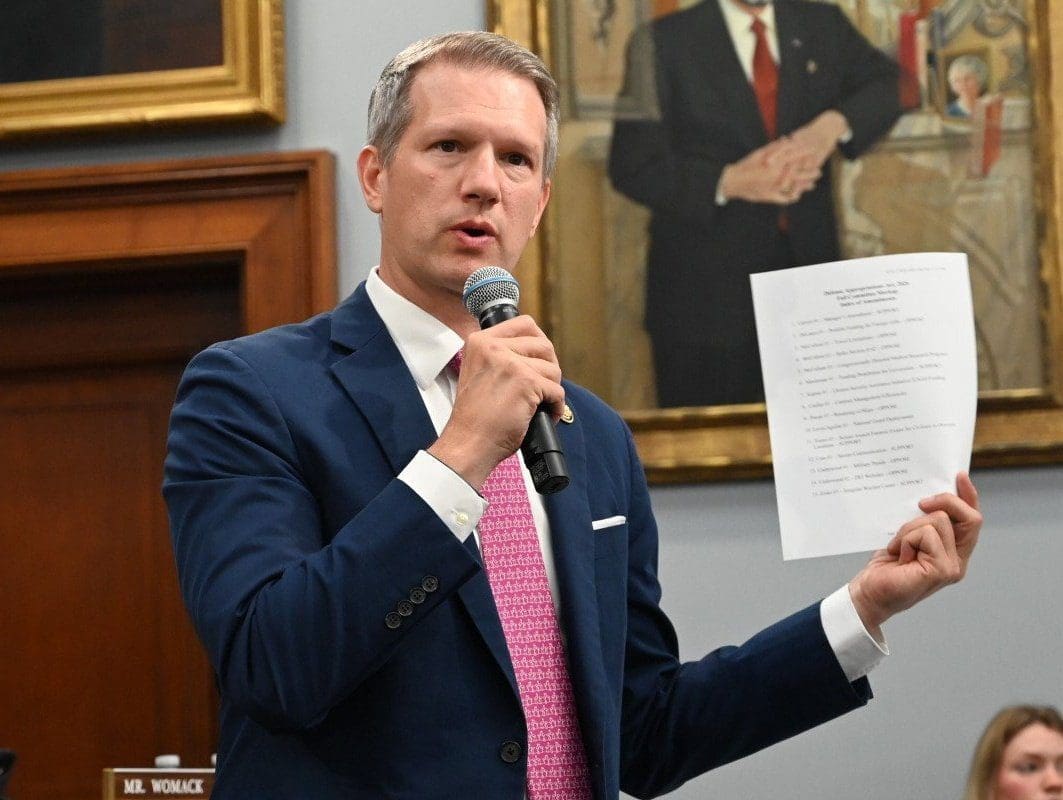
The weapon is H.R. 10939, the Nigerian Accountability Act, introduced October 29 by Rep. Barry Moore (R-Ala.). It would make it illegal for anyone in the United States to act for, or to pay, an agent of the Nigerian government while Nigeria remains a Country of Particular Concern (CPC) for religious freedom. Violators would face civil and criminal penalties, and the bill strips out the exemptions that normally apply under the Foreign Agents Registration Act (FARA).
“For too long, the Nigerian government has paid high-priced lobbyists in Washington to cover up the persecution of Christians while doing little to stop it,” Moore said when he filed the bill.
The $9 Million Target
The bill has a clear target. FARA filings show that Aster Legal, a Kaduna law firm acting for National Security Adviser Nuhu Ribadu, retained the Republican-connected DCI Group on December 17, 2025. The fee is $750,000 a month, with $4.5 million paid up front on a contract that can reach $9 million.
H.R. 10939 would shut that arrangement down until the State Department lifts the CPC tag. That has not happened since President Donald Trump restored the designation on October 31, 2025.
Survivors of the Blue Wave
The midterms handed Democrats both chambers of Congress. Many officials in Abuja read that as relief. David Onyilokwu Idah does not.
Most of the U.S. lawmakers pushing for sanctions against Nigeria came through the election untouched, said Idah, Director at the International Human Rights Commission, Abuja.
The returns bear him out. Rep. Riley Moore (R-W.Va.), author of the House resolution backing the CPC designation, won re-election with about 59 percent in unofficial returns. Rep. Chris Smith (R-N.J.), who has chaired more hearings on Nigeria than any other member, held his seat. House Foreign Affairs Chairman Brian Mast (R-Fla.), a co-sponsor of the Nigeria Religious Freedom and Accountability Act, was re-elected.
Rep. Mario Diaz-Balart (R-Fla.), who oversees foreign aid spending on the Appropriations Committee, leads by a razor-thin margin. His Democratic challenger, Nicole Locklin, has refused to concede and is calling for a recount.
Barry Moore moved up. He won Alabama’s open U.S. Senate seat with 54.7 percent, giving the Nigeria campaign another voice in the upper chamber.
Survival Without Gavels
Survival is not control. When the new Congress is sworn in on January 3, 2027, Democrats will chair the committees that decide which bills move. Every bill not passed by then dies, including H.R. 10939 and the Smith-Moore Nigeria Religious Freedom and Accountability Act (H.R. 7457).
Moore’s bill faces a double reset. It sits in the House Judiciary Committee, which Democrats will run in January, and its sponsor is leaving the House. To survive, it must be reintroduced, most likely in the Senate.
The incoming leaders also see Nigeria differently. In November 2025, Rep. Gregory Meeks of New York and Rep. Sara Jacobs of California said the clashes between farmers and herders turn on land and resources, “not religion alone.” Meeks is in line to chair House Foreign Affairs.
“Field records from Benue, Plateau and Southern Kaduna do not match that framing,” Idah said. “They show Fulani Ethnic Militia (FEM) attacks on Christian farming villages, timed to harvest and repeated year after year.”
That harvest-season pattern is the one TruthNigeria documented in its November 3 explainer, “Harvest of Fear.”
Washington Can Keep Pressure on Abuja
“The pressure does not depend only on Congress,” said Rev. Sam Albert of Kings Worship Chapel, Kaduna. “A Democratic Congress can hold hearings and shape budgets, but it cannot lift the designation.”
The CPC designation is an executive action under the International Religious Freedom Act of 1998. It belongs to the president and the secretary of state, and Trump remains in office until January 2029.
Republicans also hold the gavels for about seven more weeks. On November 12, Smith chairs a House Foreign Affairs Africa Subcommittee hearing titled “One Year Later: Assessing Nigeria’s Efforts to Protect Christians and Secure the Middle Belt.” Assistant Secretary of State for African Affairs Frank Garcia is listed as the first witness.
Riley Moore has pushed a 2027 State Department funding bill that would tie Nigeria’s foreign aid to action against targeted violence.
What Abuja Buys Next
For Abuja, the midterms offer a reprieve on Capitol Hill, not an escape. The DCI Group contract was built to counter the criticism of Republicans who controlled Congress. Those Republicans are still in office, and they still want Nigeria’s lobbying cut off.
Both sources say the killings are now too well documented to ignore. “The great work done by Equipping the Persecuted and TruthNigeria in exposing the killings of Christians makes it difficult for Americans not to see and react,” Idah said.
As long as people like Judd Saul, Riley Moore and Mario Diaz-Balart stay in the fight, Albert said, Nigerian Christians will have voices speaking for them.
For Christian communities in the Middle Belt, the question is unchanged. Will any of this, whether a lobbying ban, a hearing or a CPC label, stop the next night raid on a village?
Until it does, H.R. 10939 is a signal, not a statute. Its sponsors survived the vote that was supposed to silence them.
Mike Odeh James is a conflict reports for TruthNigeria.