Protesters Demand President Tinubu Step Down
By Ekani Olikita
ABUJA, Nigeria — Nigeria’s Democracy Day celebrations on June 12 were overshadowed by mass protests against escalating insecurity, as demonstrators blocked major roads according to Sahara Reporters.
The protesters accused Bola Tinubu’s government of failing to protect citizens despite billions of dollars spent annually on security and defense.
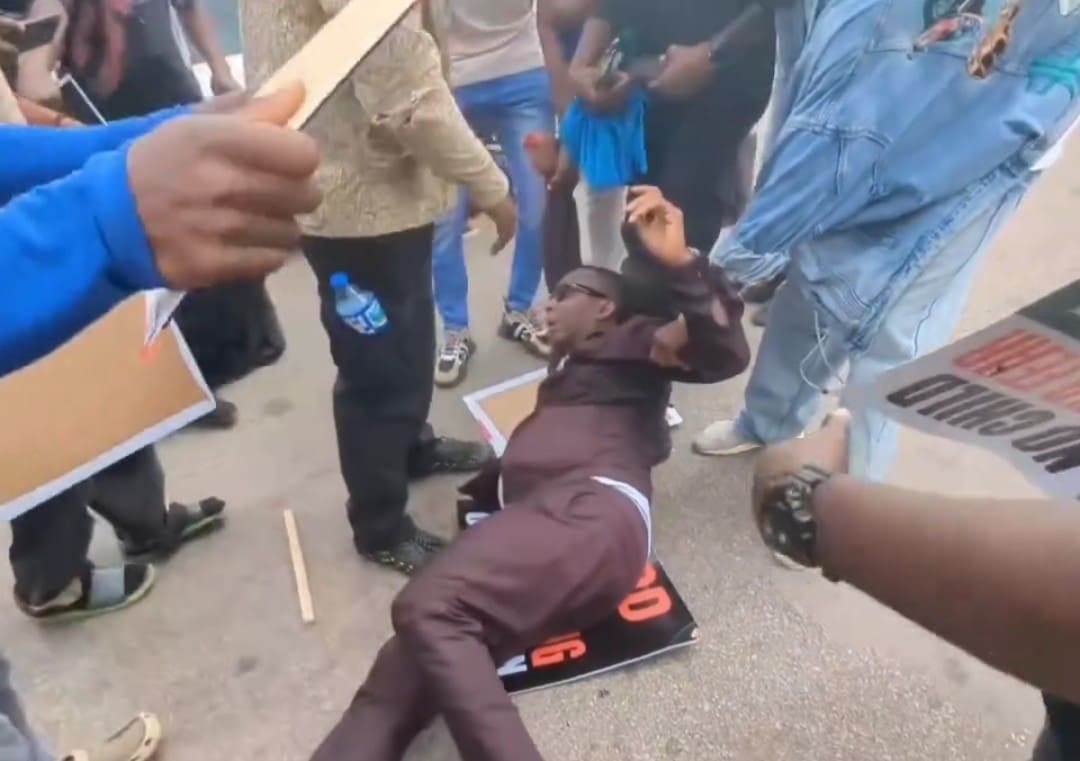
The protests turned chaotic when police fired tear gas at demonstrators gathered near the Federal Secretariat in Abuja. Several protesters, including prominent human rights activist and protest leader Omoyele Sowore, reportedly collapsed after inhaling the gas.
Speaking after recovering, Sowore described the incident as evidence of growing repression by the government https://www.facebook.com/share/p/1GYTmuWfnk/
“Today, operatives of the Nigeria Police Force deployed a strange gas at the protest ground, at close range which entered my lungs and left me struggling to breathe before I eventually collapsed.
“This incident shows the increasingly dangerous tactics being used to suppress dissent and intimidate citizens exercising their constitutional rights.
“The objective of the Asiwaju Bola Ahmed Tinubu regime is to silence, destroy and crush all opposition through fear and force. We shall never succumb to any of his worn out tactics. We will keep going until we achieve liberation.”
The June 12 demonstration followed a large protest the previous day led by social media activist Martins Vincent Otse, popularly known as VeryDarkMan (VDM). Protesters marched through Abuja demanding urgent action against worsening insecurity, kidnappings, and economic hardship
Chanting slogans such as “Terrorists Must Go,” “Kidnappers Must Go,” “Bandits Must Go,” “Tinubu Must Go,” and “APC Must Go,” demonstrators accused the government of failing to secure lives and property despite allocating about ₦3.18 trillion ($2.12 billion) annually to defense and security.
Public Anger Fueled by Kidnappings and Attacks
The latest wave of public outrage was intensified by a series of violent attacks by Fulani Ethnic Militia (FEM) and other terrorist groups across Nigeria, including the May 15 abduction of at least 45 pupils and staff from three schools in Oriire Local Government Area of Oyo State. One teacher was reportedly killed during the attack
The incident shocked many Nigerians because it occurred in southwestern Nigeria, a region historically considered safer than parts of the country’s conflict-ridden north.
Unlike Nigeria’s 2020 #EndSARS demonstrations, which were marked by confrontations with security forces, the current anti-insecurity protests have remained largely peaceful despite isolated clashes with police.
Protesters Target Defense Ministry

On June 11, hundreds of demonstrators barricaded the Ministry of Defense in Abuja, accusing security agencies of failing to curb rising violence despite substantial government spending.
Addressing protesters outside the ministry, VeryDarkMan sharply criticized the government’s security record.
“The Ministry of Defense gets N3.18 trillion ($2.12 billion USD) every year but has failed to protect us. Terrorists have taken over Nigeria, our farmlands, raping our women, children, killing our mothers, our fathers. Nobody is safe in Nigeria anymore. What are the military doing, what are the police doing, what are the soldiers doing?
“Tinubu must go, Tinubu must go, bandits must go, terrorists must go.”
Voices From the Streets
For many protesters, the demonstrations reflected years of frustration over persistent attacks and kidnappings.
A June 12 protester, 34-year-old Abuja resident Ibrahim Musa, said fear had become part of everyday life.
“People are no longer confident that they will return home safely. Farmers are afraid to go to their fields, travelers are afraid to use the highways, and parents worry when their children leave for school. We came out today because enough is enough.”
Similarly, Chinyere Okafor, who joined the June 11 march led by VeryDarkMan, said the government must be held accountable for the country’s deteriorating security situation.
“We are not protesting because we enjoy being on the streets. We are protesting because Nigerians are dying, communities are being attacked and kidnappings have become a business. The government must show results, not excuses.”
Security Expert Warns of Eroding Public Confidence
The demonstrations reflected growing public dissatisfaction with the government’s response to insecurity,
“The protests are a symptom of declining public confidence in the state’s ability to provide security,” said Security analyst and blogger, Ukan Kurugh, in an interview with TruthNigeria,
“Nigerians are expressing frustration over recurring attacks, kidnappings and the perception that security spending is not translating into improved safety. Restoring trust will require visible results, accountability and stronger coordination among security agencies,” Kurugh said.
The concerns raised by protesters echo findings from recent international reports. The Observatory for Religious Freedom in Africa reported that armed Fulani militants were linked to nearly 24,000 civilian deaths over a four-year period, making the conflict one of Nigeria’s deadliest sources of violence.
A May 2026 report by the United States Commission on International Religious Freedom (USCIRF) also identified armed Fulani militia violence as a major driver of killings, displacement, and religious freedom violations across Nigeria.
As Nigeria marked another year of democratic rule, the protests underscored a growing challenge for the Tinubu administration: convincing citizens that the government can restore security in a country increasingly weary of violence, kidnappings, and persistent instability.
Ekani Olikita is a conflict reporter for TruthNigeria.