Why Selective Silence Matters to Christians in the Middle Belt
By Izhi Bitrus Adamu
ANALYSIS In a crisis region, the voice of religious and traditional leaders carries weight. When they speak, it calms nations. When they are silent, that silence is also heard.
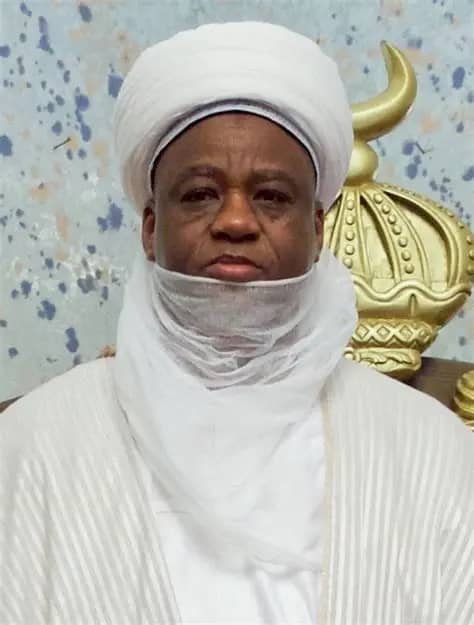
The Sultan of Sokoto, His Eminence, Alhaji Muhammadu Sa’ad Abubakar III, the 20th Sultan of Sokoto and spiritual leader of Nigeria’s Muslims since November 2006, condemned the killing of Benue MACBAN Chairman, Ardo Muhammad Risku, and his associate Yakubu Isah, The Grand Patron and Chairman of the Board of Trustees of MACBAN, the Sultan himself, “demanded a transparent, impartial probe.”
MACBAN is a Fulani sociocultural group often blamed for funding terror, kidnapping and killing of Christians in Benue and other Middle Belt states. The Sultan’s swift condemnation of the killing of his tribesmen has triggered pointed questions among victims of decades of mass killings across Southern Kaduna, Plateau, Benue, and Taraba. To many, the timing and tone raise a hard question: whose grief counts?
The State Response
The killings drew swift state action. 10 suspects were speedily arrested in connection with the MACBAN chairman’s murder. The Benue State Government, led by Deputy Governor Sam Ode, visited the late chairman’s family in Onyagede, Ohimini county (LGA), to extend condolences and call for restraint.
MACBAN itself ruled out reprisal, saying it would not respond with violence .
“The killing of the MACBAN chairman is highly condemnable. There’s no reason whatsoever for anyone to have killed them. I would love that as a leader, such a response be seen across faith and ethnicity where killings of Christians have been going on in the Middle Belt,” Barr. Sam Tokz, a Taraba-based legal practitioner, told TruthNigeria.
Ardo Muhammad’s death is tragic, and it deserves condemnation. He and Yakubu Isah were reportedly ambushed and killed by gunmen after attending a peace meeting. Yet, regrettably,
the assassination has not been condemned by the Christian Association of Nigeria or by prominent Christian thought leaders: which is a totem of Nigeria’s national brokenness.
But in the Middle Belt, every headline sits on top of memory. Witness the indelible memories of Plateau and Benue (June 13-14, 2025) including the Yelewata massacre that killed more than 270 and Taraba where over 3,000 have been killed since 2019 have buried thousands in the last decade.
For survivors, the question is: are all lives mourned with equal urgency? Sadly, silence, or the perception of selective silence, is a message from the Sultan. One commentary already called it “the Sultan’s Selective Outrage” after the MACBAN killing in Benue.
Days after Risku’s murder, fear returned to Benue. Suspected armed herders killed 15 residents of Sai in Katsina-Ala county, with many others injured,TruthNigeria reported. Why was Sai the target? Was it historical payback? Sai, recognised as the gateway through which Christianity first entered Tivland, saw men and women murdered in cold blood, with hundreds of Christian villagers displaced.
Consider the conspiracy of silence around the midnight massacre of 9 Catholic farmers in Ungwan Magaji, Kauru County, Kaduna State, June 16. The Sultan has not condemned it, and tellingly, neither did any state or Local Government Leader in Kauru County. If the same speed, tone, and demand for impartial investigation applied to Risku is applied to the killings in Sai in Benue State and Ungwan Magaji, in Kaduna State, then the principle of equal grief will begin to look real. If not, the perception of selective grief sends the message that some lives are more equal than others.
When Silence Is Also Heard
Human rights and conflict trackers have documented repeated cycles of attacks, reprisals, and displacement across the Middle Belt Benue alone recorded 6,896 deaths since Tinubu assumed office, and in Plateau 2,630 Villages have been wiped out. Churches, schools, and farms destroyed. Families still wait for justice.
“When condemnation appears swift for some victims and delayed, muted, or absent for others, it creates a Hierarchy of Grief,” Mr. Matthew Atoo, a Benue-based political analyst, told TruthNigeria in an exclusive interview on July 1, 2026. Atoo continued: “That hierarchy breaks trust. And once trust breaks, cohesion becomes hard.”
“Traditional and religious leaders are not just moral voices. In conflict zones, they are de-escalators,” he added. The Sultan himself urged Benue residents to “remain calm, shun reprisals, and allow due process” after the MACBAN killing
The Argument: Equal Condemnation Is Non-Negotiable
For Tokz, “this is not about pitting one group against another. It is about a principle: every Nigerian life must count the same in public statements.”
“Morally, selective grief tells victims their pain is secondary. Practically, it feeds suspicion. Suspicion feeds isolation. Isolation feeds the next cycle of violence.”
Tokz concluded: “Consistency means the same speed, same language, same public presence, whether the victim is in Sokoto, Benue, or Plateau. It means naming the dead, condemning the act, and standing with survivors without caveats.”
The Sultan urged for an “impartial investigation” The same standard must apply everywhere.
Nigeria cannot afford a system where only some deaths get national mourning. The Sultan’s voice matters because millions listen. If that voice is consistent, it can heal. If it appears selective, it can deepen wounds.
Mr. Matthew Atoo said, “the Middle Belt has heard too much gunfire and too little fairness. What is needed now is not more silence to interpret, but more words that include everyone.”
Because in the end, the question is simple: whose grief counts? The answer must be: all of us.
Izhi Bitrus Adamu is a conflict reporter for TruthNigeria.