Nigeria Confronts 2023 Electoral Failures, Pushes Bold Reforms to Save 2027 Polls
By Ezinwanne Onwuka
In less than two years, Nigerians will return to the polls. The last elections in 2023, marred by glitches, violence, and disputes, left public trust in the electoral process in tatters. Now, political leaders, civil society, and reform advocates are pressing for urgent reforms to ensure the lapses of 2023 are not repeated in 2027. Still, some believe no reforms will take place because Nigeria’s political leaders benefit from the present system.
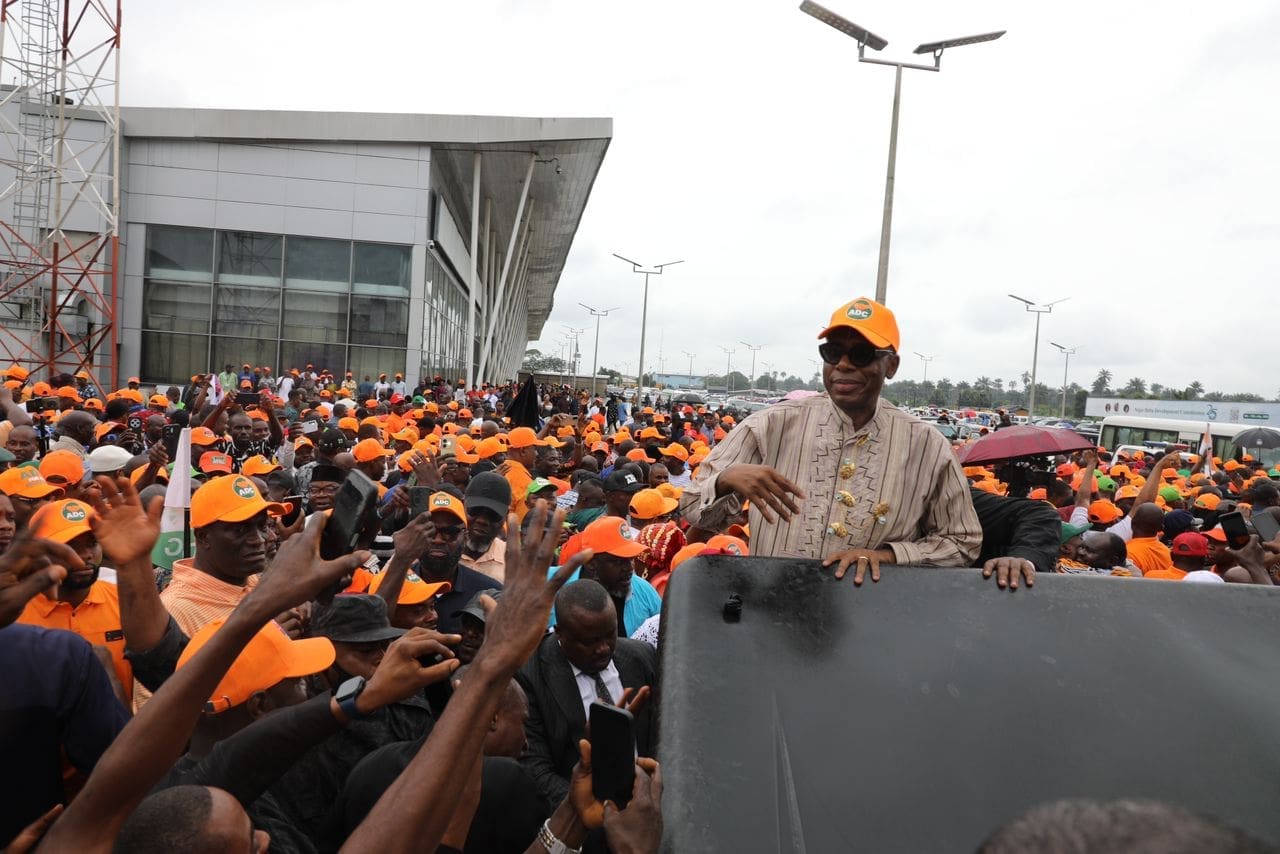
Former Minister of Transportation Rotimi Amaechi describing proposed electoral reforms as dead on arrival.
“There is absolutely nothing anybody can do about electoral reform in Nigeria in the present government. Absolutely nothing you can do because they will not do it,” Amaechi said. “Politicians will not do that because politics has become a source of revenue, a source of income for them. They don’t want voters to be able to hire and fire them.”
Yet there are proposals to deal with Nigeria’s upcoming election.
National Movement Seeks Credible 2027 Elections
On October 1, Nigeria’s 65th Independence Day, the National Consultative Front (NCFront) and the Labour & Civil Society Front (LCSF), backed by the Nigeria Electoral Reforms Coalition (NERCO) and Partners for Electoral Reforms, launched the National Movement for Electoral Reforms in Abuja.
Organizers said the push was driven by weaknesses exposed during the 2023 polls, including lapses in result transmission and questions over electoral integrity.
The summit, themed “Critical and Mandatory Constitutional Amendments for Credible Elections in 2027,” featured former President Goodluck Jonathan, ex-Vice President Yemi Osinbajo, former Education Minister Oby Ezekwesili, and 2023 presidential candidate Peter Obi as panelists.
At the event, organizers unveiled a National Charter of Demands. It calls for electronic transmission of results, stronger voter education, tougher action against vote buying and violence, financial and operational autonomy for the Independent National Electoral Commission (INEC), stricter oversight of political parties, and broader inclusion of women, youth, and persons with disabilities.
The Charter will be submitted to the National Assembly, INEC, political parties, and other stakeholders.
Lessons From 2023
The Electoral Act, 2022, enacted a year before the 2023 general elections, was meant to address the intractable problems of election manipulation, electoral impunity, operational inefficiencies and weak democratic institutions plaguing Nigeria’s electoral process.
Yet, the election fell short of expectations despite the deployment of technological innovations such as the Bimodal Voter Accreditation System (BVAS) for storing biometric information of voters and INEC Election Results Viewing (IReV) Portal for live transmission of election results from polling units in across the country.
BVAS devices malfunctioned and results were delayed or missing on IReV.
Vote buying, ballot stuffing, and result manipulation persisted despite legal safeguards. INEC’s post-election report highlighted result discrepancies and operational lapses across states.
Violence also marred the process. ACLED’s tracking reported attacks on polling units, intimidation of voters, and assaults on INEC staff and offices.
These combined failures now fuel the demand for reforms before 2027.
Voices From the Summit
At the Independence Day summit, speakers underscored the urgency of electoral reforms.
“Electoral reform is absolutely critical and must take place before our next election, said Obi. “As things stand, we don’t have a proper electoral system that can truly guarantee free and fair elections.”
He added, “There need to be comprehensive changes across the entire process — from how elections are conducted to what happens after votes are cast — in order to make our democracy meaningful.”
Ezekwesili pressed for greater independence for the electoral commission. “Anything that we are insisting on must be financial and operational autonomy, direct funding from the consolidated revenue fund,” she said.
She also urged that INEC be given prosecutorial powers and clearer authority over security agencies during elections.
“INEC must be empowered to prosecute election-related cases, have clearer authority over security agencies, and provide transparent collation of results from ward to federal level. Technology must be deployed to reduce manipulation,” she added.
Political economist Pat Utomi called for international pressure to hold Nigerian leaders accountable.
“We should internationalize this problem to the point that our country could face isolation,” he said. “If we do not do everything to ensure free and fair elections, everybody loses, including those who think they have power for the moment.”
Reform on the Table
INEC has proposed amendments to 16 sections of the 1999 Constitution (as amended) and 35 clauses of the Electoral Act 2022.
Key recommendations include early/special voting for security personnel, journalists, election observers, and Nigerians in the diaspora; removing presidential powers to appoint Resident Electoral Commissioners; creating an Electoral Offenses Commission; and introducing downloadable electronic voter cards for easier and faster accreditation.
Lawmakers are also debating 12 electoral reform bills. Proposals include conducting all elections in a single day, allowing independent candidates, and reforming the appointment process of the INEC chairman.
The House of Representatives has already passed the Electoral Bill 2025, which would repeal and replace the 2022 Act, for second reading. One controversial clause in the draft bill is the criminalization of non-participation in elections.
INEC chairman Mahmood Yakubu has urged lawmakers to conclude on the Bill quickly. “Uncertainty over the legal framework for the election can unsettle the work of the commission as election draws nearer,” he said.
2027: Turning Point or Same Old Story?
While the reform agenda has gained momentum, the biggest test remains the political will to see it through.
Ultimately, the demand for electoral reform in Nigeria is loud. The unanswered question is whether those in power will heed it or once again choose to preserve power by bending the rules in 2027.