Hostage Guards Executed some Prisoners even after Ransom Collected
By Mike Odeh James
(Kaduna) Kidnappers of productive Middle Belt farmers sometimes execute their victims shortly after ransoms are paid, TruthNigeria has learned. That’s what hardworking ginger farmer Jerry Peter told TruthNigeria shortly after his release from two months of torture on New Year’ Day.
Mr. Peter’s family had delivered the equivalent of $5,806 in ransom and yet – for reasons not yet clear — Peters watched Fulani militia terrorists execute other victims who had also paid—exposing the deadly reality behind Nigeria’s kidnap economy.
Peter’s nightmare began on a morning motorcycle ride and ended 62 days later in a forest where ransom money could not guarantee survival.
A native of Ankwa Ward in Kachia Local Government Area, Peter was returning from a political meeting on November 1, 2025, when armed Fulani terrorists ambushed him along the Kachia–Kafanchan road.
Forced off his motorcycle at gunpoint around 8:30 a.m., he became another casualty of Southern Kaduna’s unrelenting kidnapping crisis—though he would live to recount what happens inside terror camps where many vanish forever.
Peter said the abduction was swift and calculated.
“The Fulani terrorists emerged suddenly, their coordination suggesting prior knowledge of my route and schedule. Surrounded and unarmed, I had seconds to choose between compliance and death,” he recalled.
“They told me they would kill me immediately if I refused to follow them,” Peter said from his hospital bed at Royal Hospital, Kachia, where he has received treatment since his release on January 1, 2026.
What followed was a grueling trek through villages that have become waypoints in Kaduna’s kidnapping corridor.
“We trekked through Pachi, Gabachuwa, Mai Ido, and Abrom,” he said. “Each step took us deeper into a forest network linking Kaduna to Niger State until we arrived at the Rijana forest camp.”
Federal Government Coverup of Rijana Torture Camps
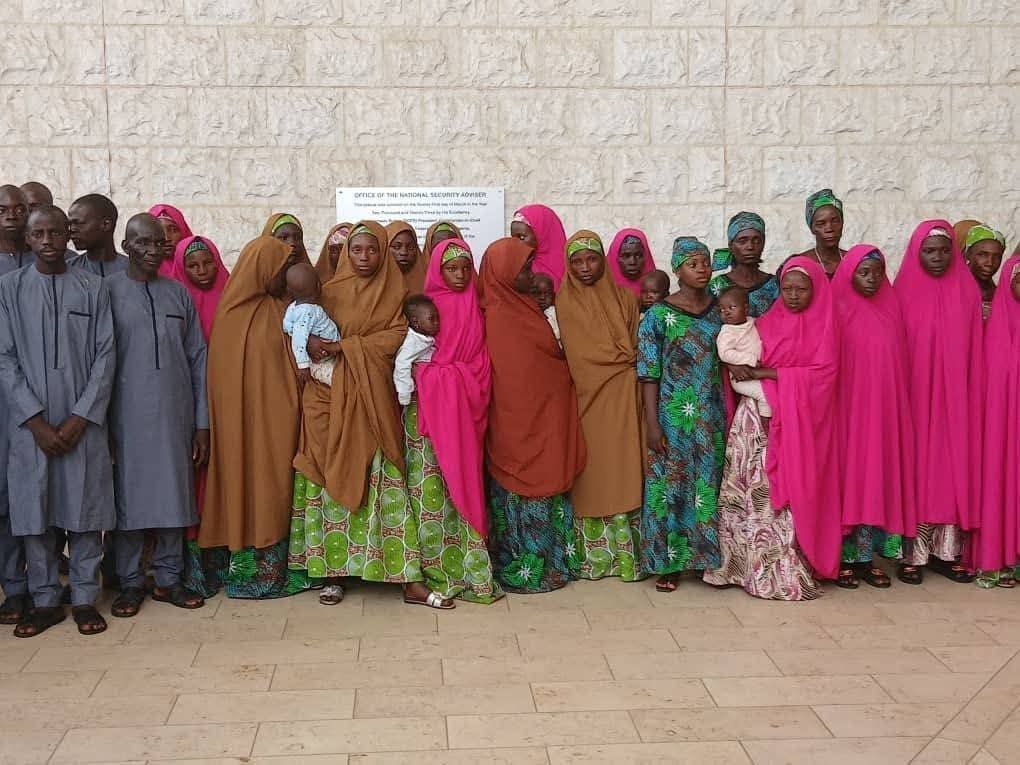
Peters had entered the infamous Rijana forest network of hostage camps that TruthNigeria has exclusively reported since February 2025. 59 hostages who were rescued from one of the camps were presented by Nigerian National Security Advisor Nuhu Ribadu on Feb. 16, 2025, a ceremony that established the fact of the Rijana hostage area. Yet, for unknown reasons, security authorities have refused to take calls from TruthNigeria reporters after the onset of 13 unique TruthNigeria documentary reports of the vast network of hostage camps in Rijana beginning on Feb. 25, 2025.
The hostage camps, believed to be 25 miles south of Kaduna City, are within a short walking distance of three Nigerian military bases.
Inside the Rijana Forest Camps
Peter described Rijana not as a single hideout but as a network of permanent terrorist camps entrenched deep within the forest. Despite years of security operations in Southern Kaduna, he said the camps remain intact and operational.
Speaking to TruthNigeria, Peter estimated that the Rijana forest may host up to 30 large camps.
“I can’t count them all, but the Fulani terrorists may have close to 30 camps,” he said. “Victims are constantly being brought in, while others are released, so the numbers keep changing.”
Strength of the Armed Groups
The scale of manpower involved in kidnapping operations was striking. “The night I was kidnapped, those who went out for operations were more than one hundred,” Peter recalled.
“When I was held the first night, I personally counted over 30 armed men guarding us.”
According to him, the fighters operated with discipline, were heavily armed, and had total command of the terrain—reinforcing the impression of organized militant activity rather than random criminality.
Rotating Population of Victims
The number of captives fluctuated constantly. Some hostages were released after ransom payments, while new abductees arrived from fresh raids along highways and rural communities.
“This made the camp feel like a detention center,” Peter said. “People were always coming in and going out.”
Life in the camp was defined by psychological terror. Hostages lived under constant threats, deprivation, and intimidation. Physical violence was not constant but always imminent.
“The fear was permanent,” Peter said. “You never knew who would be next.”
Captives were often forced to witness the suffering—and execution—of others, including victims whose families had already paid ransom.
Sectarian Motivation
The ransom demanded for Peter’s release reflected the camp’s organized logistics. In addition to $5,806 in cash, his captors demanded a motorcycle, two bags of maize, one bag of rice, 25 liters of palm oil, and $194 worth of recharge cards.
“These were not random criminals,” Peter emphasized. “They operated with discipline, used religious language to intimidate us, and knew the terrain completely.”
One of the most disturbing revelations from Peter’s account is that payment does not guarantee survival.
“I saw other captives who had already paid huge ransoms,” he said. “Some of them were later killed.”
According to Peter, executions served to terrorize remaining hostages and eliminate witnesses who could identify camp locations and terror networks. He added that some victims were killed specifically because they were Christians.
A Pattern, Not an Incident
Peter’s ordeal fits a wider pattern targeting Christian communities across Southern Kaduna. The Kachia–Kafanchan corridor has become particularly lethal, with forest camps such as Rijana serving as permanent operational bases for armed groups operating with apparent impunity.
“They are Islamic or Jihadist groups who happened to be Fulanis,” Peter said.
” They kidnap Christians, kill Christians and dispossess them of their ancestral lands and in this regards, they are terrorists as well as kidnappers,” he went on to say.
For communities in Southern Kaduna, Peter’s survival offers rare documentation of what happens inside forest detention centers where many victims disappear without trace.
How ECWA Church Helped
Peter’s younger brother, Istifanus Peter, told TruthNigeria that the ECWA Church (Evangelical Church Winning All) played a critical role during the ordeal.
“The Church supported us with continuous prayers for my brother’s release,” he said.
“Since my brother—the family’s breadwinner—was kidnapped, the Church also sent us money for feeding most of the time.”
ECWA is a Protestant Christian denomination in Nigeria and is known for evangelism, education, and missions across northern Nigeria.
Cost of Survival
As Peter continues treatment at Royal Hospital, Kachia, his physical wounds may heal, but the trauma of witnessing execution and living under constant threat is expected to be a lifelong burden.
His family’s payment of $5,806 and purchase of a motorcycle left them financially devastated. Across Southern Kaduna, countless families face the same impossible choice: fund terror through ransom or lose loved ones forever.
Security agencies were contacted for comment but had not responded as of press time.
Mike Odeh James is a conflict reporter for TruthNigeria.