By Mike Odeh James and Elisha Ayes
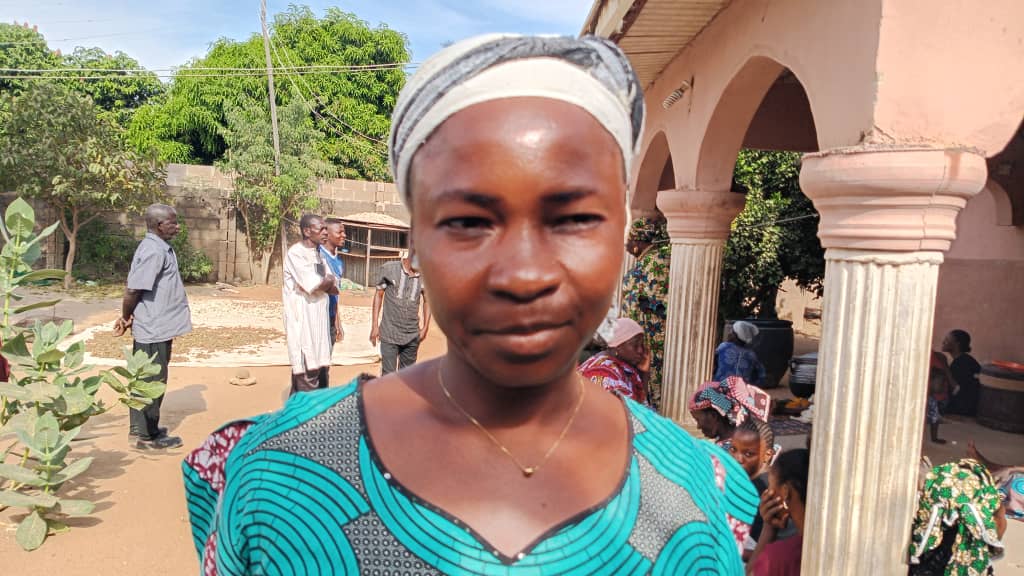
Jalingo–When 40-year-old widow Lami Clarkson stands in the dusty courtyard of Abuja Phase 2 Internally Displaced Persons Camp in Jalingo, she holds her youngest child close—not out of affection alone, but out of fear.
“I don’t have the accurate date again, but in the month of May 2025, Fulani terrorists invaded our community of Bandawa and killed so many people, especially men, that everyone had to run away,” she tells TruthNigeria.
Lami is one of more than 100 widows who gathered in two locations (Mayo Dassa IDP Camp and the Abuja Phase 2 IDP camp) in Jalingo last week to receive bags of rice donated by Equipping The Persecuted (ETP), an American Christian humanitarian organization founded by Judd Saul.
Their homes in Karim Lamido and Lau counties of Taraba State have been overrun by coordinated attacks from the Fulani Ethnic Militia—a campaign of terror that has uprooted entire villages and shattered thousands of families.
For these women, survival now depends on generosity—much of it coming from abroad.
American Aid Meets Catholic Compassion
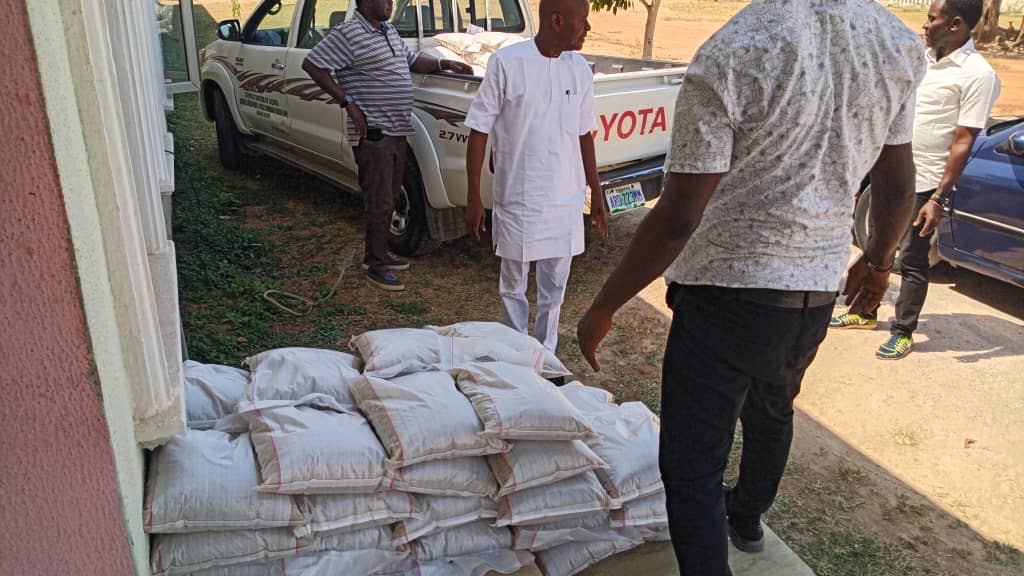


ETP’s food distribution in Jalingo was not a solo mission. The Catholic Diocese of Jalingo, led by Bishop Charles Michael Hanmawa, played a decisive role in ensuring the food reached the displaced. The bishop deployed church vehicles to every IDP cluster in the area, personally instructing parish workers to ensure no widow was left out.
Bishop Hammawa also pledged continued support: “We will assist ETP with any information regarding IDPs in Jalingo,” he assured.
Additionally, the Catholic church under the leadership of the Bishop, made available to ETP, most of its personnel such as
Rev. Fr. Collins Godwin Dossa.
Parish Priest St. Joseph Mayo-Gwoi
Coordinator, Migrants and Refugees Unit Jalingo Diocese.
Rev. Fr. Abraham Sauman.
Parish Priest Holy Family Kofai.
Director, Directorate of Social Communications, Jalingo Diocese.
Mr. Patrick M. Michael
Project Manager
Catholic Diocese of Jalingo, Justice, Development and Peace Commission.
That partnership, American aid and Catholic infrastructure—made the difference for women who had eaten little for days.
Rev. Fr. Collins Godwin Dossa, Parish Priest of St. Joseph Mayo-Gwoi and Coordinator of the Migrants and Refugees Unit of the Jalingo Diocese, gave a stark description of the crisis.
“Most of the women are victims of the Fulani Ethnic Militia in Karim Lamido and Lau Counties,” he told TruthNigeria. “Most of them have been driven off their ancestral lands, their husbands have been killed, and they do not have adequate shelter, blankets, mattresses, or medical care. But the most pressing need is food. As you can see, they are hungry.”
Inside Abuja Phase 2 camp, the desperation is visible. Women sit quietly, heads bowed, holding limp and hungry babies. Many have not slept in a proper room for years—only in empty classrooms or borrowed compounds that offer safety for a few fleeting hours.
“I Waited for My Husband to Return… He Never Did.”
Another widow, Phibi Joshua, has four children and a story that echoes the trauma of hundreds of others.
“One afternoon, after we came back from the farm, my husband said he wanted to mill our maize,” she recalls. “I waited for him to return but he did not. That evening I learned that he was killed by Fulani Ethnic Militia. I never saw him again—not even his body.”
Before the attack, Phibi and her husband farmed a large expanse of land. Their crops fed their family and sustained the local market. Today, the farm is gone. Their home is gone. Their livelihood is gone.
Her four children now sleep on the floor of an open compound owned by a Christian woman who allows displaced families to rest there during the day. At night, they move into an abandoned primary school for shelter.
“All my children are here. They cannot go to school. We have no place to sleep except this compound,” she says quietly.
Warnings Ignored, Lives Lost
Survivors insist that what makes their grief unbearable is the belief that their suffering was preventable.
Phibi Joshua says residents of Katibu village repeatedly warned authorities:
“We reported to the Nigerian Army, the Police, and the State Government that Fulani terrorists were threatening to overrun Katibu, but nobody did anything.”
Her story is corroborated by Yakubu Mshelia, a Federal Government worker and indigene of Karim Lamido.
“Before the attack in Bandawa, I called the Divisional Police Officer and told him Fulani terrorists were going to attack. He did not respond. After many locals were killed, the police did not come, the Army did not deploy, and nobody chased the terrorists away. Many of our villages are now under their control.”
Another indigene of Lau County echoed the same concern, requesting anonymity for safety.
“Fulani terrorists have gradually taken over many rural villages in Jalingo and Taraba North. The state government doesn’t want to get involved. In fact, it is doing everything to suppress news of these attacks.”
For many widows, the silence of the government has deepened their trauma.
Where the State Failed, Faith Stepped In
In the absence of government protection, churches and American missionaries like ETP are filling an urgent humanitarian gap.
At the Abuja Phase 2 distribution, 50 bags of rice was distributed, women lined up with hope in their eyes—hope that a 25-kg bag of rice might buy them two or three more weeks of survival. ETP volunteers moved from camp to camp, checking on malnourished infants and giving reassurances to exhausted mothers.
At the the other camp , another 50 bags of rice was distributed to women and children as well .
ETP’s founder, Judd Saul, has long advocated for international awareness of Christian-targeted violence in central and northern Nigeria. His organization operates in some of the most dangerous territories—bringing food, medicine, and emergency supplies to victims of extremist violence.
What allows ETP to reach these remote camps effectively, however, is the network of the Catholic Church. Parish priests know where displaced families hide. Local catechists speak the languages. Church vehicles navigate roads many agencies avoid.
That partnership, American compassion and Catholic rootedness has become a lifeline.
A Crisis That Demands the World’s Attention
Taraba’s displacement story mirrors a broader humanitarian emergency unfolding across Nigeria: thousands of villages emptied, millions displaced, and countless children growing up without parents, homes, or schools.
For many Americans, these villages are far away. But for the women in Jalingo, help from across the ocean is the only reason their children are eating today.
Standing with her bag of rice balanced on her head, Lami Clarkson whispered a message she hoped Americans would hear:
“Please tell them thank you. We have nothing left but God and the people who remember us.”
As long as the world continues to forget these remote communities, extremists will keep advancing and villages will keep disappearing. But in Jalingo, for one day at least, widows found relief—because strangers thousands of miles away cared enough to act, and because the Catholic Church committed itself to standing with the persecuted.
For the widows of Taraba, that combination of solidarity and compassion remains their last line of hope.
Mike Odeh James and Elisha Ayes are Conflict Reporters For TruthNigeria .