Supply network and ransom negotiations raise questions over Nigeria’s counterinsurgency strategy
Ransom was paid: Locals
By Onibiyo Segun
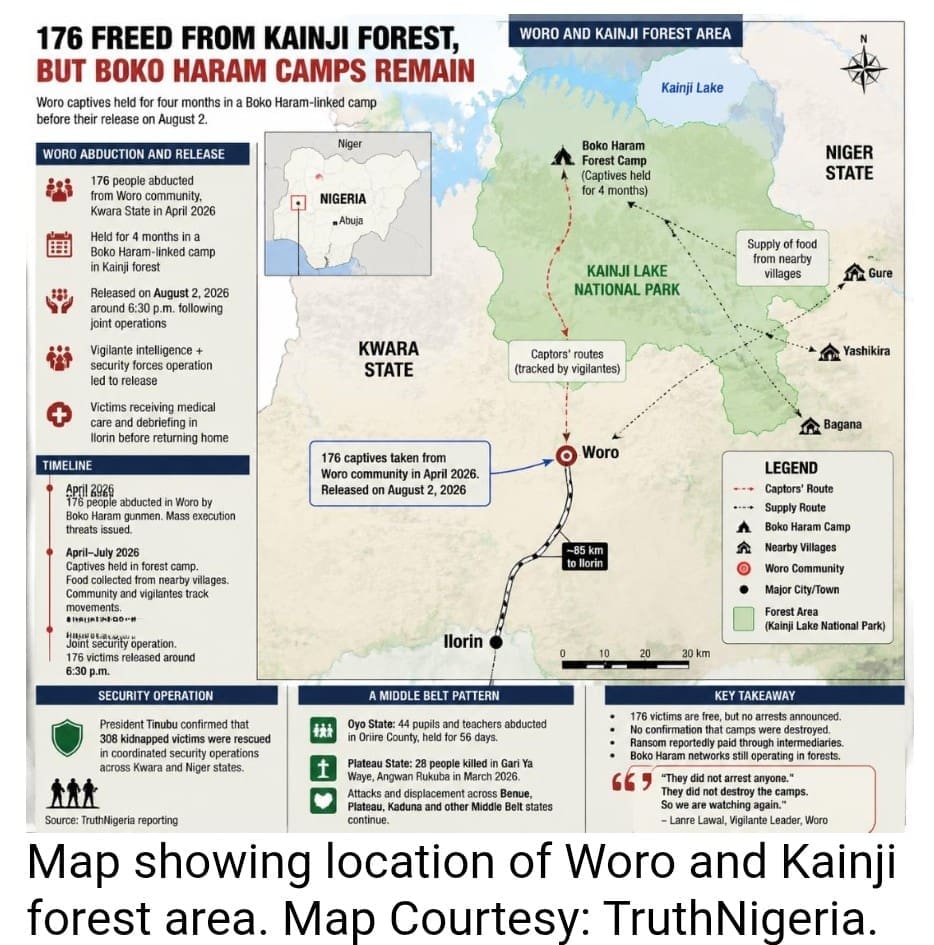
(Ilorin, Kwara State) – Freedom came for 176 people from the Woro community on August 2, but survivors say the network that held them remains active.
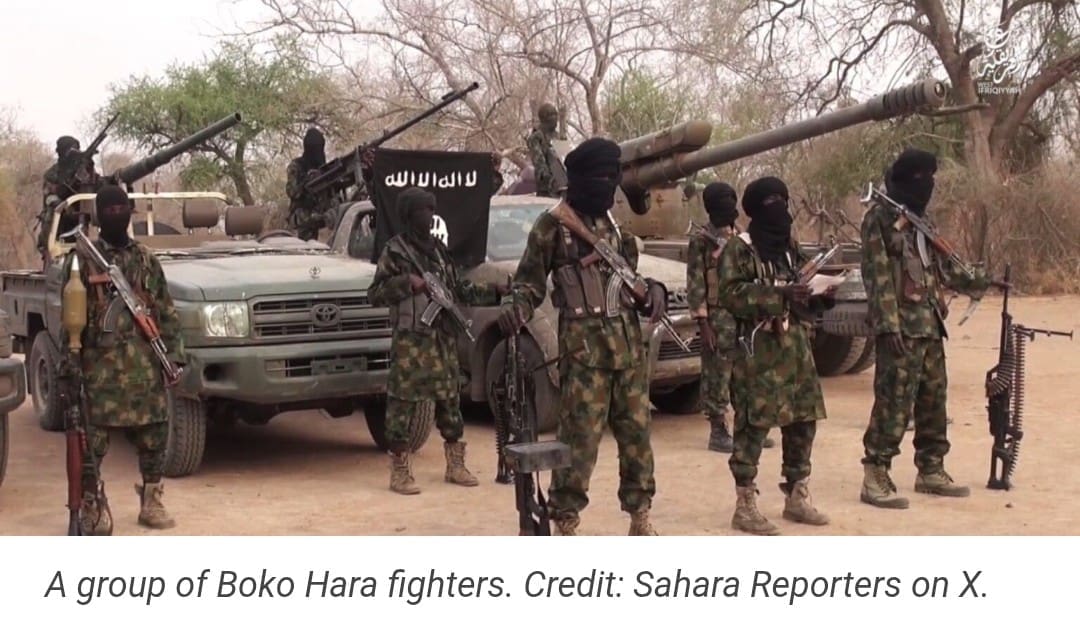
The victims were released around 6:30 p.m. after spending four months inside a forest camp survivors say was controlled by Boko Haram terrorists.
The release ended one of Nigeria’s longest mass kidnappings in 2026, but residents say the bigger question is whether security forces dismantled the group responsible or only recovered the victims. The Nigerian government claims the hostages were “rescued,” yet no perpetrators have been arrested or killed in Kwara State.
Lanre Lawal, a vigilante leader in Woro, said his team tracked the kidnappers before security forces moved into the area.
“For weeks my boys tracked them into Kainji forest. We marked their camps and routes and gave the information to the police and soldiers,” Lawal told TruthNigeria by telephone.
Lawal said the kidnappers operated through organized supply networks.
“They collected food from nearby villages. They appointed couriers who brought supplies specifically for them,” he said.
He added that the captors were confident security forces would not reach them.
“They told us no soldier would come,” Lawal said.
According to Lawal, ransom negotiations later resulted in payment, although he declined to disclose the amount.
“Ransom was later agreed. I can’t disclose how much. But it was paid,” he said.
Chief Oladayo Okunola, a Woro community leader in Kaiama County, Kwara State, whose family was affected by the abduction, gave a different account of the ransom process.
Okunola said families raised ₦155 million to secure the release of the captives, but the kidnappers rejected the money.
“We raised ₦155 million and took it to them, but they refused to accept it, saying it was not enough. We returned with the money,” Okunola told TruthNigeria.
He said Woro is a mixed-faith community where residents from different religious backgrounds were affected by the attack.
The conflicting ransom accounts cited by relatives highlight uncertainty over how the captives were eventually released.
The Kwara State Police Command confirmed the release of 176 victims after security operations involving multiple agencies.
Police spokesman Superintendent Adetokunbo Ojomu said the command worked with other security agencies to reunite the victims with their families.
Authorities did not report arrests or confirm whether camps linked to the kidnappers were destroyed.
TruthNigeria first reported the Feb. 3 mass murder 40 persons and suspected abduction of an undetermined number in Woro on Feb, 5.
President Bola Ahmed Tinubu later said security forces had intensified operations against kidnapping networks, with hundreds of victims rescued through coordinated actions in Kwara and Niger states.
But residents say the test is whether commanders, suppliers and financiers behind the kidnappings are identified.
Mouroof Akani, a security analyst based in Ilorin, said the Woro case demonstrates how kidnapping networks have evolved into organized structures.
Akani warned that rescuing victims without arrests could encourage future attacks.
“Rescue is important because lives are saved. But the bigger task is breaking the structure that makes these kidnappings possible,” he said.
Woro reflects a wider pattern of mass abductions across Nigeria’s Middle Belt, where communities continue to face attacks despite military operations.
Security forces have increased patrols and rescue missions, but residents say arrests of terror commanders and financiers remain limited.
For the families of the 176 victims, freedom brought relief after four months of fear.
But uncertainty remains over whether the kidnapping network has been broken.
“They did not arrest anyone. They did not destroy the camps,” Lawal said. “So we are watching again.”
The 176 victims are free.
The question now is whether those who took them will remain free too.
Onibiyo Segun reports on terrorism and conflict for TruthNigeria.