Burundi’s experience fighting Al‑Shabaab offers intelligence models Nigeria has yet to institutionalize, raising questions about whether cooperation will lead to real change.
By Onibiyo Segun
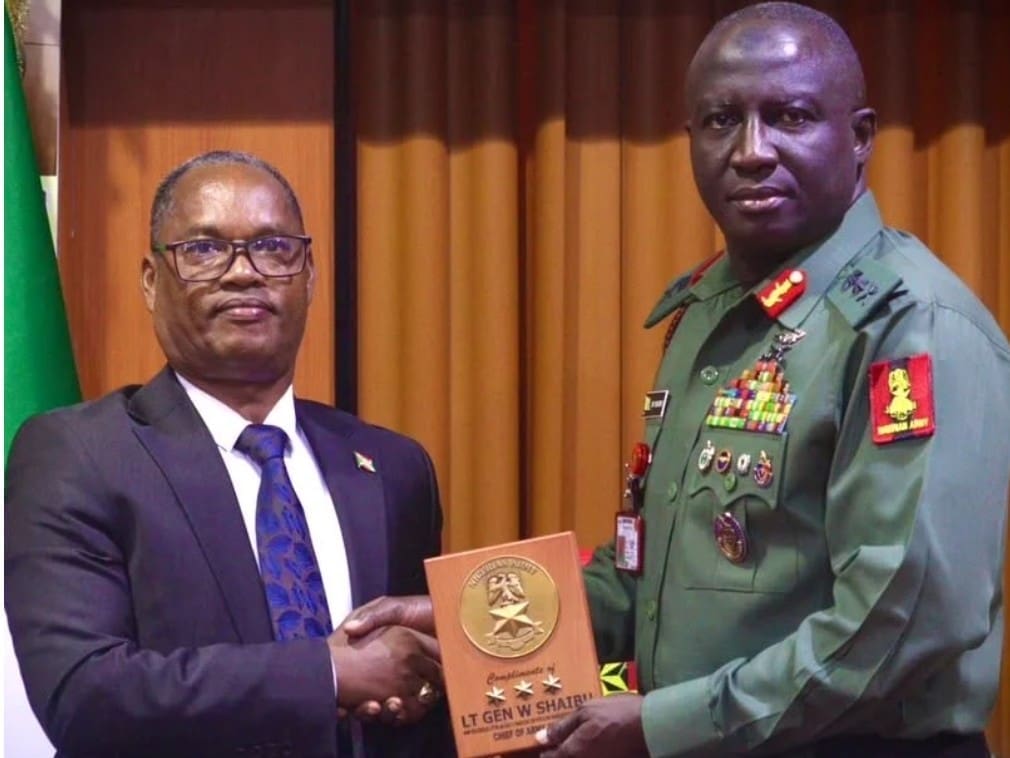
ABUJA, Nigeria — Nigeria is turning to Burundi for battlefield intelligence lessons from a military that has fought Al-Shabaab in Somalia and rebel groups in the Democratic Republic of Congo.
The partnership reflects recognition that Nigeria’s fight against Boko Haram, ISWAP and other armed groups requires more than weapons and troop deployments.
Nigeria and Burundi deepened military cooperation against terrorism as Abuja seeks operational lessons from an African country with experience fighting insurgent groups beyond its borders.
Scott Morgan, an independent security consultant based in Washington, D.C., told TruthNigeria that Burundi’s counterterrorism experience comes mainly from two foreign deployments.
“Burundi has experience in this field by doing two things. First, the country has sent troops to Somalia where they were part of the AU Mission trying to stabilize the country,” Morgan said.
“They have experience dealing with both Al-Shabaab and with some of the smaller militias that are a threat to order in the country.”
Morgan said Burundi has also deployed forces in eastern DR Congo against the Red Tabara rebel group linked to wider regional tensions involving armed groups.
Burundi’s Somalia Lesson: Intelligence Before Firepower

While TruthNigeria could not immediately reach a former Burundian commander involved in Somalia operations, Lagos-based security and counterterrorism expert Dr. Bernard Nelson said Nigeria’s challenge is not a lack of military hardware but weak institutional intelligence systems.
“Burundi learned in Somalia that intelligence, not battalions, wins against Al-Shabaab,” Nelson told TruthNigeria.
“They built small, trusted human-intelligence networks inside communities and protected those sources. Nigeria has not institutionalized that approach. We still conduct operations based on intelligence that may be weeks old.”
“The lesson Nigeria has refused to learn is this: if you cannot map the supply chain – the couriers, motorcycle routes and village collaborators, you will continue rescuing victims without breaking the network,” Nelson said.
According to Nelson, Burundi improved because its commanders were forced to coordinate at battalion level without always depending on air support.
“Nigeria has air power, but it still lacks a fully integrated intelligence system where information from different agencies is fused and acted upon quickly,” Nelson added.
Nigeria’s Intelligence Gap
Major Dele Jerome, a retired Nigerian military officer and counterterrorism expert based in Maiduguri, said Nigeria’s challenge remains gathering, analyzing and acting on reliable battlefield intelligence before terrorist groups strike.
“Nigeria must move from reactive operations to predictive warfare through real-time data fusion, exploitation of captured devices and a central intelligence hub linking security agencies,” Jerome said.
Morgan said intelligence cooperation with Burundi must become permanent rather than occasional.
“Intelligence sharing has to be institutional, not ad-hoc. Nigeria should embed liaison officers with Burundian units that have worked under AFRICOM in Somalia,” he said.
“Burundi already knows how to take US-provided satellite and signals intelligence, push it down to company level, and act within hours,” Morgan explained.
TruthNigeria previously reported on US-Nigeria counterterrorism cooperation involving surveillance, training and intelligence coordination in the Lake Chad Basin.
Lessons For Boko Haram And ISWAP Fight
Morgan said Nigeria should focus on patrol planning, faster response times and better processing of information recovered from terrorist groups.
“Another thing to look for is any improvement in processing information such as cell phones for information about the perpetrators of these attacks,” he said.
Morgan said terrorist groups across Africa survive through mobility and adaptation.
“Whether it’s in Somalia, DR Congo or Nigeria, you have groups that are known for using mobility and adapting to the terrain to their advantage,” he said.
The challenge for Nigeria is whether it can convert intelligence from communities into operations before terrorist groups relocate.
Beyond Another Security Agreement
The partnership also raises questions about whether Nigeria is addressing deeper problems behind repeated terrorist attacks.
Morgan warned that Nigeria must avoid adopting too many foreign military models without creating a unified strategy.
“The downside to this could be having the Nigerian Army trained by too many partners and lead to further confusion in the battlespace,” he said.
Morgan also questioned whether foreign assistance could become a substitute for fixing domestic weaknesses.
“One cynical view could be President Tinubu finding another outside source to do some of the tasks that his own Military refused to do,” he said.
In February 2026, Secretary to the Government of the Federation George Akume linked expanded international cooperation to Nigeria’s security efforts, including intelligence sharing and targeted operations.
The Burundi partnership presents a larger question: can African countries that have fought insurgencies learn from each other and build stronger regional security systems?
For Nigeria, the measure of success will not be the signing of another agreement, but whether intelligence becomes faster action.
“The metric for success here is simple and brutal,” Jerome said. “Can we turn intelligence into action faster than the terrorists can plan their next attack?”
The question is whether Nigeria can transform Burundi’s battlefield experience into operational change or whether the agreement will become another security partnership stronger on paper than on the battlefield.
Onibiyo Segun reports on terrorism and conflict for TruthNigeria.