By Onibiyo Segun
(KADUNA STATE) – For Aisha Markus, the government’s rescue response after the Niger State mosque attack reopened a painful question facing families in Southern Kaduna.
Why do some kidnapping cases trigger immediate national attention while others continue for months with victims and communities waiting?
Markus’ cousin was among Christians abducted during Easter worship services in Ariko and Awon communities in Southern Kaduna State..
“We watch television and hear about rescue efforts for the Niger victims,” Markus told TruthNigeria. “We have been waiting since April. We also want our people to come home.”
The case reflects a wider rural control crisis: armed groups are not only taking victims, but also disrupting farming, education, worship and community life across vulnerable settlements.
Two Kidnapping Crises, One Security Question
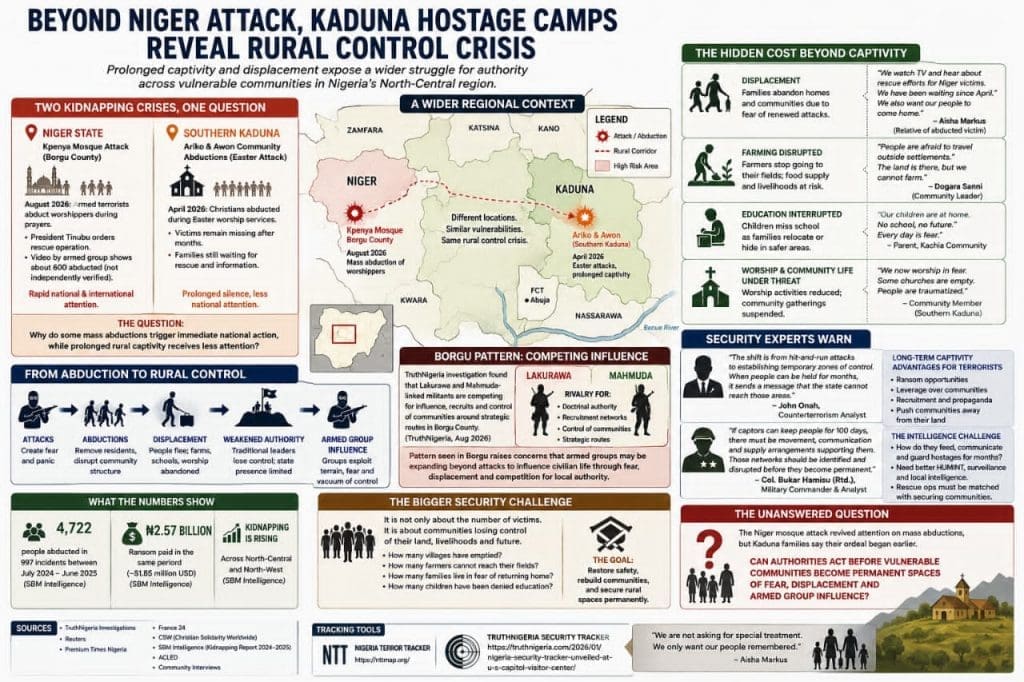
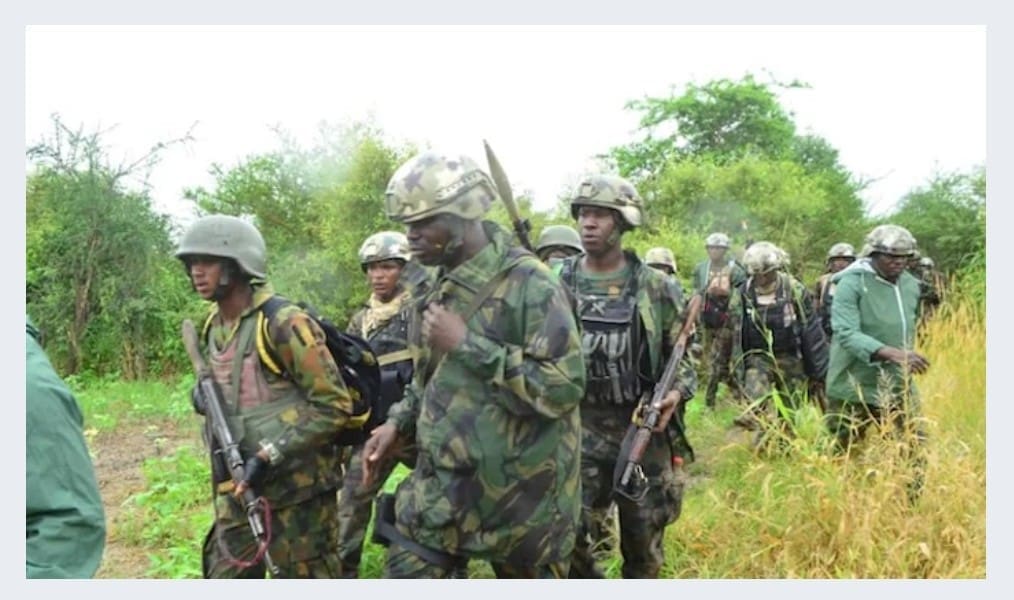
The August attack on Kpenya Mosque in Borgu County, Niger State, triggered a government rescue operation after terrorists abducted worshippers during prayers.
President Bola Tinubu ordered security agencies to rescue the victims after the attack, according to reports.
The incident attracted national and international attention because of the scale of the abduction and the speed of the response.
Reuters reported that a video released by an armed group appeared to show about 600 women, children and older people abducted after the Niger State mosque attack, but the figure has not been independently verified.
In Southern Kaduna, however, families of Ariko and Awon victims say their relatives have remained missing for five months.
The difference has raised a wider security question: Why do some mass abductions trigger immediate national action, while prolonged rural captivity receives less attention?
Some observers question whether Nigeria’s security response is structured around major attacks after they become national headlines? Or alternatively: Was Abuja’s call for action prompted by the religion of the victims? Nearly all of the Borgu hostages were Muslim: their loss prompted Tinubu to send the troops. All of the Kachia area hostages swept up on Easter morning are Christian, and they are starving in the forest after five months.
Hidden Cost Beyond Captivity
Communities around Kachia, Chikun and surrounding mountain settlements have experienced prolonged displacement and fear, with families abandoning farms, children missing school and worship activities reduced, Dogara Sanni told TruthNigeria.
Residents say some families have stopped farming because travelling outside settlements exposes them to danger, while others have relocated temporarily because they fear renewed attacks.
Community leader Buba Audu said armed groups exploit isolated terrain to move victims away from communities.
“When terrorists take people, they disappear into the mountains,” Audu told TruthNigeria.
The questions facing security agencies remain difficult: How do captors sustain food supplies, communicate and maintain guards around hostage camps for months without detection?
TruthNigeria reporting shows a pattern of attacks, abductions, displacement, weakened community authority and expanding armed influence across vulnerable areas.
TruthNigeria’s previous investigation into mosque attacks in Borgu County found that Lakurawa and Mahmuda-linked militants were competing for influence, recruitment networks and control of communities around strategic routes.
The Borgu investigation raised concerns that armed groups may be moving beyond isolated attacks toward influencing civilian spaces through fear, displacement and competition for local authority.
The emerging pattern is clear: attacks create fear, abductions remove residents, displacement weakens community authority and armed groups exploit difficult terrain, limited state presence and slow security response.
The wider concern is that different networks are exploiting similar weaknesses.
Security Experts Warn Of Changing Tactics
“Prolonged hostage situations indicate a change in how armed groups operate”, John Onah, an Abuja-based counterterrorism analyst, told TruthNigeria.
“The shift is from hit-and-run attacks to establishing temporary zones of control,” Onah noted. “When people can be held for months, it sends a message that the state cannot reach those areas.”
Onah went on to say, long-term captivity provides terrorist groups with multiple advantages.
“It creates ransom opportunities, provides leverage and pushes communities away from their land”.
“Terrorist tactics may be similar, but we must separate shared methods from proven links,” Onah explained.
The Intelligence Challenge
“If captors can keep people for 100 days, there must be movement, communication and supply arrangements supporting them,” Colonel Bukar Hamisu (rtd.), a former military commander and security analyst, told TruthNigeria.
“Those networks should be identified and disrupted before they become permanent structures,” Hamisu added.
Hamisu went on to add that security agencies need stronger use of human intelligence, surveillance technology and local community information.
“A rescue strategy without securing the communities victims came from will only produce another cycle of abductions,” Hamisu explained.
Counting Communities, Not Only Victims
Nigeria’s kidnapping crisis is often measured by numbers taken in major attacks, but residents and experts warn the deeper danger is communities slowly emptied as groups expand influence.
How many villages have emptied? How many farmers cannot reach fields or families return home safely after displacement and fear of renewed abductions? The challenge is restoring control.
The Niger mosque attack revived attention on mass abductions, but Kaduna families say their ordeal began earlier.
“We are not asking for special treatment,” Markus told TruthNigeria. “We only want our people remembered.”
The unanswered question facing Nigeria is whether authorities can act before vulnerable communities become permanent spaces of fear, displacement and armed group influence.
Onibiyo Segun reports on terrorism and conflict for TruthNigeria.