By Suleman Ayuba and Onibiyo Segun
(Minna, Niger state) – Mineral-excavation tragedies are putting governors under the scrutiny of public regulators, TruthNigeria has learned.
The Niger State National Security and Defense Corps (NSCDC) commandant has been suspended from his duties following the death of 37 men who died in custody Thursday after being arrested at an illegal mine in Niger State. Meanwhile, a pit collapse in Taraba State killed five miners and sources say as many as 15 may remain trapped.
The deaths came within days of each other but point to the same uncomfortable question: who bears the greatest risk when gold is extracted from Nigeria’s soil, and who ultimately benefits from the trade?
Nigerian media watchdogs, including TheNews Nigeria, have called for the governors of the two states to be held accountable for mass deaths on their watch.
In Niger, 67 suspected illegal miners were detained during enforcement operations around the M.I. Wushishi and Lukoto areas on September 15 and 16.
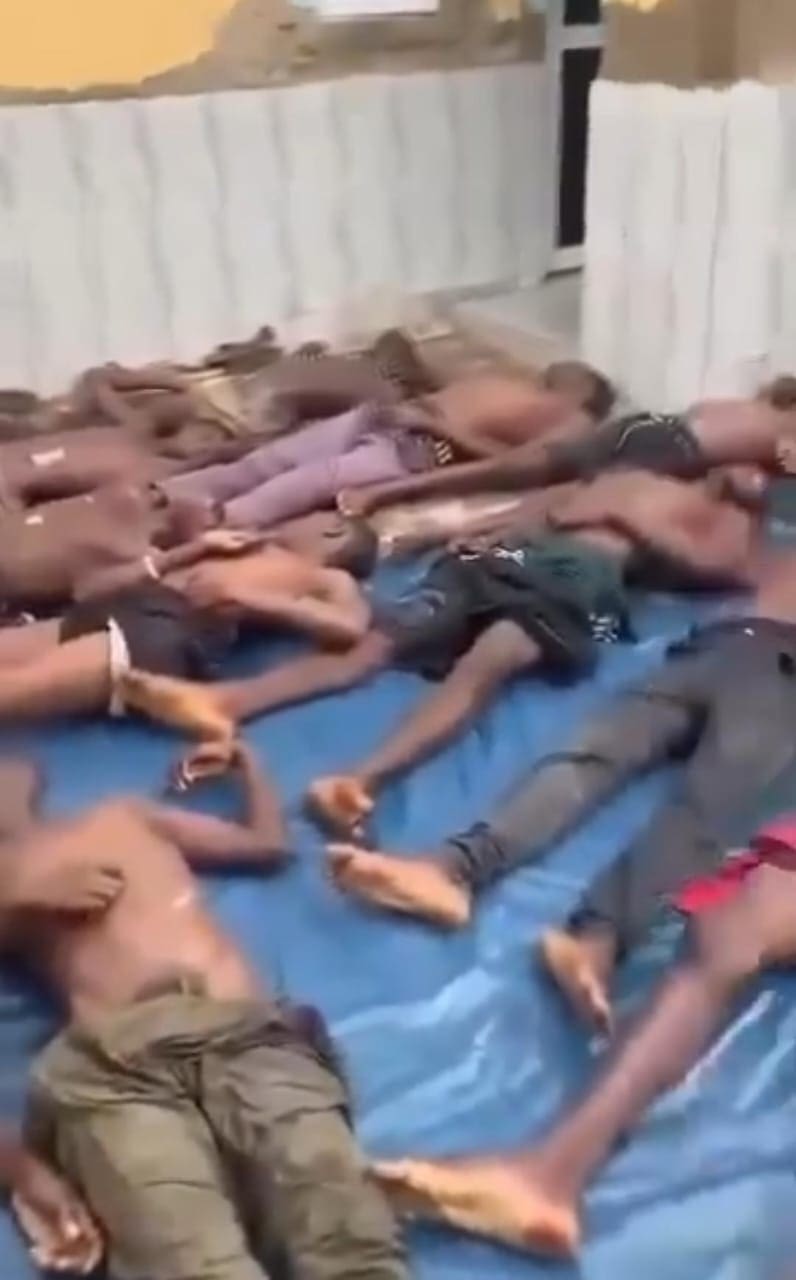
Thirty-seven were later found dead early Sept. 17 according to Governor Mohammed Bago. The men died inside a detention facility administered by the Nigeria Security and Civil Defence Corps (NSCDC) a paramilitary agency that is not a formal unit within the Nigeria Federal Police. Many of the victims were teenagers.
In Taraba, more than 20 people were feared trapped after a mining pit collapsed at Mayo-Kam in Bali County. Five bodies were initially recovered while emergency workers continued searching for others.
The Miner Arrests Before The Deaths
The Niger arrests were part of a government crackdown on mining activities described as illegal. But controversy has risen over whether the arrested men were humanely incarcerated.
“It’s a small holding cell meant for no more than 20–25 people. It was not designed for the number cramped inside,” a security official familiar with the facility told TruthNigeria.
The police declined to comment on their ongoing investigation.
67 Men, One Holding Cell
“These boys are not criminals; they are our sons seeking daily pay because there are no farms or jobs. NSCDC packed 66 into one cell without water, toilets or air. This was punishment of the poor,” Alhaji Usman Kagara told TruthNigeria.
“We received 37 bodies without medical screening records. The NSCDC facility had no resident medical personnel. We saw severe dehydration and exhaustion, with no water or sanitation. This was not a disease outbreak,” a senior medical officer at General Hospital Minna told TruthNigeria
When The Cell Turned Deadly
NSCDC officers initially cited a suspected disease outbreak but later said the cause remained unestablished, pending medical and laboratory examinations.
The governor said possible suffocation caused by overcrowding and exposure to hazardous substances associated with mining were among the possibilities being considered.
“Tests are yet to be conducted on the victims to determine the cause of death”, Dr. Suleiman Idris Kuta, a forensic pathologist in Minna
“But from what I observed, it shows exhaustion. But until a proper autopsy is carried out, we cannot ascertain the cause of death for sure,” Kuta added.
The Federal Government and Niger State have since ordered investigations. President Bola Tinubu ordered a full and transparent investigation, including examination of the arrests, detention conditions, medical attention and events leading to the deaths.
Another Mining Disaster In Taraba

While Niger was counting its dead, another mining tragedy was unfolding hundreds of kilometres away.
At Mayo-Kam in Bali County, a mining pit collapsed, trapping miners underground. Residents said more than 20 people could have been inside.
Police spokesman Superintendent of Police (SP) Victor Mshelizah said five bodies had been recovered and emergency operations were continuing.
For local residents, however, the danger was not new.
Titus Ishaya, a resident, told TruthNigeria that “warnings had been issued weeks before the collapse and that more than 10 miners had already died in earlier mining accidents in the area.”
Luka Markus, a local farmer, said “government restrictions often exist on paper while wealthy patrons continue supplying equipment and financing mining operations.”
The result, residents said, is a trade in which the poorest workers enter the most dangerous pits while those controlling the money remain removed from the physical risks.
Following The Gold Upward
“What you see in Niger and Taraba is one value chain. The crackdown targets artisanal miners, while financiers supplying excavators, diesel and gold markets remain untouched. Mining is banned on paper, yet pits remain open. Until sponsors are arrested, bodies will keep piling up,” Dr. Maikail Bida, a public affairs analyst, told TruthNigeria. That question also surrounds the ownership of some mining operations.
Malam Babawo Tudun Nasera, whose 17-year-old brother Salim died in custody, alleged that a mine connected to the Niger arrests belonged to former military Head of State General Ibrahim Badamasi Babangida and that mining continued despite enforcement closures.
The allegation has not been independently established.
Babangida, through representative Dr. Danladi Umar Abdulhameed, expressed condolences and denied ownership or connection to the mine. Investigators must establish ownership through licenses, cadastral records, company records, equipment, financial transactions and gold-buying records.
Questions Demanding Answers
“Investigators must establish how the miners died through independent medical and forensic evidence and document their arrests, detention and treatment. Anything less reduces 37 deaths to a statistic. Whatever their legal status, they entered custody alive,” Dr. Dauda Yakoob, a mining cadastre expert has said.
Analysts say investigators must establish how the miners died and whether preventable failures contributed. Families deserve answers about what happened, who was responsible, and whether anyone failed them.
Sulieman Ayuba and Onibiyo Segun report on terrorism and conflict for TruthNigeria.