Family of Nasir El-Rufai Files Lawsuit for Libel
By Mike Odeh James
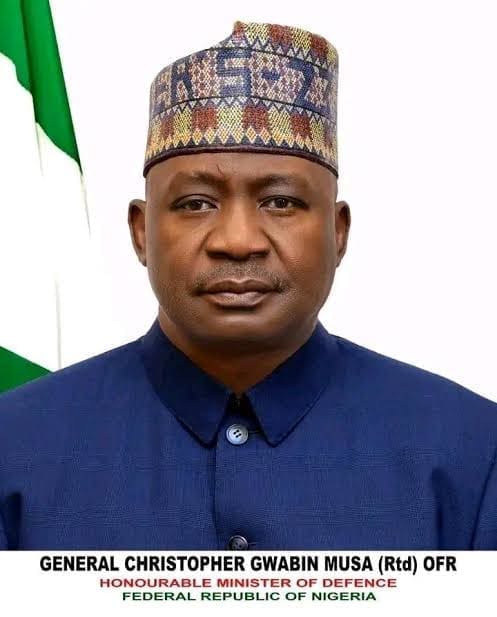
(Kaduna) On September 3, retired General Christopher Musa told Channels Television’s Politics Today that Nasir El-Rufai’s eight years as Kaduna governor were toxic.
“He divided the state into two,” leaving southerners unable to settle in the north, Musa noted on a national television
Asked whether Southern Kaduna was still unhappy with the former governor, Musa said his people could never be happy with a man who “deliberately planned for the killing of our people.” He also accused El-Rufai of paying bandits and bulldozing homes of people he quarrelled with.
Musa offered no documents on air. That omission became the story.
The Family Answers With a Lawsuit
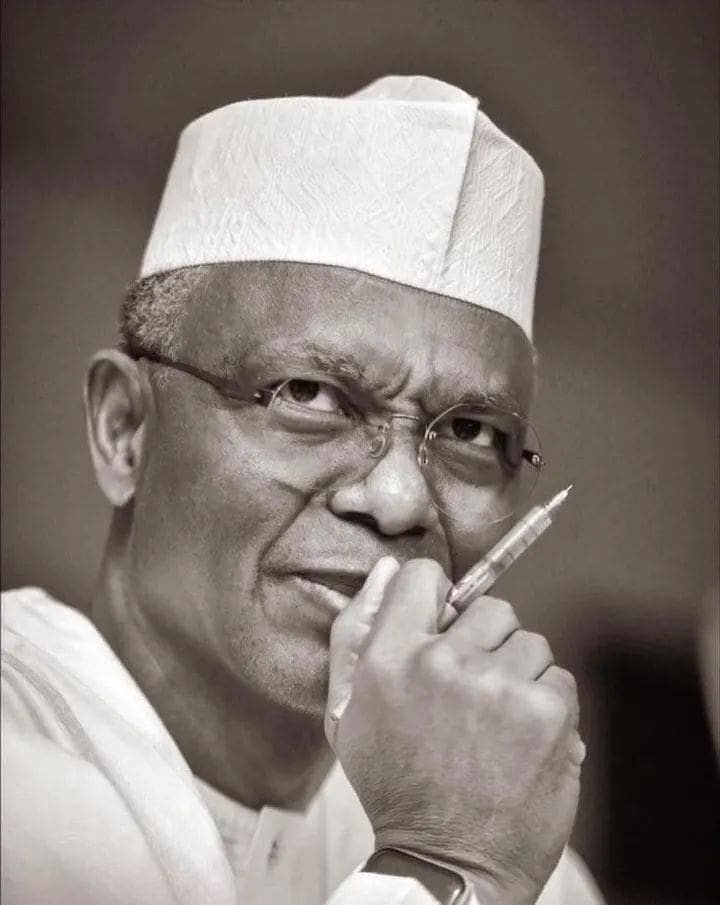
On September 7, El-Rufai’s eldest son, Rep. Mohammed Bello El-Rufai, gave Musa seven days to produce evidence or retract.
The same day, the Chambers of Ubong Akpan filed a letter before action demanding a retraction, apology, preservation of evidence and about $6.7 million as a proposed settlement. The family called the allegation grave and said it was made “without the presentation of any evidence.”
Musa has not responded publicly.
Christian and Muslim leaders in Southern Kaduna, including the Council of Imams, urged dialogue. Former sports minister Solomon Dalung defended El-Rufai and demanded proof, and retired Major General Danjuma Ali-Keffi, a former commander of the army’s 1 Division, told Musa that generals should stay out of politics. The Middle Belt Forum went the other way, backing the minister and demanding an International Criminal Court investigation of El-Rufai.
The Deputy Who Was Replaced
El-Rufai took office in 2015 with Barnabas Bala, known as Bantex, a Christian architect from Kaura county, as deputy. The pairing followed a convention observed since 1999: a Muslim governor and Christian deputy.
In 2019, El-Rufai replaced Bantex with Dr. Hadiza Balarabe, a Muslim woman from Sanga in Southern Kaduna. Bantex had chosen to contest the Kaduna South Senate seat and lost. He died in 2021.
El-Rufai defended the choice as a breakthrough for women and a minority group. His Southern Kaduna critics saw the change differently: the last Christian position at the top of the state was gone.
The Recording
Days before leaving office in May 2023, El-Rufai addressed Islamic clerics in Kaduna in Hausa, with his successor, Uba Sani, seated beside him. The recording later leaked.
He said the Muslim-Muslim ticket had come to stay, argued that most non-Muslims had not voted for his party and asked, “why should I give them the deputy position?” He described Kaduna as the model reproduced nationally in the Tinubu-Shettima ticket.
Catholic priests’ associations from the Kaduna, Kafanchan and Zaria dioceses called the remarks a “declaration of Islamic political supremacism.”
The Count
The International Centre for Investigative Reporting puts deaths from armed violence in Kaduna State at more than 3,600 between 2015 and 2022, including 1,432 killed between May 2015 and the end of 2019.
In Atyap land, the Atyap Community Development Association counted 518 people killed, 18 villages burned and 20 displaced since 2017. Twenty-four hours before leaving office, El-Rufai proscribed the association..
The Southern Kaduna Peoples Union counted 148 communities attacked and 200,000 people displaced in six years, almost all by Fulani Ethnic Militia (FEM).
Kajuru county in 2019 illustrates the pattern.
On February 15, 2019 El-Rufai announced that 66 Fulani had been killed, then raised the figure to 130. His police commissioner said the figures pre-empted the investigation.
The February 10 attack on Ungwan Barde, where 11 Adara people died, was left out. Eleven Adara leaders were subsequently arrested.
Further attacks followed: Karamai on February 26, with 38 killed; Ungwan Barde again on March 10, with 17 killed; and Inkirimi and Dogonnoma on March 11, with 52 killed. The Adara Development Association counted 118 deaths in five weeks.
In 2024, Justice Hauwa’u Buhari of the Federal High Court in Kaduna ruled the detention of the Adara leaders unlawful and awarded them about $600,000.
Nobody has been tried for the killings.
What He Has Already Admitted
In December 2016, El-Rufai said his government had traced transhumant Fulani to Niger, Cameroon, Chad, Mali and Senegal, told them a Fulani governor was now in office and paid some compensation for cattle to stop attacks.
Those remarks confirm payments. They do not, by themselves, prove Musa’s heavier claim that El-Rufai planned killings — the allegation at the centre of the legal demand for retraction.
El-Rufai has been in custody since February 16 on financial charges arising from a state assembly finding of about $282 million mismanaged, and a separate charge involving alleged interception of the national security adviser’s phone ncalls.
Why Washington Should Care
Nigeria was designated a Country of Particular Concern on October 31, 2025, and House appropriators travelled to the Middle Belt in February. Advocates are lobbying to keep the designation beyond its one-year mark.
The evidence Musa was asked to produce is not in Washington. It is in Kaduna’s security files, compensation ledgers and the graves at Karamai.
A Political Signal?
According to David Onyilokwu Idah, Director of the International Human Rights Commission in Abuja,
“Musa’s intervention comes at a politically consequential moment: about four months before Nigeria’s January 2027 presidential election.
” With other prominent northern power brokers such as Bello Bodejo and former Attorney General of the Federation Shehu Malmi facing pressure, his public repudiation of El-Rufai raises a larger question: is the political influence of the herder constituency being recalibrated ahead of Tinubu’s reelection campaign?”, Idah asked
Musa has not said this is his purpose, and the evidence does not establish such a realignment.
But, according to Idah, his intervention raises a question that may become harder to ignore as the election approaches: whether some northern networks that helped shape Nigeria’s political order are losing influence, being repositioned or being pushed further from the centre of the governing coalition.
Mike Odeh James is an award-winning journalist and he writes for TruthNigeria .