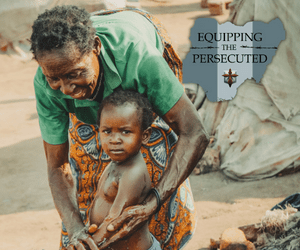
Just miles from Nigeria’s Presidential Villa, displaced families in Wassa IDP camp face childbirth deaths, zero medical staff, and soaring infant mortality — mirroring a nationwide collapse of healthcare for millions of displaced Nigerians.
By Mary Kiara
ABUJA, Nigeria — Seven children died at an Abuja displacement camp in a single month from childbirth complications, exposing a deadly healthcare vacuum just miles from the nation’s seat of power.
Across Nigeria’s displacement camps, from rural Benue to the urban periphery of Abuja, mothers and children are dying not just from bullets and machetes, but from a calculated abandonment of state care.
Disclosures from frontline Christian workers reveal an unfolding humanitarian emergency at the Wassa Internally Displaced Persons (IDP) camp in the nation’s capital.
“We’ve been losing a lot of our people here. In July alone, we lost about seven children because of childbirth. We are begging the government because we are helpless here,” Reverend Stephen Mesheda, a Catholic priest providing pastoral care at Christ the King Catholic Church within the Wassa camp, stated of the July fatalities.
The Institutional Vacuum in the Federal Capital
Just miles from the Presidential Villa, the Wassa settlement possesses neither a functional hospital nor healthcare center. With zero state-funded doctors or nurses present, displaced residents are forced to rely entirely on unregulated private chemists for emergency prescriptions.
“There is no hospital here. Not even primary healthcare here. I don’t see anyone around. The only ones we have around are just maybe private chemists,” Reverend Mesheda said.
This institutional vacuum forces pregnant women to undergo labor without sterile tools or skilled birth attendants, driving up infant mortality.
Medical screenings by volunteer teams revealed that the crisis is compounded by deplorable environmental conditions.
“Many of the poor are having malaria parasites. Malaria is caused by mosquitoes, and it is mostly prevalent in damp, waterlogged, and unclean areas,” Sr. Mary Okoro, Coordinator of the Daughters of Charity Hospital in Abuja said.
“A lot of children with malnutrition, that means they are not feeding well and they lack blood.”
A National Pattern of Abandonment: From Abuja to Benue
While the deaths at Wassa highlight acute neglect in the Federal Capital Territory, data from humanitarian monitors demonstrates a nationwide systemic failure.
Across Nigeria’s core displacement zones, particularly in Benue State, the agricultural epicenter of the Middle Belt, over 500,000 displaced persons face identical state abandonment.
Official statistical dashboards compiled by the United Nations and the International Organization for Migration (IOM) place Nigeria’s verified internal displacement footprint at upwards of 3.68 million individuals, over 85 percent of whom were driven from their ancestral lands by insurgency and rural terrorism.
International human rights investigations by Amnesty international have documented that formal state and mobile clinics originally commissioned to serve camps are systematically shutting down.
In Benue camps such as Anyiim in Logo County, the closure of medical facilities established by international aid groups has left thousands without access to free medicine.
In May 2026, Mimidoo Gemade watched her six-month-old daughter die at the Anyiin IDP camp after health workers outside the camp demanded payment for a life-saving blood transfusion.
“I had no money, and there was nobody to help me,” she told TruthNigeria.
“I went traditional, hoping that the agbo (herbal concoction) will work, but it didn’t. I lost my child.”
“If the clinic within the camp had still been operational, my child would be alive today.”
Pregnant residents face identical barriers, often unable to afford routine antenatal care or required supplements.
Naomi Teryen, a pregnant 32-year-old displaced resident at Anyiin, recalled arriving at a government primary healthcare facility with only $0.71, only to be turned away because she could not afford the full consultation and medication fees.
“I don’t have a job, and there is no proper healthcare service in this camp,” Naomi Teryen told TruthNigeria.
Medical experts warn that structural failures across camps lead directly to late-stage obstetrical complications, pushing maternal mortality ratios in displacement settings to double national averages.
Research published in the National Library of Medicine reports a maternal mortality ratio of 1,189 deaths per 100,000 live births in Benue State health facilities.
A 2021 PhD thesis by Fatima Mahmood Jibirilla at Walden University, states that women living in IDP camps in Nigeria “have a higher risk of maternal death than women living in their homes.”
“There are no special arrangements for pregnant women in IDP and refugee camps in Nigeria. There are poor antenatal services that are inadequate to detect and address likely pregnancy-related complications and other signs of poor pregnancy outcomes.”
The Call for Accountability
Despite nominal subnational initiatives, such as the Benue State government’s launch of farmers’ cooperatives and action plans under Governor Rev. Fr. Hyacinth Alia, displaced residents report seeing no tangible relief in their daily survival.
Frontline clergy emphasize that the health emergency is entirely within the power of federal and state authorities to resolve if political will exists.
“If they want, they can do it, and it’s not something that is above their capability. So we beg the government… let them help us by building hospitals here for us,” Rev. Mesheda stated.
Mary Kiara reports on Terrorism for TruthNigeria.