A widow is the only witness. Her family has petitioned police. No arrests have been announced.
By Mike Odeh James
KADUNA, Nigeria — Magaji Simon Fedelis was clubbed and hacked to death on Oct. 14, 2026, while crossing the River Kaduna with his wife, who says the attackers announced they had come for Christians.
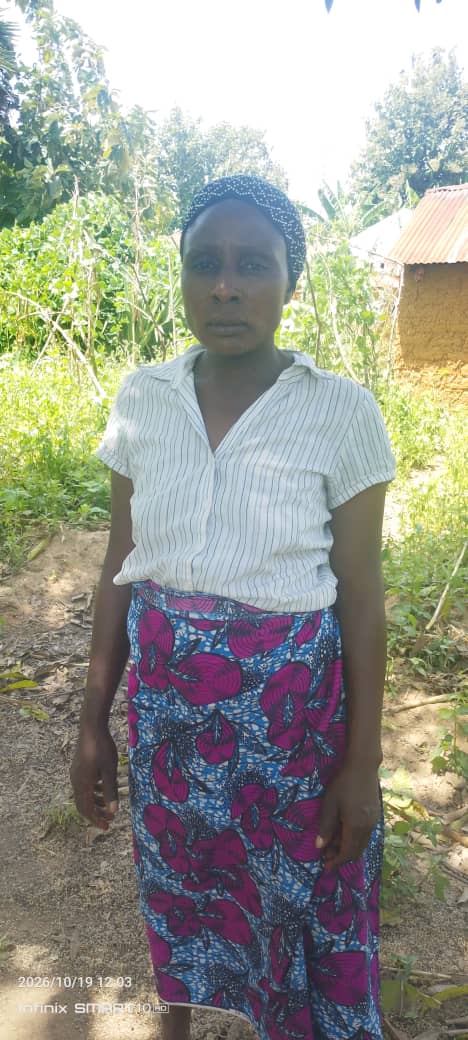
The couple were walking home from Ganawuri Market that evening. To shorten the trip, they took a creek-bed path to the river crossing in Bondong District, near the Hi Atu area of Kaura County, on the eastern edge of Southern Kaduna.
As they crossed, four heavily armed men burst from the forest and blocked their way. Patricia Magaji who spoke exclusively to truthNigeria identified them as Fulani.
“The first thing they did was use a big club on my husband’s skull. Then they used the machetes in their hands to drive me into the forest,” Patricia said.
Two more men emerged from the trees and stood guard over her, she said, while the others rejoined the attack on her husband.
“I could hear them cutting my husband, and him trying to resist them,” she said.
When the killing was done, the attackers came back to her. They told her they had come “to deal with Christians,” she said. Then they fled.
A Village Under Siege

Magaji and his wife are devout Christians, well known in Tsokbuwanu Village, according to Elder Simon Achi, 70, a longtime resident.
“This year alone, Fulanis who are not indigenous to our lands have been threatening us, grazing freely on our farms, destroying our crops and even stopping our women from going to the farms,” Achi said.
Residents describe a pattern familiar across the Middle Belt: herds driven deliberately onto planted fields, farmers warned off their own land, and complaints that go nowhere. Rights groups attribute such attacks to the Fulani Ethnic Militia (FEM), armed herder networks that have displaced Christian farming communities across Kaduna, Plateau and Benue states.
James Usman Moses, a Tsokbuwanu farmer, said he lost an entire season’s work.
“Everything I labored for this farming season, worth 20 million naira, has been destroyed by Fulanis who pushed their cows onto my farmland,” Moses said, a loss of roughly $13,500.
“Even when we try to complain, the police and local authorities refuse to do anything. Worst of all, the Fulani have threatened to kill us on the farm,” he said.
‘Farming Is Prohibited‘
The threat is not new in Kaura County. A year earlier, on Saturday, Oct. 25, 2025, three brothers from Gizagwai went to farm at Ashui, also known as Yadi, near Government Secondary School Manchok, according to a community account circulated locally.
Around 11 a.m., one brother left ahead of the others. Two young Fulani Terrorists armed with machetes then confronted the remaining two and told them farming in the area was now prohibited, the account said.
The attackers cut one brother with a machete until he collapsed. The other fought back until the assailants fled. The injured man was revived and taken to a hospital for treatment.
The incident was never reported to authorities or posted publicly. Asked why, residents said people are exhausted and no longer trust anyone in authority, according to the account.
That silence is part of the story. In rural Southern Kaduna, attacks that injure rather than kill rarely reach police logs, let alone national headlines. A declaration that farmers may not farm amounts to a slow eviction, enforced one machete at a time.
A Family Turns to the Law
Magaji’s family say it will petition the police, asking for an investigation and the arrest of his killers.
“We are law-abiding citizens and will not take the law into our own hands. We seek justice through lawful authorities,” the family wrote.
The Kaduna State Police Command was contacted for comment on Oct. 18 and Oct. 19, 2026. No response had been received as of publication. No arrests had been announced for the River Kaduna crossing killing.
The appeal reflects a choice many Middle Belt families now weigh: trust a security system that has delivered few prosecutions for FEM attacks, or take up their own defense and risk arrest themselves. Across the region, community vigilantes have been detained by the military and the Department of State Services while attackers remain free.
Nigeria remains under a U.S. Country of Particular Concern designation for severe violations of religious freedom, and members of Congress have cited killings of Christian farmers in the Middle Belt as grounds for keeping it. Attacks like the one at the River Kaduna crossing, where victims say they were targeted explicitly for their faith, sit at the center of that debate.
One Witness
Kaura County borders Plateau State, and its farming communities have endured repeated armed attacks on farmers, travelers and villagers moving between markets and fields.
The River Kaduna crossing is a routine route for Bondong residents. Since Oct. 14, 2026, it has also been a crime scene. No arrests have been announced.
For now, the woman who watched her husband die is the case’s only witness. Her family fears that makes her a target.
Mike Odeh James is an award-winning journalist and he writes for TruthNigeria.