Refugee agency seeks $11.4 million in emergency aid for Nigeria, Niger and Benin
By Ekani Olikita
(Abuja), Nigeria- Nearly 64,000 Nigerians have fled escalating violence in northern Nigeria and sought refuge in neighbouring Niger since January 2026, the United Nations refugee agency has disclosed.
The United Nations High Commissioner for Refugees (UNHCR) warned on Tuesday, November 10, that the growing displacement was worsening an already critical humanitarian and protection crisis across Niger, Nigeria and Benin.

UNHCR Director of External Relations Dominique Isabelle Hyde disclosed the figures during a press briefing at the Palais des Nations in Geneva, Switzerland.
According to the agency, Niger already hosts more than 500,000 refugees and asylum-seekers, including approximately 327,500 Nigerians, in addition to people displaced within its borders.
Several hundred other Nigerians have reportedly crossed into neighbouring Benin to escape attacks by Islamist militants and armed criminal groups.
Most of the new arrivals in Niger have settled in Diffa, southeastern Niger, and Tahoua, western Niger, both bordering Nigeria.
In October alone, approximately 1,200 people crossed into Diffa, while another 3,400 arrived in Tahoua.
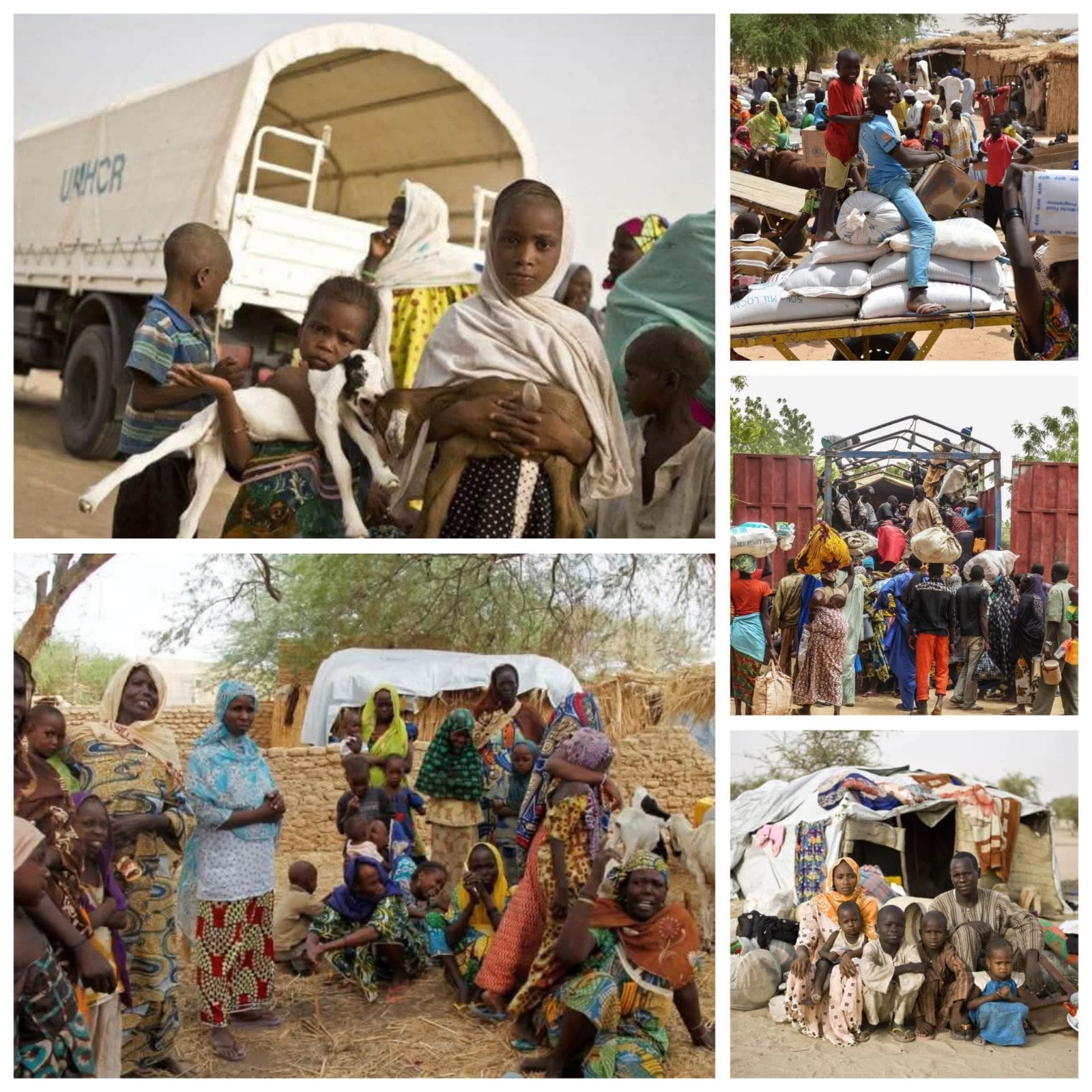
Diffa has received more than 23,000 Nigerian refugees since the beginning of the year, over two-thirds of them children.
UNHCR said many families were living in makeshift shelters with inadequate protection from harsh weather, limited access to clean drinking water and little access to healthcare and education.
Some refugee women reportedly walk several kilometres daily to fetch water for their families, while humanitarian organizations are recording rising malnutrition, respiratory infections and poor sanitation.
The protection situation is equally alarming. Only about five percent of Nigerian refugees who arrived in Niger this year have been formally registered, leaving thousands without the documentation needed to access humanitarian assistance and essential public services.
Education is another major challenge, particularly for Nigerian children arriving from an English-language education system in communities where schools and transitional learning facilities are unavailable.
The humanitarian emergency is further complicated by insecurity and climate-related pressures in Niger.
UNHCR reported that more than 70 percent of the security incidents recorded in Niger this year occurred in Diffa, while drought and irregular rainfall have severely affected agricultural production and pastureland.
Grain production is expected to be insufficient in approximately 700 of the area’s 1,000 villages, while an estimated 70 percent of pastureland has been lost.
Despite the pressure, Nigerien authorities and host communities have continued providing support, including allocating land for temporary refugee shelters.
However, UNHCR warned that their capacity to accommodate the growing population was becoming increasingly overstretched.
The agency is seeking $11.4 million to strengthen humanitarian assistance and longer-term solutions across Niger, Nigeria and Benin. Of this amount, $2 million is earmarked for immediate needs, including food, clean water, shelter, healthcare, refugee registration and protection.
Security Analysts warn of regional consequences
The growing refugee movement has renewed concerns among Nigerian security experts about the humanitarian and national security implications of persistent violence in the country’s northern and central regions.
Capt Jato Abu, a retired Military Officer and a Counterterrorism Expert based in Abuja, Nigeria in an interview with TruthNigeria said, the increasing number of Nigerians crossing international borders demonstrated that insecurity had become a major displacement crisis requiring urgent government intervention.
“When citizens are forced to abandon their ancestral communities and seek safety in neighbouring countries, it is a clear indication that the security challenge has gone beyond ordinary criminal activity.
“The government must strengthen intelligence gathering, improve border security and dismantle the operational networks of armed groups. Military operations must also be accompanied by effective protection of vulnerable communities and sustainable resettlement programmes”, Jato told TruthNigeria
Mambo Ochoche, Deputy Superintendent of Police (rtd), who specialized in Internal Conflict Displacement, warned that prolonged displacement could create additional security and economic pressures across the West African region.
“Mass displacement does not end when people cross an international border. It creates additional humanitarian, economic and security responsibilities for host countries. If the situation is not addressed, vulnerable populations may become increasingly exposed to exploitation, human trafficking and recruitment by criminal networks,” Mambo told TruthNigeria
FG launches mobile services for 3.7 million displaced Nigerians
Meanwhile, Nigeria’s Federal Government, UNHCR and the German government have launched a mobile service delivery initiative targeting approximately 3.7 million internally displaced Nigerians and other vulnerable populations facing difficulties accessing essential identification and government services, according to Vanguard.
The initiative, tagged One Motor, Plenty Services, involves 10 specially equipped mobile centres handed over to selected state governments.
The centres will provide National Identification Numbers (NIN), birth certificates, Bank Verification Numbers (BVN), SIM registration, bank account opening and enrolment in the National Social Register.
The intervention was designed to address the exclusion of vulnerable Nigerians who cannot access essential services because of displacement, distance and lack of identification, according to Dr. Bernard Doro, Minister of Humanitarian Affairs and Poverty Reduction, at the handover ceremony in Abuja on Wednesday, November 11,
“For millions of our citizens, the problem is not merely that services do not exist. The problem is that those services most often do not reach them,” Doro said.
He explained that identity documentation was essential for accessing government assistance, economic opportunities and social protection.
“ID is the first step out of poverty. You cannot be paid if you cannot be identified. You cannot be protected if you cannot be counted,” he added.
The minister urged beneficiary states to ensure the vehicles were properly maintained, secured and regularly deployed to displaced communities rather than abandoned in government facilities.
“These units must not sit in government car parks. They must be fueled, maintained, secured and kept on the road, reaching the last camp, the last village and the last family,” he said.
The initiative is expected to improve access to government services, strengthen social inclusion and help displaced Nigerians regain access to essential documentation.
Ekani Olikita is a conflict reporter for TruthNigeria.