A New U.S. bill targets Nigeria’s lobbyists
By Mary Kiara
BENUE, Nigeria – Sukpu Tony sleeps on a bare classroom floor at the Roman Catholic Mission (RCM) Primary School in Agagbe, Benue State; a stark symbol of terrorism that persists one year after the United States redesignated Nigeria a Country of Particular Concern (CPC) over religious freedom violations.
The Christian farmer ended up in the makeshift camp after surviving a raid on his village, Mbapupuu, by armed terrorists who killed members of his family and left him with a life-altering leg injury.
“They thought I was dead but a Good Samaritan carried me to safety,” Tony told TruthNigeria.
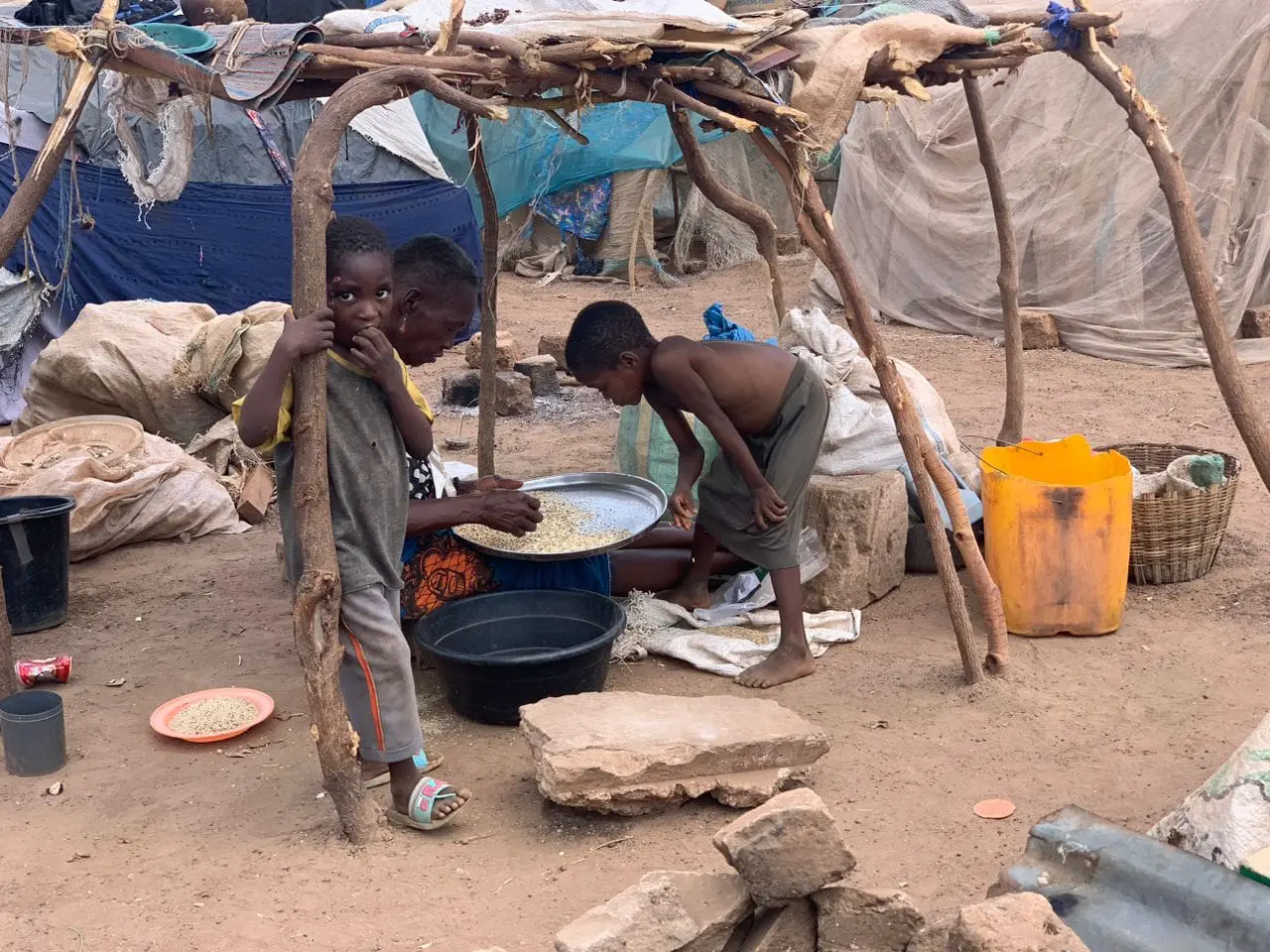
Today, thousands of other survivors remain trapped in overcrowded facilities where classrooms double as sleeping quarters for the displaced and learning spaces for children.
“We lack food and healthcare. We are suffering. Villages are still being attacked; Nigeria does not have a hold on terrorism,” he said.
The Lobbying Push Versus Reality on the Ground
The U.S. and Nigeria have had high-level talks through a Joint Working Group led by U.S. Under Secretary of State Allison Hooker, and Nigerian National Security Adviser Nuhu Ribadu; focusing on counterterrorism and the protection of vulnerable groups.
Yet, critics argue that Abuja’s response has focused heavily on public relations rather than tangible security outcomes.
Records from government platforms show that Abuja disbursed $365,000 in December 2025 for emergency strategic communications to counter reports of Christian persecution.
Concurrently, Foreign Agents Registration Act (FARA) documents reveal that the Nigerian government retained a U.S. lobbying firm via a contract totaling $9 million USD annually to maintain U.S. support and manage its international image.
In response, U.S. Representative Barry Moore introduced H.R. 10939, a bill seeking to ban compensated lobbying on behalf of the Nigerian government while the CPC designation remains active.
“For too long, the Nigerian government has paid high-priced lobbyists in Washington to cover up the persecution of Christians while doing little to stop it. This bill will end that,” Rep. Moore said.
The Daily Struggle of Nigeria’s Displaced
On the ground, the humanitarian reality stands in sharp contrast to official narratives.
According to the UN Refugee Agency (UNHCR), more than 464,000 people remain displaced across Benue State.
Helen, a Christian mother of five displaced from Tse Adekule, described the harrowing conditions inside an IDP camp after her husband and relatives were killed by Islamist militants.
“The camp place is too congested, and our children are always falling sick,” Helen told TruthNigeria.
“We rely on a nearby stream shared with cattle for drinking water. It is not meant for human beings, but we have no choice,” she said.
The Benue State Emergency Management Agency says the overlap is managed. “Some of their children also attend the school, so there is no disturbance,” agency information officer Terma Ager told reporters.
Experts Call for Accountability
Experts argue that genuine progress requires measurable metrics rather than opaque security spending.
“Looking at preventive measures, particularly deradicalization projects, there is a stark lack of transparency in Nigeria compared to the UK, Australia, or Canada, where public data, metrics, and testimonials are readily available,” Temitope Olodo, a preventive terrorism consultant, told TruthNigeria.
“The government should track specific performance indices: the country’s ranking in kidnapping (e.g., moving from number 10 in 2023 to number 25, showing improved intelligence). An increase in formal convictions for violent extremists (e.g., scaling up from 200 convictions in 2023 to 1,000 by 2026).”
“Heading into the 2027 elections, no citizens should remain stuck in IDP camps; the government should be able to track a massive drop in IDP populations and out-of-school children as tangible proof of recovery,” Olodo added.
Meanwhile, religious and civil leaders emphasize that local accountability and community vigilance are vital.
Assessing the real-world impact of the designation, Reverend Joseph Hayab, Chairman of the Northern Christian Association, told TruthNigeria: “President Trump’s declaration woke our government up from slumber. They acted like there were no attacks, but the moment Trump tweeted, officials started running helter-skelter, running to America and meeting State Department officials.”
“The energy president Tinubu has put into traveling should be directed to correcting the wrongs in Nigeria. The progress in eradicating terrorism would have been bigger than what we are having at the moment.”
Rev. Hayab named incidents inside the year: “Sheikh Jingil openly insulted Christians. Nobody arrested him. The attacks persist, but because of fear many people are not voicing out.”
Speaking on the need for localized vigilance and structural reform, Dr. Sylvester Okere, a counterterrorism expert emphasized that community accountability must match international diplomacy.
“Those carrying out the genocidal attacks; terrorists and kidnappers, have wives, children and family members. They came from somewhere, someone knows them. So, why is the government not being open? Identify these people and let it be over and done with.”
With at least 64 civilians and local defenders killed across Nigeria in the final week of October 2026 alone, Northern leaders Rev. Hayab say there’s a need for visible progress.
“If the progress is not good enough, then people are still in danger.”
Mary Kiara reports on Terrorism and Religious Freedom Policy for TruthNigeria.