As the gunfire fades, the same government that left Christian villages to burn now sends soldiers to die for votes it may never earn.
By Suleman Ayuba
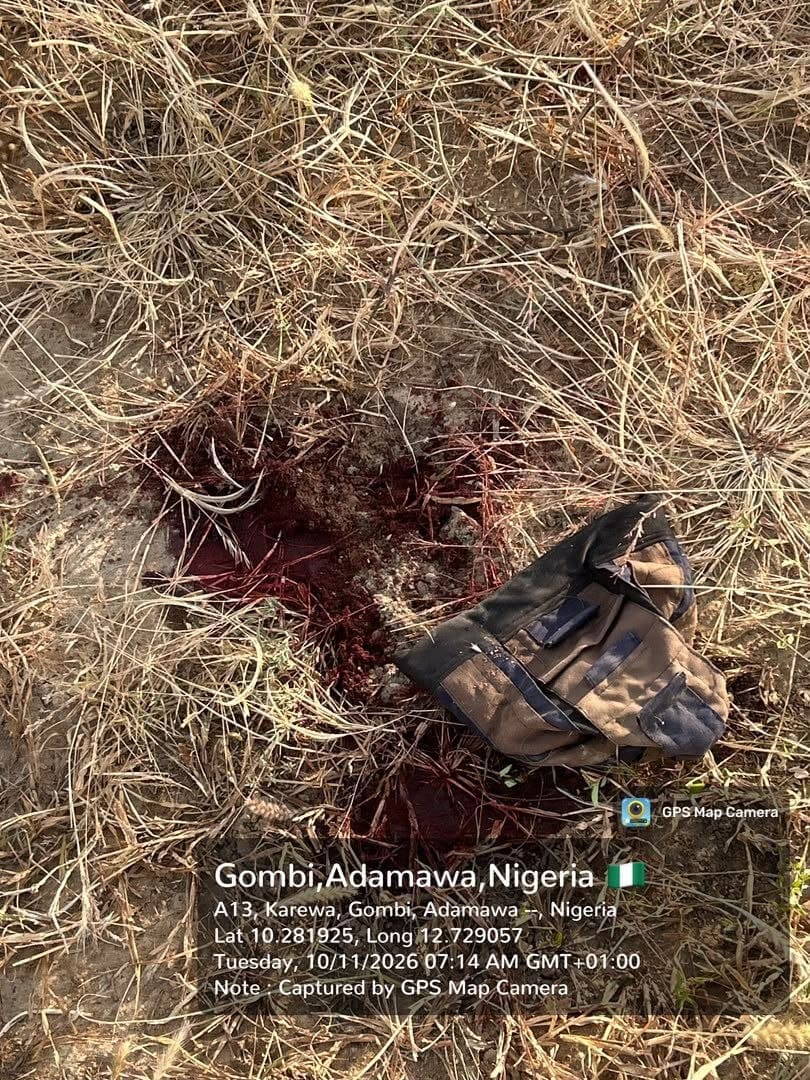
ADAMAWA STATE — Troops of Sector 4, Joint Task Force (Northeast), Operation HADIN KAI, have again broken a Boko Haram/ISWAP assault on the Christian farming belt, yet indigenous residents of the devastated Graha (Garaha) community say the response remains too little and too late. On 8 November 2026 soldiers at Zangula Kilba Junction in Gombi Local Government Area overwhelmed an attempted attack, neutralising two terrorists and recovering two AK-47 rifles, four magazines, 115 rounds of ammunition, empty links, two cases of locally fabricated explosives and other items. The following day troops in Mubi South freed three kidnapped civilians, including Mrs Happiness Dama Dauda, and recovered produce belonging to farmers who had fled.
The action feels calculated. “They come only when the votes are close,” Daniel Mamza, an indigenous Christian farmer from Graha County, told TruthNigeria. “Our houses are still ash. Our churches are still rubble. We buried our people with our own hands and no one rebuilt a single wall. They need our votes so they send soldiers to look strong. We want our homes and our churches back—not promises Mamza told TruthNigeria.”
“The soldiers are trying. Many of them are dying for us. But the government sends them with empty hands and then forbids them to move until an order arrives—and the order never comes. So, they wait in the open while the terrorists move freely. We watch good men die because someone in Yola or Abuja will not give the word,” Sarah Adamu, also displaced from the same communities, added.

A counterinsurgency analyst who is also a security personnel that is familiar with the Northeast theatre told TruthNigeria anonymously because he was not authorised to speak said, The latest operations show improved tactical responsiveness but expose deeper structural weaknesses.
“Neutralising two fighters and recovering explosives at Zangula Kilba is a clear short-term success,” the analyst said. “It disrupts immediate plans and demonstrates that Sector 4 can react when intelligence or a distress call arrives. However, the pattern of waiting for higher orders before proactive movement, combined with persistent logistics shortfalls, continues to leave both troops and Christian communities vulnerable between engagements. Until the political leadership prioritises sustained presence and rapid decision-making over episodic reactions, he said these gains will remain temporary.”
These engagements occurred on the corridor local clergy had warned was next.
In mid-October Reverend Manasseh Mbafe, CAN Secretary for Hong Local Government Area, told TruthNigeria that Boko Haram had destroyed more than 100 Christian houses in Graha and was advancing toward Gombi. Mbafe called it “a systematic and calculated genocide against indigenous Christians,” noting eight communities already emptied were “100 percent Christian.” An EYN church was levelled on 8 October and the 232 Battalion outpost in Garaha-Mojili was overrun on 30 September.
In August 2026 suspected Boko Haram fighters attacked Gaya-Dlang in Hong LGA, killing a police inspector and seven civilians, abducting four girls , looting shops and burning houses. Hong LGA Chairman Aliyu Saad Yerima confirmed the eight deaths.
The August Gaya-Dlang repeated attacks forced Christian farmers to abandon their fields. In April ISWAP claimed responsibility for twin assaults that killed around 30 people in and near the nearly 100 percent Christian community of Guyaku, where churches were burned. BusinessDay has reported multiple military successes in the axis, including earlier neutralisations of terrorists, yet residents say reconstruction of destroyed Christian homes and places of worship has not begun.
Operation HADIN KAI’s 10 November statement emphasised continued patrols to deny terrorists freedom of action, according to a press statement from the military.
For the Christian farmers of Graha and Gaya, however, the temporary halt does not restore what has been lost. A security expert monitoring the Adamawa front noted that “the recovery of explosives and the rescue of hostages demonstrate operational competence, but the absence of a clear hold-and-rebuild phase after each clearance allows the same groups to return. Political calculations around elections appear to shape the tempo more than a consistent counterinsurgency plan.” Daniel Mamza’s demand for rebuilt houses and churches, and Sarah Adamu’s account of soldiers left waiting for orders, point to this deeper failure. Whether pressure will last long enough for families to return remains unanswered in a landscape documented as being systematically emptied.
Suleman Ayuba conflict reporter for TruthNigeria.