Judd Saul Named the Towns – the Attacks Came Anyway
By Mike Odeh James
(KADUNA CITY) In early December last year, Judd Saul named the Nigerian towns he said militia gunmen would hit at Christmas. Days later, the killings began.
At a Washington roundtable, the Iowa missionary warned that fighters were massing along the Plateau-Nasarawa and Nasarawa-Benue borders. He named their targets: Riyom, Bokkos, Agatu and Kafanchan.
On the night of Dec. 16, 2025, gunmen stormed a mining site at Ratoso, in Plateau State’s Barkin Ladi County next door to Riyom, and shot 12 young Christian miners dead. By Christmas, at least 20 Christians had been killed across Benue and Plateau. Nigerian authorities had ignored the warning, International Christian Concern reported.
Man Behind the Alerts
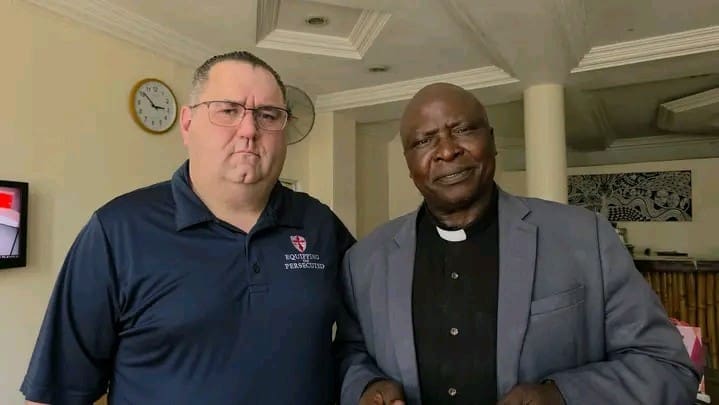
Saul first came to Nigeria in 2011, a documentary filmmaker on a mission trip with his grandfather, Duane Wessels. He kept coming back, three or four times a year, leaving his wife and five children in Iowa. In 2019 he founded Equipping the Persecuted (ETP), which delivers terror alerts, food, medicine and shelter to Christian communities, and publishes TruthNigeria.
“I have walked through the ruins of burned Christian villages, buried victims of terrorist attacks, comforted widows and orphans, and witnessed firsthand the unimaginable suffering of Christians who have been abandoned by those responsible for protecting them,” Saul said.
Where the Killing Happens
Nigeria, Africa’s most populous nation, is roughly split between a mostly Muslim north and a mostly Christian south. The Middle Belt is the band of states between them, including Benue, Plateau and southern Kaduna. There, mostly Christian farming villages sit alongside mostly Muslim Fulani herders.
“We have got to quit calling it the farmer-herder clash,” Saul said.
Land disputes are real, he concedes. But grazing quarrels do not explain coordinated night raids, burned churches and whole Christian communities driven off land they never get back. His target is not the Fulani people, most of whom are peaceful herders and traders. It is the Fulani Ethnic Militia (FEM), armed Islamist networks operating in Northcentral and Northwestern states and in Northeastern states Boko Haram (Western Learning Forbidden) and the Islamic State West Africa Province (ISWAP).
Counting the Dead
“Between Jan. 1 and Sept. 8, we documented at least 4,216 Christians who were killed for their faith in Nigeria. That is nearly 17 people killed every day, or one murder every 86 minutes,” Saul wrote in the Washington Examiner, citing ETP’s own tracking.
Independent monitors point the same way. Open Doors’ 2026 World Watch List found that 3,490 of the 4,849 Christians killed for their faith worldwide died in Nigeria, about 72%.
A six-year study by the Observatory of Religious Freedom in Africa counted 22,835 Christian civilians killed against 10,519 Muslims. It found the FEM killed more civilians than Boko Haram and ISWAP combined, which is the core of Saul’s argument.
Prevention, Not Just Relief
“Our Terror Alerts give Christians a chance to survive that they would not otherwise have. But warning people is not enough. The killing has to stop,” Saul said.
“Too much of our response to Nigeria has become a cycle: an attack, a heartbreaking appeal, a wave of donations, and then the next attack. But relief does not end persecution. It only manages it,” he said.
Answering the Doubters
Abuja insists that terrorists kill Nigerians of every faith. Writers in Current Affairs call the genocide charge a cover for fights over land and minerals. In September, a BBC Africa Eye documentary, “Nigeria: Faith, Fear and Fake News,” questioned the genocide narrative.
“The BBC went to Nigeria looking for ‘fake news’ and found mass graves, burned churches, murdered families and Christian survivors … It is sanitizing slaughter,” Saul said.
Even analysts wary of the genocide label concede the core facts. “These facts must neither be minimized nor explained away,” Oge Onubogu of the Center for Strategic and International Studies told Congress on Nov. 12.
The Washington Front
On Oct. 31, 2025, President Donald Trump designated Nigeria a Country of Particular Concern. On Christmas Day, U.S. forces struck fighters it believed were Islamic State targets in Sokoto State, in the Northwest, far from the Middle Belt villages Saul had warned about. The strike didn’t target the Fulani Ethnic Militia (FEM) that kill the lion’s share of vulnerable Christians.
“We don’t need another congressional hearing to tell us that Christians are being slaughtered. We need concrete action to stop it,” he said.
His demands: Name the killings correctly, confront the FEM and those enabling it, fund early warning and village protection, and help Christians return safely to their ancestral homes.
“Trump has an opportunity to do something historic for persecuted Christians in Nigeria. But that will require listening to the people who actually know what is happening on the ground,” Saul said.
“The facts don’t lie. The dead bodies don’t lie,” he said.
Editor’s note: TruthNigeria is published by Equipping the Persecuted, which Judd Saul founded.
Mike Odeh James is an award-winning journalist who reports for TruthNigeria.