An Effort to Vindicate Washington’s Hard Line?
By Mike Odeh and Suleman Ayuba
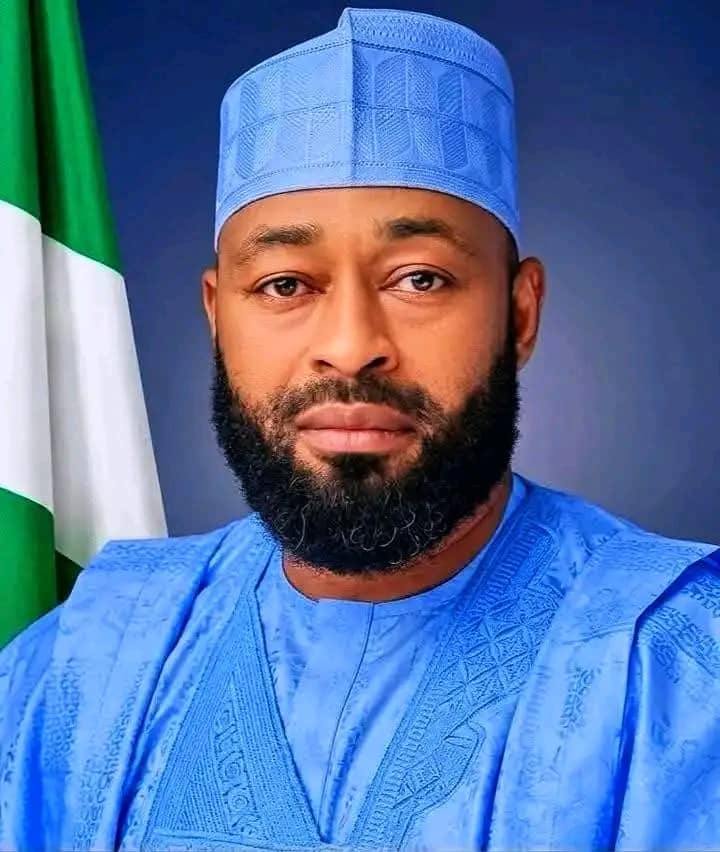
(Abuja) Niger State Governor Umaru Bago fired every Fulani traditional ruler in his state Friday, accusing the chiefs of shielding kidnappers and terrorists tormenting their communities across the state on July 17. The governor replaced them with village chiefs, re-designating them as Hakimi or Dakacin Fulani.
The Fulani tribe is one of Nigeria’s largest, with up to 10 million members. (Radicalized Fulani criminal gangs frequently have been linked to kidnapping and mass murders.)
The sweeping July 18 order, delivered on video Saturday in the north-central Nigerian state, stripped multiple Fulani district heads known as “Ardos” (chiefs) of their positions of authority in the boldest move yet by any governor against traditional structures long accused of enabling violence by Fulani Ethnic Militia (FEM) violence.
The purge landed barely 48 hours after the U.S. House of Representatives approved a funding bill to withhold 100% aid to Nigeria over the killing of Christians — timing that thrusts Bago’s gamble into the center of an escalating confrontation between Washington and Abuja.
The governor’s action validates the claim of human rights advocates who say that Fulani terrorists are driving the death and destruction consuming the Middle Belt.
‘Complicit in the Bloodshed’
Bago told the assembled chiefs to their faces that he could no longer trust them to keep the peace. The breaking point, according to accounts of the meeting, was a pattern the governor said he could no longer ignore: freed kidnapping victims kept identifying Fulani individuals as their abductors.
Bago concluded that the traditional rulers knew exactly who the criminals in their domains were — and chose to protect them rather than hand them to security agencies. That silence, he reportedly told them, made them complicit in the bloodshed engulfing the state.
The governor also pointed to a dangerous cross-border dimension: Fulani relatives and armed allies streaming in from neighboring countries to reinforce local fights, turning village disputes into bloody tribal wars with mounting death tolls.
Bago saved his sharpest words for land racketeering. He accused certain title holders of illegally selling land, blamed those deals for recent killings in Rafi County, and froze all land transactions in parts of Kagara with immediate effect.
His message was blunt: traditional rulers exist to prevent violence, assist security agencies, and protect every resident regardless of tribe. Those who failed forfeited their thrones. Replacements have already been named.
The Numbers Washington Ignored
The governor’s charge is backed by the hardest data yet compiled. In a 105-page, six-year study released June 30, the Observatory for Religious Freedom in Africa (ORFA) documented 79,323 people killed in terror-related violence in Nigeria between 2020 and 2025 — and found Fulani terror groups responsible for 44 percent of all civilian deaths, four times the combined toll of Boko Haram and Islamic State West Africa Province (ISWAP). The ISIS-linked insurgents attacks accounted for just 12 percent of civilian deaths.
When the search is refined by the term, “Christian victims,” the Fulani militia’s share climbs to 53 percent, with 28,551 Christians killed — dying at 4.4 times the rate of Muslims.
“The Western preoccupation with Boko Haram is, at best, misleading,” Frans Vierhout, a senior research analyst at ORFA, told TruthNigeria.
Yet, for years, American counterterrorism policy fixated on the jihadist groups while the deadlier network killed unnoticed — a blind spot Bago’s purge now makes impossible to sustain.
A Furious Washington Was Already Moving
Bago acted as a storm was gathering across the Atlantic. On July 15, the House adopted an amendment by Rep. Gregory Steube of Florida withholding 100 percent of U.S. assistance to Nigeria until its government takes effective steps against the violence, then passed the fiscal 2027 State Department spending bill 217-209.
The vote ratified a turn from the White House that began in 2025, when Trump redesignated Nigeria a Country of Particular Concern over violence against Christians and later authorized a missile strike on Nigerian territory on Christmas Day.
Against that backdrop, a sitting northern governor publicly naming Fulani networks as the engine of kidnapping, killing and land seizure amounts to what Washington has demanded and Abuja has resisted: an admission from inside Nigeria’s own political establishment.
‘No Amount of Appeasement Would Make Them Stop’– Expert
“The governor’s action validates the assertion that Fulani Ethnic Militia are truly responsible for the killings, kidnapping and land grabbing in the Middle Belt and other states of the country,” said David Onyilokwu Idah of the International Human Rights Commission, Abuja.
The move, Idah said, sends a direct message to Governor Hyacinth Alia of Benue State. “While we are not stereotyping Fulanis, there is a high level of cooperation between who we call moderate Fulanis and the violent ones,” Idah said, adding: “In fact, the line is so blurry because Fulanis who are supposed to be speaking out against the activities of the Fulani Terrorists are actually defending them.”
“Hence, the Benue State Government should note that no amount of appeasement or pampering would make the Fulani Ethnic Militia stop attacking Benue State,” Idah said. “The only solution is to confront them using the Army, police or Civil Defence Corps,” he added.
Will Washington Reward — and Watch Niger State?
“Governor Bago has a valid point regarding the removal of the tribal chiefs, although it does have the optics of collective punishment,” said Scott Morgan, a Washington, D.C.-based security consultant. “Not only is it a precedent that other governors could follow — it makes one wonder why other governors are not willing to take such action.”
“This will be seen in a positive light in many parts of Washington,” Morgan said, though not without skeptics. “Some will argue that Governor Bago took this action to show people in Washington that he is a serious player in the upcoming elections.”
“Niger State will be the focus of intelligence analysts to see how the Fulani react to this move. There will be a reaction,” Morgan warned. “Will Aso Rock encourage other governors to take similar action? That is another paramount question.”
Beyond attack statistics, Morgan said analysts should watch the surrenders. “We could also watch how many militants either surrender to the authorities or are taken into custody. It will be seen as a sign that the governor is being taken seriously.”
Mike Odeh James and Suleman Ayuba are conflict reporters for TruthNigeria.