Four new divisions placed directly on the killing fields confirm what officials long dismissed as “clashes”: the region is now treated as an active combat theater.
By Mike Odeh James
ABUJA — “I am leaving Akpachi and heading to Otukpo because this is the third time Akpachi has been attacked by Fulani Ethnic Militia,” Philomena Agaji Onyilokwu told TruthNigeria, one hand steadying the bag on her head as the motorcycle carrying her pulled onto the road. Then she was gone — one of scores fleeing Akpachi that morning, all running from the Fulani Ethnic Militia for the third time.
In nearby Otukpo Nobi, the Fulani Terrorists had already shown what awaits villages left undefended. They struck the Christian farming community and killed at least 18 residents, and survivors told TruthNigeria what survivors always say in Benue: the military was nowhere to be found — not during the attack, and not in the days of warning before it.
“Before the Yelewata massacre in Benue’s Guma county, credible intelligence circulated that an attack was imminent. No reinforcements came. The warnings were correct, and the Federal Government was warned, yet it did nothing. The graves confirm it,” said Franc Utoo, an official of Equipping the Persecuted, a U.S. based humanitarian organization.
What Tinubu Approved
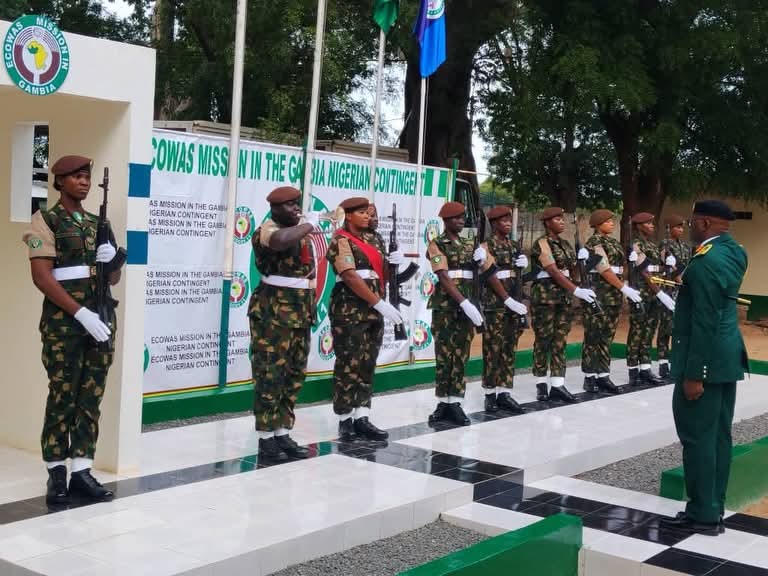
On July 23, the government gave its answer — in soldiers. Tinubu approved the expansion of the Nigerian Army from eight divisions to 12 and the recruitment of 28,000 additional personnel, in a statement signed by presidential spokesman Bayo Onanuga.
The four new divisional headquarters will occupy Makurdi, Ilorin, Jalingo, and Benin City, rolling out in two phases: the 5th, 9th, and 10th divisions operational by September, and the 83rd Division in Benin City by December. The presidency says the restructuring will decentralize command, strengthen border security, and improve response times.
Explainer: Why Divisions Matter
An army division is a major operational command coordinating thousands of troops across a wide area. A divisional headquarters lets commanders deploy forces rapidly and coordinate intelligence locally, rather than waiting on distant regional commands. Analysts note that where governments place new divisions reveals where they expect sustained combat — not temporary deployments.
The Map Speaks
“Makurdi is the capital of Benue — home to Yelwata, Otukpo Nobi, Akpachi, and the seized Idoma villages of Otukpo county. Jalingo is the capital of Taraba, where Takum, Donga, and Wukari counties have bled for years. Ilorin anchors Kwara, the western gate of the Middle Belt, where the kidnapping economy and militia raids have spilled across the Kogi and Niger borders. Three of four new divisions are planted squarely on the killing fields,” said Adakole Adam, a security analyst with Adamson Security Consultancy in Takum.
The confession implicates the whole region. Benue and Taraba get their divisions. Plateau — Bokkos, Mangu, Barkin Ladi — fall within the belt the new formations must reinforce, as do Nasarawa, Kogi, Niger, Kwara, and southern Kaduna’s Kajuru and Kachia counties, with the Federal Capital Territory’s rural fringe not exempt. Eight states and the seat of government itself: that is the true size of the territory Nigeria has quietly reclassified from “clashes” to combat zone.
Bases Are Not Protection
Until last week, Benue and Taraba had no divisional headquarters at all — the nearest formations sat far from communities under nightly threat. That is why Yelwata’s warnings went unanswered, and why Philomena is fleeing for the third time. Residents doubt the new map changes that.
“Most of the army bases will be in the capitals, and soldiers may not be deployed to the forests, bushes, and interior where the terrorists are camped,” Agaba Idabi, a resident of Otukpo Icho, told TruthNigeria.
How Washington Drew the Map
The expansion did not happen in a vacuum. President Donald Trump redesignated Nigeria a Country of Particular Concern on October 31, 2025, over severe violations of religious freedom, and followed the designation with missile strikes in northern Nigeria. By January 22, Abuja and Washington had inaugurated a joint working group on counterterrorism cooperation, and a February report from U.S. House committees, citing more than 7,000 Christian deaths in 2025, urged sustained American pressure.
“Due to the pressure on Tinubu to curb the killings of Christians and deploy more soldiers to the Middle Belt, Tinubu is now creating more army divisions,” Utoo said.
“Reacting to a larger crisis is indeed a serious response. Increasing the Army by 4 Divisions is also an admission that the current state of the Army is not adequate to handle the current challenges,” said Scott Morgan, a Washington DC based security analyst. “The US should assist the Nigerian Army where it is needed, not just in the Northeast.”
Morgan noted that American help carries conditions. The Leahy Law bars U.S. military assistance to any foreign unit the State Department verifies has committed gross human rights abuses, with the Secretary of State required to report such abuses to Congress.
An Army Previously Overwhelmed
“The recruiting of 28,000 more men into the Army, the recruitment of Forest Guards, and the proposed state police showed that Nigeria’s military, which previously stood below 450,000, is clearly understrength. If the killings of Middle Belters are to stop, Nigeria must have up to one million men under arms — and most must come from the Middle Belt and Southern states,” Utoo cautioned.
Whether the new divisions mark a turning point for Nigeria’s one-sided civil war –
or merely acknowledgement of neglect – will be measured not by maps or announcements, but by whether Philomena Agaji Onyilokwu can finally go home — and stay.
Mike Odeh James is an award-winning reporter for TruthNigeria