Massad Boulos’s shift collapses Abuja’s long‑running denial campaign as U.S. pressure intensifies over Middle Belt massacres.
By Mary Kiara
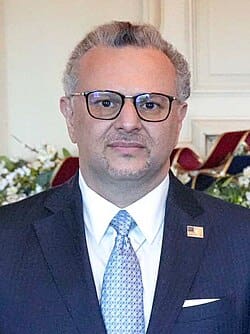
(Lagos) – U.S. Presidential Adviser Massad Boulos has acknowledged that ongoing violence against Christian communities in Nigeria’s Middle Belt is “intolerable,” collapsing Abuja’s campaign to deny targeted religious persecution.
“The ongoing violence against Christian communities and other vulnerable populations in Nigeria’s Middle Belt is intolerable,” Boulos stated in a public release on X.
“The United States remains committed to partnering with Nigeria to combat terrorism and violent extremism and to ensure that all Nigerians can live and worship freely, without fear of persecution or violence,” he wrote.
A Stark Policy Reversal
The statement marks an about face for Boulos.
In October 2025, he dismissed reports of anti-Christian targeted killings as “misguided” claims inconsistent with reality.
“People of all religions and of all tribes are dying… Boko Haram and ISIS are killing more Muslims than more Christians,” Boulos said.
That stance placed Boulos directly at odds with Capitol Hill and White House strategists.
Just 13 days after Boulos’s initial denial, President Donald Trump officially redesignated Nigeria as a Country of Particular Concern (CPC), citing systemic religious freedom violations.
Trump followed the designation with concrete military and economic pressure: Christmas Day airstrikes against terrorist enclaves in northwestern Sokoto State, the deployment of 200 U.S. military personnel and MQ-9 Reaper drones to Bauchi State, congressional delegations to displaced persons camps, and explicit threats to withhold federal foreign aid.
Weight of Overwhelming Evidence
“Massad Boulos’s reversal is a textbook case of narrative collapse,” a senior security analyst told TruthNigeria under condition of anonymity.
“The Nigerian government and its allies have tried to dismiss the violence as “farmer-herder clashes” or “banditry.” They have spent millions on lobbying and public relations to maintain that narrative, but evidence has overwhelmed denial,” the security analyst said.
“This is not a simple change of heart, it is a strategic recalibration forced by overwhelming truth.”
The diplomatic shift comes amid heightened scrutiny regarding Boulos’s commercial ties in Nigeria.
Boulos, whose son, Michael Boulos, is married to Trump’s daughter, Tiffany, served for decades as chief executive of SCOA Nigeria Plc. Corporate records show SCOA supplies heavy industrial machinery to Hitech Construction, a firm awarded a $13 billion contract for the Lagos-Calabar Coastal Highway. Legal counsel for Boulos issued statements denying any improper influence or benefit from federal allocations.
According to Africa Intelligence, some senior U.S. officials have questioned the senior adviser’s credibility and his handling of African diplomacy.
“Trump’s Africa adviser seems to want to work both as an official and on his own behalf and is suspected within the State Department and within African presidencies of sometimes blurring the lines.”
Boulos rejected the allegations, saying he has “never engaged in professional favoritism as it pertains to any company.”
The publication reported that Boulos is viewed with suspicion by some within the White House and has faced internal resistance as he sought to expand his influence over U.S. policy in Africa.
Despite Abuja spending $9 million on Washington lobbying firm DCI Group to defeat charges it turns a blind eye to Christian genocide, human rights organizations and congressional leaders continued to press their case to the contrary.
The Observatory for Religious Freedom in Africa (ORFA) documented 79,323 terrorism-related deaths in Nigeria between 2020 and 2025.
The report by ORFA showed armed Fulani terror groups killed civilians at four times the rate of Boko Haram and the Islamic State West Africa Province (ISWAP) combined, with Christians slaughtered at 4.4 times the rate of Muslims in affected states.
Capitol Hill Demands Accountability
U.S. lawmakers visiting agrarian Benue State reported more than 600,000 displaced, predominantly Christian farmers living in makeshift camps after armed Fulani militias razed their ancestral villages.
Rep. Chris Smith, NJ Republican, and Chairman of the House Foreign Affairs Subcommittee on Africa, condemned what he termed the “Nigerian government’s blatant denial of the religious persecution occurring within its borders.”
“It is a persecution issue,” Brad Brandon, chief executive officer of Across Nigeria, told TruthNigeria. “Christian communities are being wiped out, and millions are displaced. Christians are being targeted.”
The U.S. Bureau of African Affairs reinforced the White House stance following fresh massacres in central Plateau State.
“The continued violence targeting Christian communities and other vulnerable populations in Nigeria’s Middle Belt is deeply alarming,” the Bureau stated, demanding immediate prosecution of terrorist commanders.
Geopolitical Consequences
Ahead of a scheduled bilateral security meeting in Washington on August 12 between U.S. Under Secretary of State Allison Hooker and Nigerian National Security Adviser Nuhu Ribadu, Nigerian officials are attempting to showcase rapid weapons seizures and expedited prosecutions to avert additional trade and security sanctions.
However, international policy analysts emphasize that Boulos’s public pivot proves diplomatic coddling of Abuja is yesterday’s news in Washington.
“Boulos is not unique; the same process is happening with the UN, with USCIRF, and with Western governments. Eventually, the truth becomes too heavy to deny.”
Mary Kiara reports on religious-freedom policy for TruthNigeria.