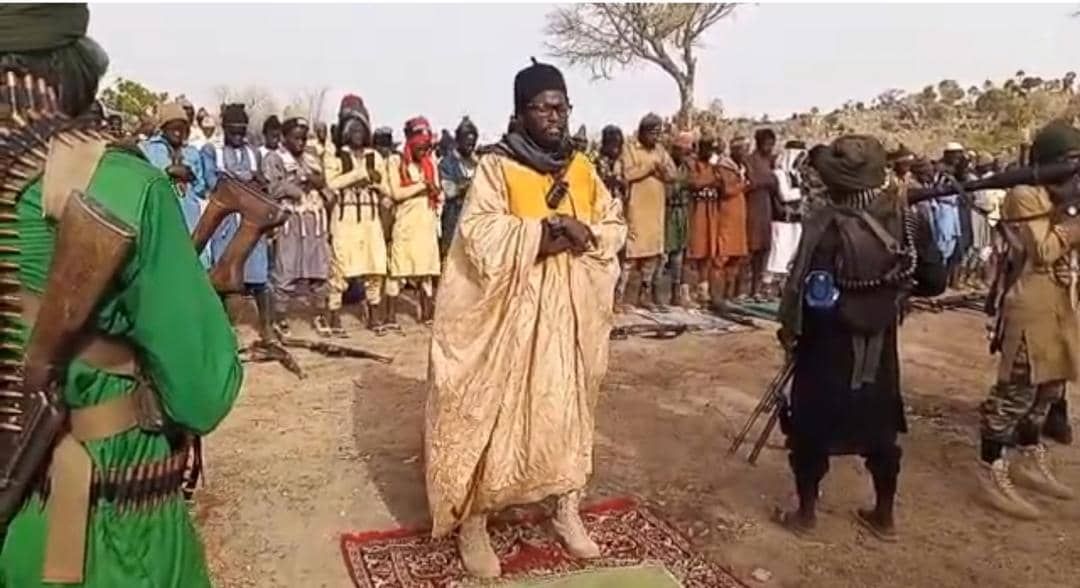
Fast-Growing Transnational Jihadists Pocket 90 Percent of $5.8 Million
By Suleman Ayuba
(Maiduguri) The ISIS-linked insurgency known as Boko Haram (Western Learning Forbidden) has achieved near-total domination of Nigeria’s kidnap-for-ransom industry, according to SB Morgen, an Africa-focused intelligence and market-analysis firm. Between July 2025 and June 2026 the country paid out ₦7.779 billion (approximately $5.78 million) in ransoms, channeling the overwhelming majority of national payments straight into the coffers of a fast-growing transnational jihadist network.
According to SBM Intelligence’s chilling report The Capture of Nigeria’s Kidnap Economy, of that sum, the Jama’atu Ahlis Sunna Lidda’awati Wal-Jihad (JAS) faction of Boko Haram and its allied cells extracted ₦7.0015 billion—an astonishing 90 percent—from only eight recorded incidents.
These figures suggest a systematic capture of an entire shadow economy by ideologically driven militants whose ambitions stretch far beyond Nigeria’s borders.
Whereas a diffuse population of 20,000 to 30,000 radicalized bandits and unaffiliated kidnappers carried out 146 separate abductions, they collected a mere ₦719.4 million, or 9.2 percent of the national total. Measured by the volume of attacks, kidnapping remains a crime of the many. Measured by actual cash transferred, it has been monopolized by a designated terrorist organisation that forms part of a fast-growing transnational jihadist threat.
Two mass abductions account for almost the entire national ransom bill and illustrate the new model of industrial-scale terror financing. In April 2026, fighters commanded by Ali Ngulde swept into Ngoshe in Gwoza, Borno State, and seized 416 people. They issued a 72-hour ultimatum for ₦5 billion. The full amount was paid—the largest single ransom SBM Intelligence has ever documented.
Months earlier, in November 2025, gunmen abducted 315 pupils and staff from St Mary’s School in Papiri, Niger State, in what the report described as one of the worst mass abductions in the country’s history. Multiple intelligence sources put the ransom at ₦2 billion. Together these two operations delivered ₦7 billion and explain virtually the entire year’s verified payouts.
The economics reveal a brutal inversion. Bandits and unaffiliated actors demanded ₦13.492 billion across their 146 cases yet collected only 5.3 percent of what they asked for. JAS, by contrast, demanded ₦9.205 billion and extracted 76.1 percent of its demands. The group’s ability to hold hundreds of hostages simultaneously, combined
with a demonstrated willingness to kill, has created leverage that ordinary criminals cannot match.
For the first time in the annual series, the highest amount demanded in a single incident and the highest amount actually paid were identical—the ₦5 billion Ngoshe ransom. That coincidence, the report notes, is the clearest possible signal of a counterparty with the power to be paid exactly what it demands.
Nathan Ibrahim, an Abuja based human lawyer and counterterrorism analyst, told TruthNigeria that the strategic consequences extend far beyond the immediate cash figures. For a designated terrorist organisation to collect ₦7 billion in a single year is not merely a criminal-justice failure; it is a direct material transfer of resources to an insurgency. Those funds buy weapons, pay fighters, sustain logistics, and finance the next round of abductions. In the hands of a fast-growing transnational jihadist network,he said the money does not stay local. It strengthens cells, enables cross-border coordination, and deepens the capacity of groups that already operate across the Sahel and Lake Chad Basin. What begins as a Nigerian ransom payment becomes fuel for regional instability, Ibrahim said.
SBM Intelligence report also records a break from recent patterns. In previous years, ransom sums in naira climbed while their dollar value stagnated because of currency devaluation. In 2026 the naira strengthened even as the total ransom bill rose, so the dollar value of payments more than tripled from the previous cycle’s $1.66 million to approximately $5.7 million. The result is a genuine bumper harvest for terrorism at a moment when the purchasing power of those funds is rising rather than eroding.
SBM Intelligence frames the shift as structural. A designated terrorist organisation is no longer merely participating in the kidnap economy; in ransom terms, it is the kidnap economy. Everyday criminal kidnapping continues across the country, but the high-value, high-leverage end of the market has been captured by militants whose ideology and networks are transnational. The concentration of proceeds in one faction changes the calculus for response. Treating kidnapping purely as a policing or local security problem misses the point. The crisis now functions as a funding mechanism for the very groups that most threaten national- and regional stability.
Yet to be answered is whether the kidnapping of 80 Muslim worshippers from four mosques in Borgu Local Government Area in Niger State on August 21 represents an attempt by the emergent insurgency known as Lakurawa to get into the lucrative kidnap for ransom industry. Some videos posted since the attack suggest more than 500 people have been abducted. Niger police have yet to confirm a number.
The report concludes with a stark warning: breaking the cycle demands two simultaneous actions—disrupting the financial flows that now underwrite the insurgency, and addressing the economic desperation that supplies its foot soldiers. Without a coordinated strategy that targets both the profitability of the crime and its deeper roots, Nigeria risks entrenching kidnapping not merely as a criminal industry but as a permanent revenue stream for a fast-growing transnational jihadist movement. The ₦7 billion already transferred is not the end of the story; it is the down payment on the next wave of abductions, the next weapons purchases, and the next expansion of militant reach.
Suleman Ayuba is a conflict reporter for TruthNigeria.