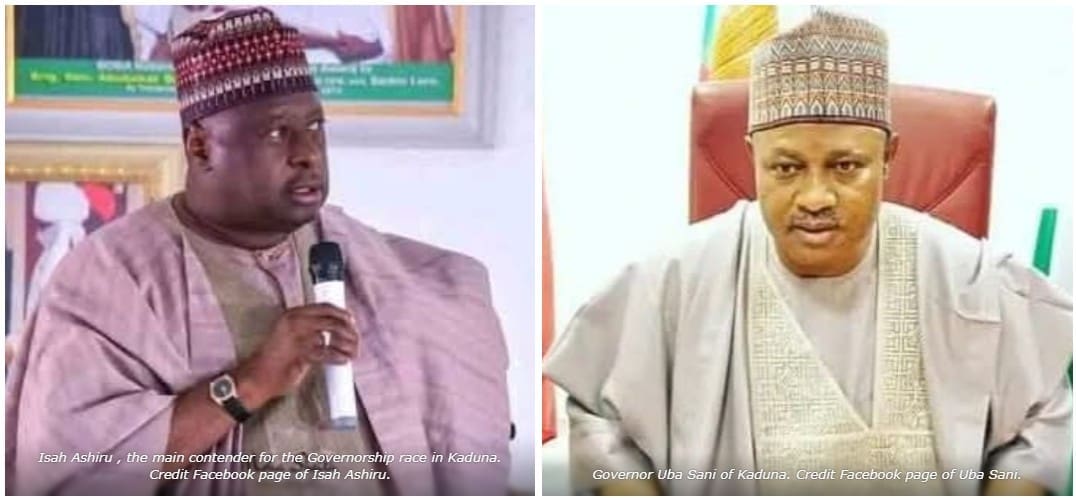
Kaduna votes February 6, 2027, with the APC incumbent favored institutionally, the ADC opposition split by a disputed ticket, and the NDC unable to settle on a nominee. Southern Kaduna’s security crisis — not faith balancing — remains the decisive issue, as communities say none of the candidates have a credible plan to stop killings and abductions.
By Mike Odeh James
KADUNA, Nigeria — Six contenders are vying to govern Kaduna in Nigeria’s February 2027 election, but two opposition tickets face court disputes and none of the major campaigns have offered a credible plan to confront the state’s worsening security crisis. Incumbent Governor Uba Sani of the All Progressives Congress holds the institutional advantage, while African Democratic Congress candidate Isa Ashiru leads a fractured opposition alliance amid legal uncertainty. Southern Kaduna’s communities, still reeling from years of killings and abductions, say safety—not faith balancing—will decide who enters Kashim Ibrahim House.
Uba Sani — All Progressives Congress
Governor Uba Sani took the All Progressives Congress ticket unopposed on May 21, 2026, with 459,393 affirmation votes across Kaduna’s 23 local government areas.
He won in 2023 as Nasir El-Rufai’s preferred successor. The two are now opponents; El-Rufai has left the All Progressives Congress for the African Democratic Congress. Former governors and senators Ramalan Yero, Shehu Sani and Suleiman Hunkuyi, plus twelve opposition lawmakers, have joined Sani.
His strength is incumbency and federal alignment. His vulnerability is security. Killings and abductions persist in Birnin Gwari and other rural local government areas. The government cites negotiated releases and restored farmland access, but attacks remain the opposition’s main attack line.
Isa Ashiru Kudan — African Democratic Congress
Isa Ashiru represented Makarfi/Kudan in the House and ran for the Peoples Democratic Party in 2019 and 2023. He lost to El-Rufai, then finished second to Sani with 719,196 votes — the largest proven opposition base. His alliance with El-Rufai expands it. In August he named former finance commissioner John Markus Ayuba as campaign director-general.
His ticket is contested. Ashiru polled 86,113 in the African Democratic Congress primary, ahead of Jafaru Sani with 29,580. Shu’aibu Miqati, fifth with 10,819, petitioned. The Appeal Committee split: chairman Muhammed Mustapha Fagge declared Miqati winner; secretary Mikailu Barau affirmed Ashiru. Miqati threatens court action. The national secretariat has not clarified who it recognizes.
Shehu Usman Bawa — Peoples Democratic Party
Former Kaduna North lawmaker Shehu Usman Bawa won the Peoples Democratic Party primary on May 25, 2026, beating Haruna Kajuru 124,170 to 22,010. He pledges community policing and support for vigilantes.
His advantage is nomination stability. His problem is a shrinking base as figures move to the African Democratic Congress.
Danjuma La’ah — Nigeria Democratic Congress
Two-term Kaduna South senator Danjuma La’ah opposed El-Rufai in the Senate, joined the All Progressives Congress under Sani, left after losing its senatorial primary and now runs on the Nigeria Democratic Congress. His argument is rotation: the north has produced most governors; Southern Kaduna is due.
He did not emerge from a primary. The Nigeria Democratic Congress state executive and local government chairmen adopted him in July. Deputy National Chairman (North) Sidi Abdul Bomi told The Whistler that a document circulating as his nomination paper is fake. Rival claimant Mohammed Sani Abbas says he was screened and won a primary. La’ah’s camp says no primary was held. Stakeholders want a substitution primary under Section 36 of the Electoral Act 2026.
Aminu Abdulfatah — People’s Redemption Party and Muhammed Rilwanu Lawal — Labour Party
Former Speaker Aminu Abdulfatah is the People’s Redemption Party consensus candidate. The party retains Aminu Kano’s name but lacks statewide machinery. Labour Party’s Muhammed Rilwanu Lawal is also a consensus candidate. Peter Obi won 294,494 votes in Kaduna in 2023, but that has not translated into governorship wins in the north.
Where it will be won
Kaduna North remains largely All Progressives Congress, though Ashiru holds pockets. Kaduna Central is Sani’s largest and strongest zone. Kaduna South is the battleground, split between La’ah’s rotation claim and Ashiru’s coalition through Ayuba. That split will decide if the opposition can consolidate enough votes.
No candidate has published a war chest. No credible statewide poll establishes a favorite.
Sani has the strongest institutional position. Ashiru has the largest opposition vote and the El-Rufai network, but carries legal risk. La’ah could be decisive without winning. If he dominates Southern Kaduna, he shrinks the coalition Ashiru needs to beat the All Progressives Congress.
Faith balance, without safety
Every major ticket now carries a Christian deputy. None carries a published security plan.
Sani named Kaduna State Internal Revenue Service chairman Jerry Adams, a Christian from Southern Kaduna, as running mate, replacing Hadiza Balarabe and ending the Muslim-Muslim ticket from 2019. Ashiru picked former assembly member Irmiya Kantitok from Southern Kaduna.
The balancing settled nothing. The Southern Kaduna Political Forum rejected Kantitok, saying a small circle chose him without consulting communities. The Muslim Youth Foundation of Southern Kaduna warned parties against assuming its votes.
Southern Kaduna’s Christians did not ask for a slot on a ballot. They asked to stop burying their dead after attacks attributed to Fulani Ethnic Militia in Kajuru, Zangon Kataf and Kaura. No candidate has published a plan to stop the killing.
Campaigns open September 9. Kaduna has five months to decide who occupies Kashim Ibrahim House.
Mike Odeh James is an award winning journalist who writers for truthNigeria