7 killed, including 1 soldier. 12 abducted, more missing. More than 150 terrorists surrender.
By Ezinwanne Onwuka
On northern Nigeria’s highways, travelers ran for their lives as gunmen opened fire and bombs exploded. But farther east, the hunters became the hunted: troops killed at least 47 terrorists, destroyed a Boko Haram/ISWAP camp and reported more than 150 surrenders.
NORTH-CENTRAL: Highways Become Kidnap Corridors
Kogi State recorded three attacks on travelers in three days, turning major highways into ambush points for gunmen.
On Wednesday, Aug. 26, at about 4:40 p.m., gunmen hiding in the bush intercepted two buses traveling in opposite directions.
Among the passengers were Christian members of the National Youth Service Corps (NYSC), Nigeria’s compulsory national service program for young graduates. Some passengers escaped into the surrounding forest, while others were abducted, police said.
After receiving a distress call, the Kogi State police deployed a joint security team to the scene. Two abandoned vehicles — a white Peace Mass Transit bus and a yellow 18-seater bus — were found on the highway as security forces searched the area.
The team later rescued 11 people, including the two drivers. The fate of the other passengers remained unclear. Most of those rescued were NYSC members traveling from Bayelsa State to Abuja.
The following afternoon, Aug. 27, gunmen struck again along the Itobe-Ochadamu Expressway, opening fire on motorists near Ojuwo Olijo in Ofu County.
Ishaq Yunusa, chairman of the All Progressives Congress in Dekina County, was found dead inside his blue Toyota Corolla. Another person traveling with him was abducted.
The attacks continued Friday evening, Aug. 28, along the Ankpa-Adoka-Makurdi federal highway.
The victims, mostly traders from Ajobe community returning from Nkwo Idoko market, were traveling in a pickup truck when gunmen opened fire. Some passengers jumped from the vehicle and ran. The attackers shot at those fleeing, killing two men and a woman.
Nine others were abducted, resident Yakubu Ishyaku told local media. Among them was Mariam, who was traveling with her daughter. Her sister, Achenetu Akubo, said the kidnappers demanded ₦40 million, or about $28,000, for their release.
But the ransom was not the family’s only concern. Mariam was undergoing medical treatment and had gone to the market without the medication she needed. Her family fears for her health, worried about how long she could survive in captivity without access to her medicine.
At about 8:40 p.m. that same Friday, gunmen blocked the Bokkos–Barkin Ladi road in Barkin Ladi County, Plateau State and abducted two passengers from a vehicle.
A rescue operation by troops from Sector 4 of Operation Enduring Peace to track the kidnappers and rescue the victims proved futile.
7,825 Abducted in One Year
The attacks came as new data showed how deeply kidnapping has become embedded in Nigeria’s security crisis.
A report by SBM Intelligence, titled The Capture of Nigeria’s Kidnap Economy, found that at least 7,825 people were abducted in 1,713 kidnapping and related incidents between July 2025 and June 2026. The number of victims rose 66 percent from the previous 12-month period.
Victims and their families paid an estimated ₦7.78 billion ($5.7 million) in ransom — more than three times the amount paid the previous year.
About 90 percent of the ransom went to the Jama’atu Ahlis Sunna Lidda’awati Wal-Jihad (JAS) faction of Boko Haram in just eight major incidents, driven largely by mass abductions.
Two incidents alone accounted for ₦7 billion ($5.2 million) of the total ransom. They included ₦5 billion ($3.7 million) paid for 416 people abducted in Ngoshe, Borno State, and ₦2 billion ($1.4 million) for 315 pupils and staff abducted from St. Mary’s School in Papiri, Niger State.
However, the Nigerian government denied paying any ransom for the release of the Papiri captives after they were freed on Dec. 22, 2025.
According to the report, Zamfara State recorded 236 kidnapping incidents involving 1,921 victims — nearly a quarter of all reported victims nationwide. Overall, the North accounted for 93.7 percent of all people abducted during the period, compared with 6.3 percent in the South.
Northwest: IEDs Kill Two as Troops Repel Terrorist Attack
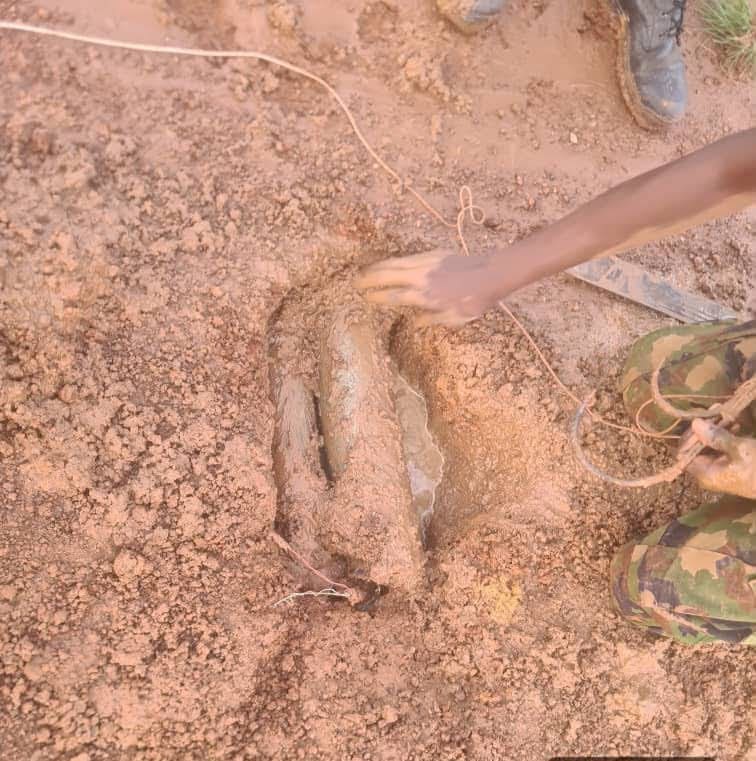
At about 8:04 a.m. Wednesday, Aug. 26, a motorcycle triggered an improvised explosive device on the Gurusu-Gwashi road in Bukkuyyum County, Zamfara State. The blast killed two people, a man and a woman.
Troops of Joint Task Force North West Operation FANSAN YAMMA responded to reports of the explosion, safely recovered the device and disposed of the IED, the Nigerian Army said in a statement.
The explosion was the latest in a series of IED attacks in Zamfara that have killed and injured residents. In June, three police officers were killed when an IED exploded on the Anka-Bagega road in Anka County.
The danger did not end with the two deaths.
On Thursday, Aug. 27, troops found another IED along the same route and safely detonated it before it could hit another vehicle, according to the Voice of Nigeria.
In Sokoto State, terrorists launched a more direct assault, advancing toward Sifawa military barracks while attacking the communities of Badau and Danchadi in Bodinga County on Wednesday.
Troops engaged the attackers and forced them to withdraw, but one soldier was killed. An armored personnel carrier and a Buffalo military transport vehicle were also damaged in the fighting.
Northeast: Troops Take the Fight to Terrorist Camps
Farther east, Nigerian forces reported some of the week’s biggest battlefield gains.
In Adamawa, troops from Operation Hadin Kai and a tactical team from the Office of the National Security Adviser entered the Kopre Mountain area of Hong County on Thursday, Aug. 27 after receiving intelligence about a Boko Haram/ISWAP camp.
The military said troops fought the militants in two encounters, killing more than 21 and destroying the camp and its logistics infrastructure. Weapons, ammunition, motorcycles and other supplies were recovered or destroyed.
In Borno, troops of the 101 Special Forces Battalion supported by the air component of Operation Hadin Kai and intelligence assets from the Multinational Joint Task Force. repelled a late-night terrorist attack around Kadiya village in Kukawa County on Friday, Aug. 28.
The military said fighters attacked the 101 Special Forces Battalion at about 10:45 p.m. before withdrawing under a coordinated ground and air response. Twenty-six insurgents were killed during combined ground fights and precision air strikes.
Ten motorcycles used by the fleeing attackers were destroyed, and one Mine-Resistant Ambush Protected (MRAP) vehicle sustained damage. Troops recovered assorted ammunition, including PKT rounds, special ammunition, and anti-aircraft rounds.
Four soldiers suffered non-life-threatening injuries and were safely evacuated for medical treatment.
The military also reported a significant number of defections in Borno, saying more than 150 terrorist commanders, fighters and affiliates surrendered during the latest reporting week, compared with more than 50 the previous week.
The Army attributed the increase to sustained military pressure, intelligence-led operations and disruption of terrorist logistics.
Ezinwanne Onwuka is a conflict reporter for TruthNigeria.