Begins Tracing 44 Contacts
By Luka Binniyat
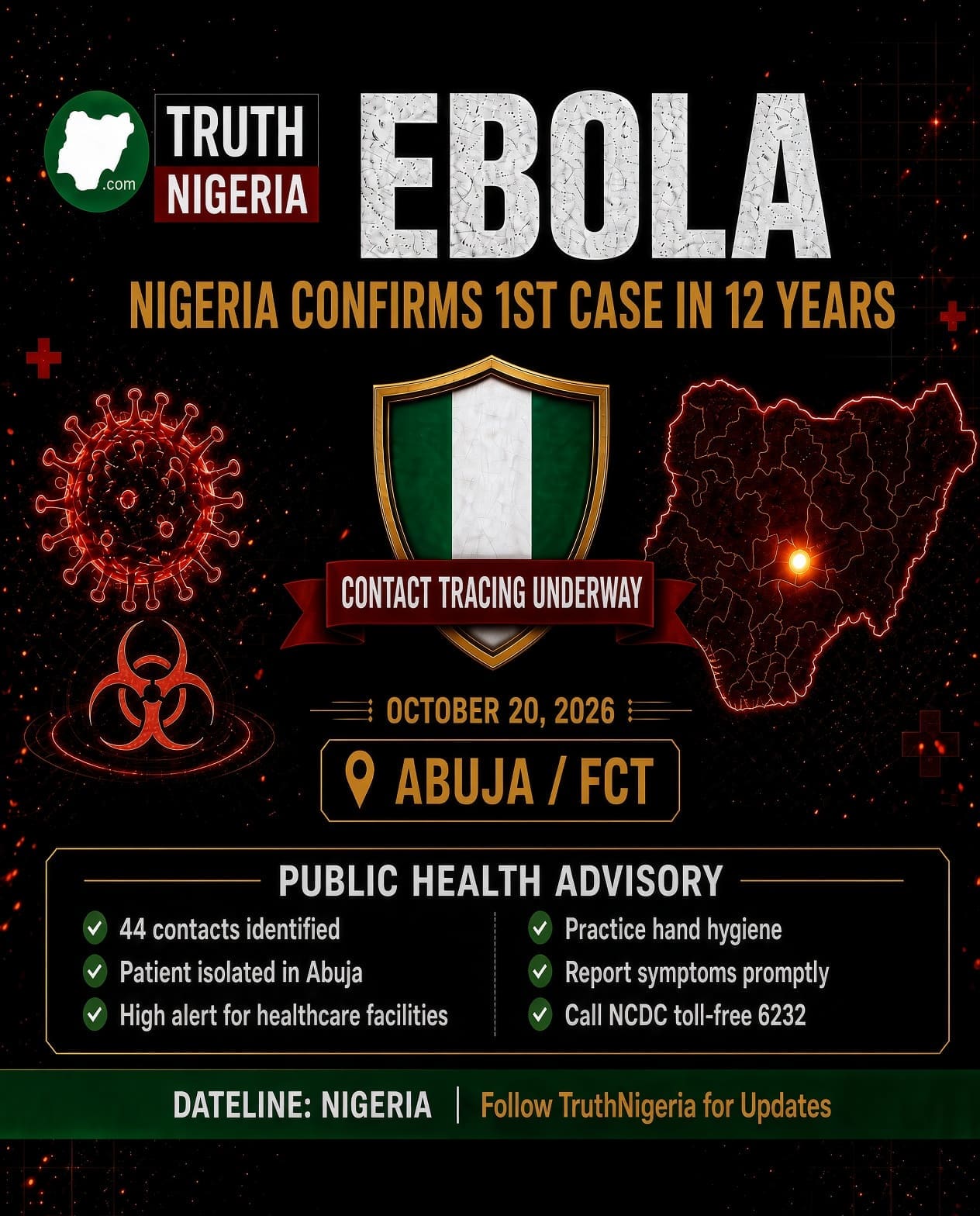
(ABUJA) – The Federal Government has confirmed a case of Ebola Virus Disease (EVD) in the Federal Capital Territory (FCT), Abuja, and commenced contact tracing to prevent further transmission of the deadly infection.
The Coordinating Minister of Health and Social Welfare, Prof. Muhammad Ali Pate, announced the development on Tuesday, October 20, following laboratory confirmation of the infection in a woman who recently arrived in Nigeria on an international flight from Uganda, Channels Television and other news media have reported.
According to the minister, the woman began developing symptoms on October 7 and was admitted to a private hospital in Abuja on October 11, where she received treatment for several days before the diagnosis was confirmed.
Patient’s Identify Hidden
“The patient has since been isolated and is receiving medical care, while public health officials have identified 44 people who may have come into contact with her,” the Minister said in the report.
Pate said the government was working to contain the infection and prevent further spread.
“We are doing everything possible to contain this case by tracing all the contacts the individual may have had,” he said.
The minister did not disclose the identity of the patient.
The Associated Press reports that the Federal Ministry of Health and Social Welfare, the Nigeria Centre for Disease Control and Prevention (NCDC), the FCT Health Services Secretariat and other relevant authorities are coordinating the response.
“The contact-tracing exercise covers people who may have been exposed to the patient, including healthcare workers, other patients, caregivers and travel contacts,” the report quoted Pate as saying.
The hospital where the woman received treatment is also receiving support to strengthen infection-prevention and control measures
Call For High Alert

The government has directed public and private healthcare facilities across the country to remain on high alert and ensure that suspected cases are promptly identified, isolated and reported to public health authorities.
Healthcare workers have been advised to maintain a high level of suspicion, observe strict infection-prevention procedures and use appropriate protective equipment when attending to suspected patients.
The minister urged Nigerians to remain calm while observing preventive measures, including regular handwashing and avoiding contact with the blood and other bodily fluids of anyone suspected of having Ebola.
He also advised anyone who develops symptoms after a possible exposure to avoid close contact with others and contact public health authorities for guidance before visiting a healthcare facility.
Symptoms of Ebola may include fever, severe headache, muscle pain, weakness, vomiting and diarrhoea. In some cases, the disease can cause internal or external bleedings.
Transmission of Ebola
The World Health Organization says the virus is transmitted primarily through direct contact with the blood or other bodily fluids of an infected person who is showing symptoms, or through contaminated objects and surfaces.
People infected with Ebola do not generally transmit the virus before symptoms develop. The incubation period ranges from two to 21 days.
Outbreak in Central African
The confirmation comes amid an evolving Ebola outbreak in Central Africa and concerns over the movement of infections across international borders.
On October 6, the NCDC announced that it was strengthening surveillance and preparedness measures after Kenya confirmed an imported case of Ebola disease caused by the Bundibugyo virus, linked to an outbreak in the Democratic Republic of Congo (DRC).
In a statement issued at the time, the agency said it was monitoring the regional situation and reviewing Nigeria’s preparedness to ensure early detection, isolation, laboratory diagnosis, contact tracing and effective infection control.
The agency also emphasised the importance of risk communication and protecting healthcare workers.
Following Tuesday’s confirmation, the priority is to establish the full chain of exposure, monitor identified contacts and determine whether further infections have occurred.
2014 Outbreak In Nigeria
Nigeria previously recorded an Ebola outbreak in 2014 after an infected traveller arrived in Lagos from Liberia. The country successfully contained that outbreak through case identification, isolation, contact tracing and coordinated public health interventions.
Health Experts said that the 2014 experience is expected to inform the current response, although the effectiveness of containment will depend on how quickly all contacts are identified and monitored and whether further cases emerge.
Members of the public seeking information or wishing to report a suspected case can contact the NCDC toll-free call centre on 6232, which operates 24 hours a day, seven days a week.
Authorities have urged Nigerians to cooperate with public health teams, provide accurate information about possible exposure and avoid spreading unverified reports about the case.
Luka Binniyat writes for TruthNigeria from Kaduna.