By Onibiyo Segun
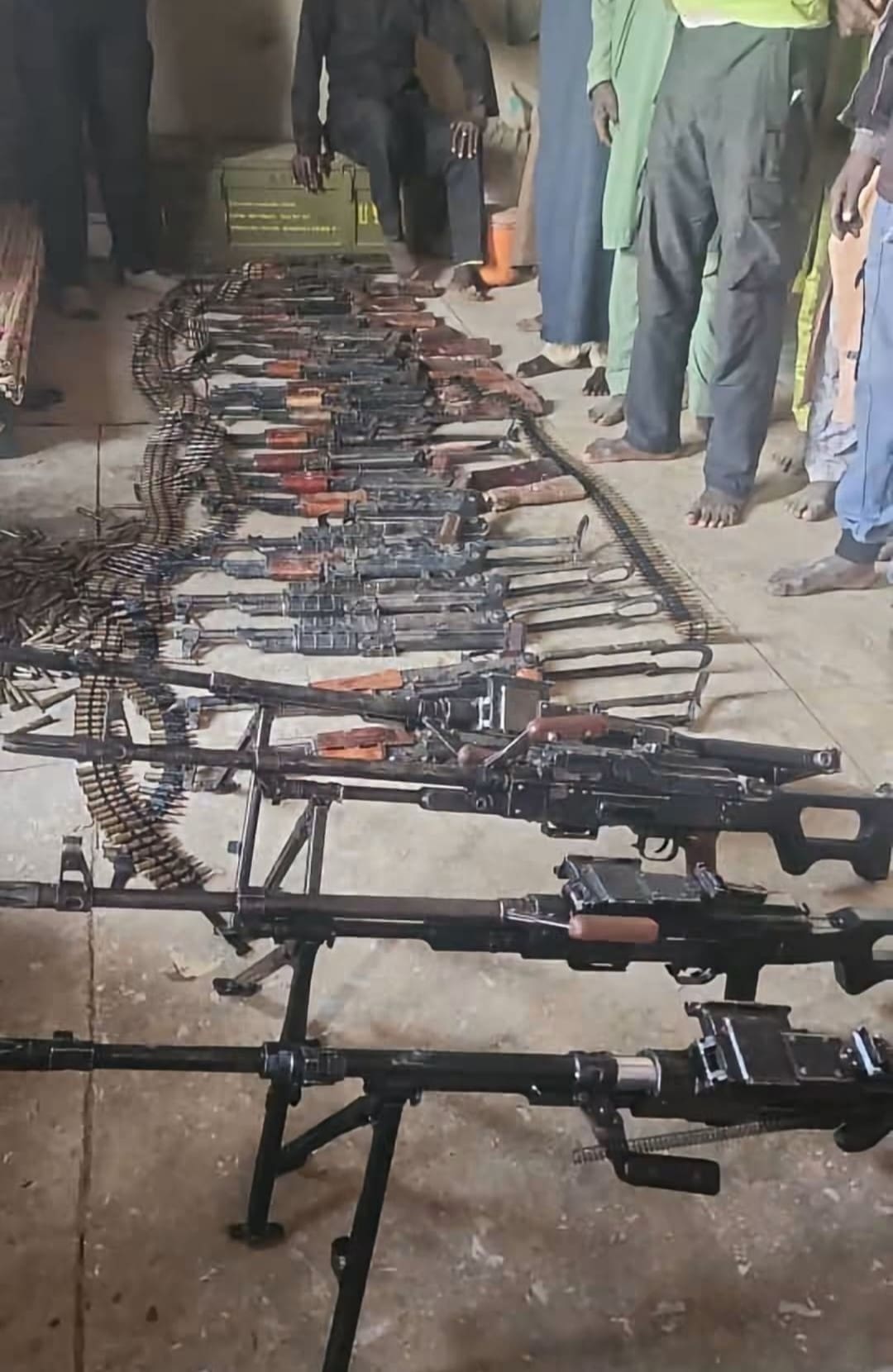
(SOKOTO) – Twenty-one AK-47 rifles, four PKT machine guns and 825 magazines were reportedly seized in Dawakawa, Sokoto, after smugglers allegedly moved them from Niger Republic by camel on Tuesday.
Zagazola Makama and PRNigeria reported the seizure on Wednesday, November 11, attributing it to the Department of State Services (DSS) and citing unnamed security sources. Neither report named suspects, identified the crossing, disclosed intended recipients or reproduced a signed DSS statement. No public DSS statement was located.
Dawakawa lies in Goronyo County, east of Sokoto city, towards Isa and Sabon Birni and the international Niger frontier in eastern Sokoto State.
The wider frontier includes Illela, Sabon Birni, Isa, Gudu and Tangaza in Sokoto; Jibia, Kaita and Mai’Adua in Katsina; Zurmi and Shinkafi in Zamfara; and Kamba and Arewa Dandi in Kebbi. Bandit-terrorist networks and the AlLakurawa operate in parts of this region. Zagazola also names Boko Haram, whose main theatre is northeastern Nigeria. No evidence identifies any group as the intended recipient.
Scale Of The Arms Problem

TruthNigeria reported that after bandit kingpin Mohammad Halilu Sububu was killed near Mayanchi, Zamfara, in September 2024, the Nigerian Air Force said troops recovered three PKT machine guns, five AK-47 rifles, 29 magazines, an RPG launcher and more than 1,000 rounds.
In June 2026, TruthNigeria reported five suspected arms couriers arrested, including two foreign nationals, and the recovery of 15 AK-103 rifles, 15 magazines and 1,434 rounds. The investigation described a suspected Sahel-linked supply route from Niger into Nigeria.
Dr. Bawa Mohammed, a senior researcher at the Centre for Conflict and Security Studies in Abuja, told TruthNigeria that major hostage operations require weapons procurement, fuel suppliers, transport coordinators, safe routes, communications handlers and armed protection teams. “These are organized systems,” Mohammed said.
Retired DSS Director Mike Ofuo told TruthNigeria: “The significance is not the rifles alone. The network moving weapons from Niger Republic through Kaduna toward Kainji forests supports future attacks,” Ofuo said.
Ransom Money Translates to Firepower
TruthNigeria’s January 29, 2026 investigation documented testimony from John Ali, a retired Nigerian Army military intelligence officer who said he spent five months in captivity. Ali alleged arms dealers visited kidnapping camps on ransom-payment days and exchanged weapons for cash.
“The very day any ransom is going to be paid, arms dealers, including bad eggs in the police and the military will come to the camp with supplies and exchange the arms they brought for cash,” Ali told TruthNigeria.
Scott Morgan, a Washington-based security analyst, described kidnapping as “a for-profit enterprise in Nigeria, in some cases abetted by state governors.”
Forest Holding Camps Depend On Sustained Supplies
TruthNigeria’s November 3 investigation described a hostage camp in Faskari County, Katsina, holding nearly 200 captives. Survivors said people seized in southern Kebbi were moved by motorcycle through Zamfara into the Rugu Forest area. Security sources described food and fuel extorted from villages as supplies sustaining the camps.
The report documented prolonged detention of women and children, and accounts of deaths and shallow graves. It raises a central question: who supplies the weapons, fuel and logistics that allow armed groups to hold captives for months?
Harvest Of Fear And Shield Villages
TruthNigeria’s “Harvest of Fear” investigation documented allegations that armed men abducted farmers, obstructed harvesting and threatened rural families in southern Kaduna. It described attacks on livelihoods and food production as a means of weakening communities.
The November 6 “Market Day Massacre” report described gunmen killing four people, including a pastor, at Abeda Shitile in Logo County, Benue, during market day on November 3. Government sources told TruthNigeria the attack aimed to disrupt farm production during harvest. It illustrates the consequences of violence against farming and trading communities. The reports do not establish that the same actors or weapons networks were involved; they show how attacks on harvests and markets compound local displacement and food insecurity.
TruthNigeria’s November 9 investigation, “Rape, Extortion and Fear,” documented allegations of sexual violence, forced labour, levies and movement restrictions used to control rural households. Dr. Maryam Ibrahim told TruthNigeria threats against wives and daughters can enforce obedience. Prof. Charles Akise described levies and commands as parallel authority. This informs TruthNigeria’s “Shield Villages” theme.
TruthNigeria’s November 5 report from Akwando, Kachia County, Southern Kaduna, recorded two Christians killed and 18 abducted on November 4, according to the Resilient Aide Dialogue Initiative. Reuben Buhari said most abductees were women and children. He also described earlier captives who died in detention.
Interception Must Lead To The Suppliers
The seizure removes weapons from circulation, but the bigger questions remain. Were couriers arrested? Who supplied and financed the shipment? Which group was to receive it? Have investigators identified other consignments using the same routes?
Analysts say the DSS should clarify the operation and disclose whether arrests were made. They must trace suppliers and financiers.
For communities facing abductions, attacks on farms and coercion, the issue is whether authorities can disrupt the supply systems that keep armed groups from operating.
Onibiyo Segun reports on terrorism and conflict for TruthNigeria.