Federal court indictments and intelligence reports show northern state treasuries and digital proxy accounts fund armed militias targeting Christian villages
By Mary Kiara
LAGOS, Nigeria — State treasury payouts and digital account exploits are moving millions of dollars to jihadist networks in Nigeria’s fertile, majority-Christian Middle Belt region, bypassing banking regulators to fund anti-Christian massacres.
Primary tracking databases, financial intelligence reports, and federal court indictments filed in Abuja show the money sustaining West Africa’s deadliest insurgencies no longer moves solely through dark-web channels or physical bags of cash.
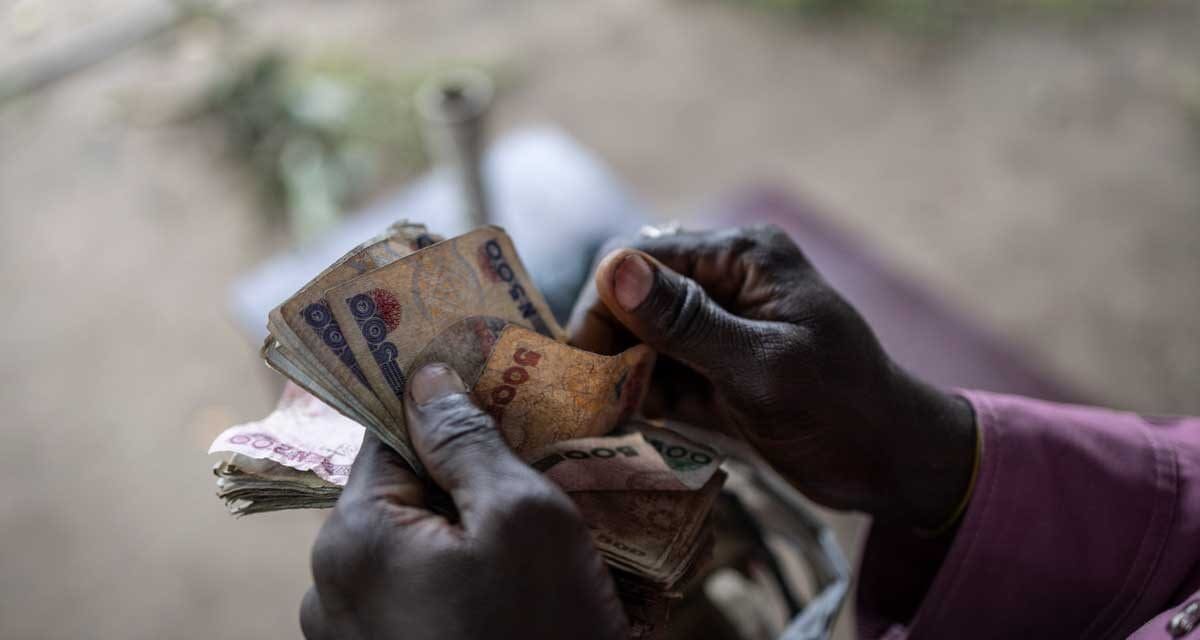
Instead, it relies on a dual-track pipeline: decentralized digital account exploitation targeting ordinary civilians, and direct cash disbursements from northern state government treasuries directly to armed Fulani militia leaders.
Digital Mule Exploitation
The Nigerian Financial Intelligence Unit’s (NFIU) 2025 Annual Report exposes how terrorist cells, particularly the Islamic State West Africa Province (ISWAP), systematically exploit digital banking networks to move operational capital.
A primary tactic involves “identity laundering,” in which male terrorist logistics commanders covertly open and control bank accounts in the names of women-family members included.
The operatives hold the physical ATM cards, mobile credentials, and PINs, routing alert notifications away from the women, who often remain entirely unaware of the massive sums moving through their profiles.
“They exploit cultural norms that make women less likely to be suspected by authorities, using wives, sisters, or female associates as fronts to distance illicit funds from the true operatives,” the NFIU stated in its report.
In January 2026, Aisha Yelwa, a mother in Niger state facing severe personal financial hardships, went viral across national broadcasts after $235,714 was suddenly dumped into her personal bank account. Yelwa immediately alerted her local bank branch to return the money, stating she would not let illicit money ruin her family’s future.
When automated filters trigger asset freezes on compromised profiles, innocent marketplace merchants and female entrepreneurs find their legitimate capital locked, destroying household micro-enterprises while terrorist networks simply migrate to new proxies.
“The KYC (Know Your Customer) process going on in banks is sometimes incomplete,” Dennis Amachree, a former assistant director of Nigeria’s Department of State Services (DSS), told TruthNigeria.
“The security agencies have to look at the banks. The banks have this data… they will be recruiting people in the banks who are giving out this information to terrorists,” Amachree added.
Beyond compromised bank staff, insurgent networks utilize digital sports betting platforms and international crowd funding apps. Foreign-based facilitators collect small donations from Western sympathizers, often just $20 to $50 on encrypted channels like Telegram.
The pooled funds are fractured into money transfer options and sent to local “money mules,” who convert the digital credits into cash, fuel, and supplies for field operatives.
“They crowd fund the money overseas in bulk, then they now redistribute the money in pieces,” Amachree explained. “If you follow the money, you discover that it will actually lead all the way down to where the original money is coming.”
State Treasury Lines to Armed Militias

While digital micro-transactions fund field logistics, institutional court filings reveal that macro-scale financing for armed Fulani ethnic militias flows directly from official government coffers.
On June 22, 2026, the Economic and Financial Crimes Commission (EFCC) filed a 12-count indictment before the Federal High Court in Abuja against Bello Abdullahi Bodejo, National President of Miyetti Allah Kautal Hore.
The charges allege terrorism financing and money laundering totaling $2.53 million.
According to the official charge sheet, the cash was disbursed to Bodejo in four separate tranches between late 2023 and 2024 by Sa’idu Abubakar, the former Accountant-General of Bauchi State under Governor Bala Mohammed. None of the transactions passed through a banking institution; instead, millions in foreign currency were handed over at private residences, supermarkets, and restaurants in Abuja.
The EFCC is separately prosecuting Bauchi State Commissioner for Finance Yakubu Adamu and three senior civil servants for terrorism financing linked to the same $17 million off-bank treasury pool.
Miyetti Allah Kautal Hore and its affiliate, the Miyetti Allah Cattle Breeders Association of Nigeria (MACBAN), claim to represent pastoral interests.
However, Testimony presented by Nina Shea of the Hudson Institute before the U.S. House Foreign Affairs Subcommittee documented that MACBAN networks have supplied Fulani herders with military assault rifles for decades.
Data from the Observatory for Religious Freedom in Africa (ORFA) reveals that between 2019 and 2024, Fulani militias were responsible for 47 percent of all civilian killings across Nigeria.
Furthermore, data published by SBM Intelligence shows Nigeria’s kidnapping-for-ransom economy generated over $5.1 million in paid ransoms within a single 12-month period, with organized terrorist factions capturing 76 percent of payouts to re-arm their cadres.
Implications for Western Policy
The convergence of government treasury leaks, digital mule networks, and mass abductions demonstrates that Nigeria’s security crisis is not a series of isolated “communal clashes,” but a fully capitalized, systemic campaign.
For Western lawmakers, these documented financial trails undermine official state narratives of simple resource scarcity.
When sitting government officials bypass banking laws to deliver millions in cash to militia heads whose members deploy AK-47s and military-grade equipment against Christian agricultural communities, state accountability can no longer be ignored.
Without targeted sanctions on state actors and rigorous international oversight of cross-border digital remittance corridors, Western financial systems remain unwittingly linked to the funding of religious cleansing in Nigeria’s Middle Belt.
Mary Kiara reports on terrorism and Religious freedom Policy for TruthNigeria.