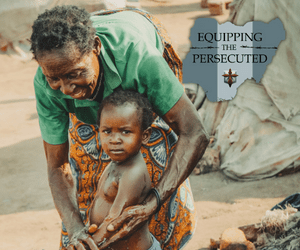
With millions facing food insecurity and thousands of farmers driven from their land, Nigeria increasingly relies on imported food to fill domestic production gaps.
ABUJA, Nigeria — Violence in Nigeria’s farming communities is contributing to a growing dependence on imported food. Central Bank of Nigeria figures show the country spent $1.19 billion on food imports in the first half of 2026, up 11.41 percent from the same period a year earlier, as insecurity and displacement continue to constrain local food production.
A statement credited to the Minister of Agriculture and Food Security, Senator Abubakar Kyari in August, 2025, reveals that Nigeria spends over $10 billion worth of food items annually while earning less than $400 million from agricultural exports.
“The rise in food imports reflected the government’s response to supply shortages caused by banditry and kidnapping which created disruptions to domestic production”, said Chief Executive Officer of the Centre for the Promotion of Private Enterprise (CPPE), Dr Muda Yusuf.
Food scarcity triggered by security challenges
“Farming operations cannot be carried out in an insecure environment”, wrote Matthew Funsho Bello in a scholarly article published in May, 2026.
“Boko Haram and Fulani herders have become a serious threat to farming communities because of their regular
attacks and the murders they cause,” Bello added.
Among the 17 African countries monitored by Alliance for a Green Revolution in Africa (AGRA), Nigeria accounts for the largest number of people facing severe food shortages with 36.29 million people affected.
A report published in September 2026 by AGRA attributed the crisis–level food shortages in Nigeria to “conflict, insecurity, and displacement which disrupted agricultural production, livelihoods, market access and humanitarian assistance.”
In Nigeria’s Northwest, once known as the country’s breadbasket, armed banditry across Zamfara, Katsina, Sokoto, and parts of Kaduna has “pushed farmers off their land, crippled food production, and displaced more than one million people”, according to a recent report by TruthNigeria.
Farmlands abandoned
As at May, 2026, International Organisation for Migration (IOM), reported that over 460,000 people remain internally displaced in Benue State. In the same vein, the Internal Displacement Monitoring Centre (IDMC) estimated that 295,000 internal displacements related to conflict and violence was recorded in 2024 alone across states like Benue, Borno, Katsina, Sokoto, and Zamfara where farmers abandoned their farms due to targeted attacks.
“When farmers flee for their lives, they abandon not just their homes, but their livelihoods,” the report by IDMC added.
Drivers of Accelerated Displacement
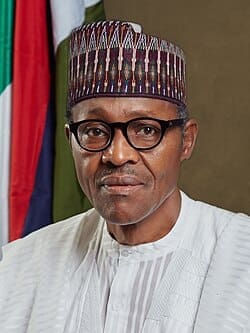
“The emergence of President Muhammadu Buhari a Fulani-born former infantry Major General of the Nigeria Army to the office of the Nigerian President in 2015 has without doubts precipitated an upsurge in the organized, carefully choreographed and massively executed civil war of the Fulani pastoralists against native farmers in many villages, towns and cities all across the nation,” wrote the Head of The Human Rights Writers Association Of Nigeria, Emmanuel Onwubiko, in a report published in August, 2022.
“This war has birthed in the South, the North, the East and the West and this well coordinated serial bloodbath has led to thousands of casualties and have left at least 3 million internally displaced citizens in Southern Kaduna State and Benue State,” Onwubiko added in the report.
Acute food shortages recorded during the administration of President Buhari (now late), reportedly drove Nigeria’s economy into a recession with “Nigeria’s Gross Domestic Product in real terms declining by -3.62% (year-on-year) in the third quarter of 2020.” Headline Inflation rose 59 times in the eight years of Buhari’s administration, prompting the World Poverty Clock to put the number of Nigerians living in extreme poverty at 71 million in June 2023.
An analysis of select staple food prices between January 2016 and October 2025 by the International Center for Investigative Reporting (ICIR) shows that the cost of basic food items namely rice, beans, garri, bread, eggs, and yams grew by over 413 percent. These increases span two administrations – the late former President Muhammadu Buhar and the incumbent President Bola Tinubu.
The importation option
Following a decline in the local supply of raw food items to processing companies operating in Nigeria, manufacturers that are meant to buy from farmers opted for importation,” according to the Sun.
“The situation worsened after the federal government granted temporary duty-free and tariff waivers on essential food imports,” said Head of Supply Chains at Morison Industries Plc, Paul Obafemi.
“Food importations could be stopped only and only if farmers could go back to farms,” said the President-General of Trade Union Congress of Nigeria (TUC), Festus Osifo in August, 2026, while speaking on the economic challenges confronting workers and Nigerians generally.
Speaking during an interview with TruthNigeria, an economics based in Lagos state, Mr. Clifford Inyama, said there is need for Nigeria to continue importing food until the farmers begin to produce enough to feed the population.
“It will be suicidal to stop food imports when domestic production alone is unable to sustain the population,” said Clifford Inyama to TruthNigeria.
“Until the Nigerian government properly addresses the issue of attacks on rural farmers, displacement of rural residents and destruction of crops by Fulani herdsmen and their cows, food importation must continue,” Inyama went on to say.
“The government can make it easier for the common man by subsidizing the cost of the imported food rather than compelling the importers to pay tariffs and import duties,” Inyama added.
The danger ahead
“Import surges in food commodities erode the incentives for local production and undermine the resilience of the domestic food system,” said the chief executive officer of The Centre for the Promotion of Private Enterprise (CPPE), Muda Yusuf.
According to the President of the African Development Bank Group, Dr. Akinwumi Adesina, a nation that depends on others to feed itself, is independent only in name.
Ebere Inyama reports for TruthNigeria on conflict and religious freedom.