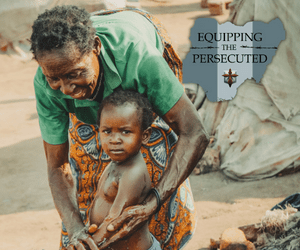
Millions remain displaced as kidnappings, killings and abandoned farms expose a widening protection gap
Love of Country Must Transcend Ethnicity, Politics or Personal Profit: TruthNigeria Founder
By Mary Kiara
LAGOS, Nigeria — President Bola Tinubu let it be known on Independence Day that Nigeria has been on a bumpy road for 66 years but is doubtlessly on the right track now. Notably, he completely sidestepped the ongoing security crisis.
Unlike his 2023, 2024, and 2025 addresses where security was given dedicated sections, explicit threat targets, and major policy promises, his 2026 speech contained no substantive discussion on terrorism, land seizures, or displacement.
In an almost 2,000-word address, his total mention of security was reduced to generic past-tense framing and a single passing sentence: “We have endured war, military rule, economic crises, insecurity and political upheaval. Yet through it all, Nigeria… has endured.” (Full discussion of the speech to be posted Friday.)
But for tens of millions of displaced and grieving Nigerian citizens, for thought leaders and humble citizens alike, the elephant in the back of the room was noticed.
Nigeria’s Other Voices “I want to return home, but I have become destitute. Nigeria has made me one,” says Tesu Kwaghtser.
These are the words of a widowed mother of three when asked to describe the joys of Nigeria’s 66th year of independence.
Eight years ago, armed militants invaded her village in Guma County, Benue state, murdered her husband and burned her home. For Kwaghtser, Nigeria’s Independence Day celebration is not about parades or speeches. It is about whether she can ever return home.
“Every single day of our lives, we live in fear. Is that how to live life?”
Across central and northern Nigeria, millions of indigenous citizens view the national flag with profound grief.
“I Was Made a Beggar in My Own Country”
“I was made a beggar in my own country. If we are to ever see a reason to celebrate the country’s independence, then the government has to wipe out all the terrorists out of our villages and give us back our ancestral lands,” she said.
Her measure of national freedom is therefore painfully ordinary.
“If me and my people can return home and live in peace with our tribe members, then any celebration will be worth it. Not sleeping with one eye open.”
Kwaghtser’s experience is repeated across parts of Nigeria’s Middle Belt and North, where armed attacks have emptied villages, disrupted farming and left families dependent on camps or host communities.

The scale is enormous. UNHCR Nigeria’s data lists more than 3.7 million Internally Displaced people, while a 2026 SBM Intelligence report recorded 7,825 people abducted in 1,713 kidnapping and related incidents between July 2025 and June 2026. At least 1,142 people were killed during those incidents.
When a Father’s Death Becomes a National Statistic
Twenty-year-old Christiana Joseph knows another side of the same violence.
Her father, Joseph, a Christian farmer in Benue State, was killed in January after Fulani militants entered his farmland.
“The independence anniversary celebrations are mere formalities. I’m sure those in authority know that the country isn’t safe, and they have done a terrible job of securing the country,” Joseph told TruthNigeria.
“A human life that is sacred is lost, or better still taken, and rather than rent his clothes and go into mourning, instead Nigeria is ‘blessed’ with a president that goes on vacation after a massive attack leaves scores dead.”
Her anger is echoed by John Bakeni, chairman of the Christian Association of Nigeria in Borno state.
“If you look at the trajectory of Nigeria’s growth and development from independence, ordinarily one will say it should be from bad to good, better, and best. But then if you look at Nigeria’s trajectory, it seems the country is moving from bad to worse,” Bakeni told TruthNigeria.
The Numbers Behind the Fear
A new report by the U.S.-based aid organization Equipping The Persecuted says it documented 4,216 Christian deaths in Nigeria between January 1 and September 8, with much of the documented violence occurring in the Middle Belt.
The report attributes a larger number of recorded deaths to Fulani-linked militant networks than to Boko Haram and Islamic State West Africa Province combined.
“While communal disputes may result in localized clashes, they do not ordinarily produce the systematic burning of churches, the targeted killing of worshippers, or the prolonged denial of return to displaced populations,” ETP noted in its findings.
“Nigeria is for the people who love Nigeria—those who are willing to serve its people, protect their neighbors, and build something that will last beyond their own lifetime,” according to TruthNigeria Founder Judd Saul. “That love must be greater than ethnic divisions, political loyalties, or the pursuit of personal gain.
“As an American celebrating our nation’s 250th anniversary this year, I am reminded that freedom carries responsibility. No country is perfect, including my own. But justice, peace, and the opportunity to build a better life should be shared by all people. They should never be privileges reserved for the powerful, the wealthy, or the well-connected,” Saul said (full text posted on today’s TruthNigeria site).
Abuja Says the State Is Fighting Back
The Nigerian government disputes the picture of a state losing control.
“Our armed forces and security agencies are intensifying operations against terrorism, banditry, and kidnapping,” Secretary to the Government of the Federation George Akume said ahead of the anniversary.
Information Minister Mohammed Idris echoed those claims, highlighting the creation of four new army divisions and the prosecution of high-profile insurgent commanders.
But security analyst Chima Chukwunyere says the state’s response remains inadequate.
“Nigeria once commanded respect among the comity of nations. Today, security operatives trek into forests in search of criminals. Such operations could be carried out far more efficiently with drones or helicopters,” Chukwunyere told TruthNigeria.
“Although killings occur daily, perpetrators are often known but not brought to justice,” he said.
“How can a country with an Army, Navy, Air Force, and trillions of Naira budgeted for defence fail to protect its own children?” legal advocate Boma Lilian Braide said in a statement.
“A man who cannot sleep with both eyes closed in his own country is not independent. He is a prisoner in his fatherland.”
For Umar Sunoma, a youth advocate, independence has a simple definition.
“Independence to Nigeria is a word that describes freedom from slavery and anything that has to do with capturing people, but we see the exact opposite in Nigeria,” he told TruthNigeria.
For Kwaghtser, the meaning is simpler still: home.
And until she and those affected can return, Nigeria’s independence remains something celebrated on a calendar rather than experienced as freedom.
Mary Kiara reports on Religious Freedom Policy for TruthNigeria.