Catholic priests and community leaders say Abuja’s proposal would hand over land emptied by militia violence and displace Christian farmers permanently.
By Mike Odeh James
MAKURDI, Nigeria — Catholic priests in Benue State are rejecting a federal plan to build Fulani ranches on farmland they say was emptied of Christian families by years of militia attacks, warning that Abuja’s new National Ranching Policy would effectively reward the perpetrators of violence. The proposal places Benue — one of the Middle Belt’s hardest‑hit states — among the first locations selected for ranch construction, prompting local leaders to accuse the government of legitimizing land seizures carried out by Fulani Ethnic Militia fighters and bypassing displaced communities who have yet to return home.
The Nigeria Catholic Diocesan Priests Association issued its rejection days after Abuja named Benue among the first states to receive the National Ranching Policy.
Minister of Livestock Development Idi Maiha announced the rollout after briefing President Bola Tinubu, with Benue, Plateau, Nasarawa, Kaduna and Adamawa selected. Maiha said those areas record the highest farmer-herder conflict, and that nomadism in its present form cannot be sustained.
“Ranching must never become a disguised instrument for land grabbing, forced occupation or the permanent displacement of indigenous communities,” the association said in a document signed by Revd Fr. Joseph Terfa Beba.
The Ministry of Livestock Development did not respond to written questions from TruthNigeria.
What Washington Should Know
For readers in Washington, the dispute can look like a zoning argument. It is not.
“Over the years, Fulani Ethnic Militia were brought into the Middle Belt from North West Nigeria, Mali, Chad and Niger Republic. They killed thousands and displaced millions of Nigerian Christians,” said David Onyilokwu Idah, Director at the International Human Rights Commission in Abuja. “These are the people you want to build ranches for in the Middle Belt.”
The regions he named — Benue, Plateau, Taraba and Southern Kaduna — are more than 80 percent Christian and and are farmed by small-plot holders. “What happens to the native land holders who are in IDP camps, displaced?” Idah asked. “So the Federal Government is planning to transplant Fulani on Middle Belt territories?” Land was taken by rifle. The state now proposes to hand it over by decree.
Seven reasons the answer is no
The victims are being asked to host the herds. Abuja’s own selection criterion is conflict frequency. Benue was chosen because Benue has bled. State officials put the displaced population above 615,000, and the June 2025 Yelwata massacre in Guma County alone claimed more than 150 lives.
Restitution must precede allocation. The priests demand sequencing: displaced families must return to their ancestral lands before any ranching discussion. Hundreds of thousands cannot walk back because Fulani terrorists occupy them.
Consent was bypassed. Under Nigeria’s Land Use Act, land is vested in the state governor. A federal pilot naming a state that says it was left out of the approval process raises a constitutional question.
Benue already has a ranching law, yet it has not been enforced. Governor Hyacinth Alia has reaffirmed the state’s Prohibition of Open Grazing and Ranches Establishment Law of 2017, while conceding it cannot be enforced: Civilian guards use homemade single shot pipe guns, whereas herders are protected by militia armed with assault rifles.
Nobody has been held to account. Fulani terrorists have burned parishes, seized farmland and renamed villages with almost no prosecutions. In August 2025, priests reported St. Paul’s Parish, Aye-Twar, destroyed and 26 outstations occupied. A government that cannot try the arsonists is now offering to allocate the ashes.
“Rewarding terrorists?”

Dr. Bitrus Pogu, Chairman of the Middle Belt Forum, rejected the plan outright. “This is like rewarding terrorists, rapists, arsonists and bandits with lands of their victims,” Pogu told TruthNigeria, adding that the people of Benue, Plateau and Southern Kaduna are farmers with no land available for grazing. “We shall resist any attempt to appropriate Middle Belt lands for Fulanis,” Pogu said.
“This is gradual Islamization and Fulanization of Benue and the Middle Belt by the Federal Government,” said Franc Utoo, an official of Equipping the Persecuted, TruthNigeria’s parent organization, and a native of Yelwata. He asked why Zamfara, Borno and Yobe, with larger land masses and Fulani populations, were not selected. The pilot list complicates that charge: Benue, Plateau and Nasarawa hold large Christian majorities; Adamawa is mixed, and Wase Local Government Area, county in Plateau State where the pilot program opens, is majority Muslim.
The bishop Abuja tried to silence
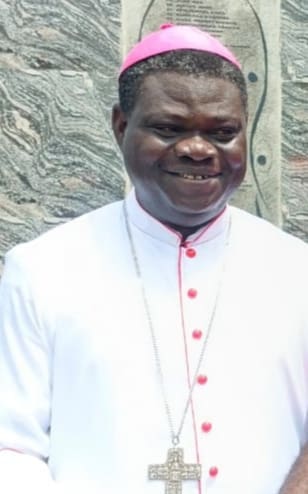
Testifying before the U.S. House Foreign Affairs Subcommittee on Africa on March 12, 2025 Bishop Wilfred Chikpa Anagbe CMF described a strategy of killing and expelling Christians, destroying churches and farmland, occupying seized land and renaming villages. The reprisal was swift. Foreign embassies warned the bishop of credible threats that he would be detained on his return from the United States. Weeks later, his home village of Aondona was attacked.
Why it matters in Washington
Anagbe’s testimony preceded Nigeria’s redesignation as a Country of Particular Concern under the U.S. International Religious Freedom Act — a status carrying sanctions authority — and advocacy groups credit it with helping secure that outcome. Congress is now weighing conditions on U.S. assistance to Abuja.
The ranching pilot lands inside that debate. Accept the ministry’s framing and this is agricultural modernization. Accept the diocese’s and it is the legal ratification of ethnic clearance.
“There is no land in Benue State for commercial ranching,” the priests wrote.