By Izhi Bitrus Adamu
On August 5, 2026, the Nigerian Army announced it had arrested a suspect “tied to the deaths of 30 Christians” in Kaduna State. The operation, according to persecution watchdog groups, took place in Dutsen Kura.
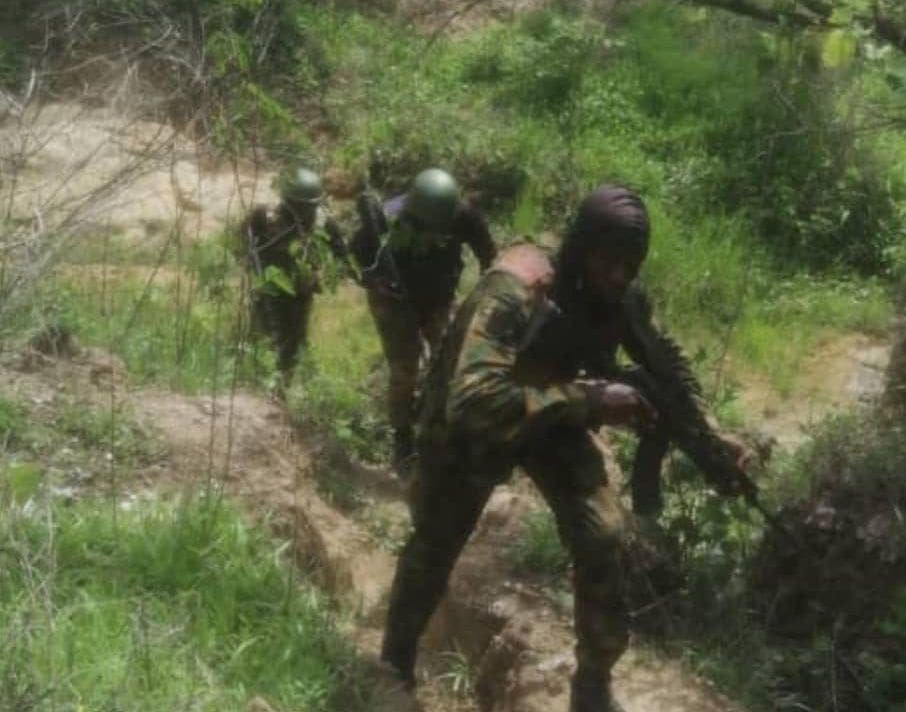
The report indicates that on August 3, 2026, at approximately 8:00 p.m., troops of Sector 3, Operation Enduring Peace, arrested 48-year-old Salihu Miakailu at his residence in Dutsen Kura village, Bassa County (LGA), Plateau State. He is being held in military custody over alleged involvement in the July 27, 2026 attack on Naridon village in Kauru County (LGA) southern Kaduna, that left about 30 residents dead. No formal charges have been announced, and interrogations are ongoing to identify other accomplices linked to border community attacks.
The Occupation: From Farmland To Enclave
Dutsen Kura sits in Bassa County. According to Mr. Barri, at least 15 villages have been displaced in Rigwe Chiefdom by Fulani Ethnic Militia ethnic cleansing attacks spanning more than 25 years.
Irigwe people, also referred to as Rigwe, Eregwe and Nyango, are found mainly in Bassa County about 20 miles west of Jos in the Middle Belt region. According to the 2026 Joshua Project, the Irigwe population is 99,000, of which more than 50 percent are Christian.
Residents say that Dutsen Kura turned into a camp where militias meet to strategize attacks on Christian communities. What was once Irigwe farmland is now described by locals as a no-go zone. Hundreds of Christian villagers displaced in May 2014 have not returned.
Community sources told TruthNigeria that Dutsen Kura now functions as a movement corridor for armed men. The tract of land links Irigwe villages in Bassa and Riyom counties to communities across the Kaduna border and into neighboring Bauchi State. Attackers move in and out through Dutsen Kura to strike and retreat, local people tell TruthNigeria.
Why a No-go Zone next to The Barracks?
The most pressing question from Irigwe leaders: How has an occupied enclave linked to mass killings survived for more than a decade next to one of Nigeria’s biggest military formations?
Dutsen Kura sits behind the 3rd Armored Division, behind the walls of Maxwell Khobe Cantonment in Rukuba, Jos.
“The Army arrested Salihu Miakailu there on August 3,” Mr. Barri said. “That means they have intelligence. That means they know the place. Why has there not been a full cordon-and-search to dismantle it?”
Voices From The Displacement
Mr. Monday Ngmeri Audu and Mr. Stephen Bulus, displaced persons from Ritivo, told TruthNigeria their homes have been occupied by Fulani.
“We tried returning home in 2015, the Fulani youths chased us with machetes, in broad daylight,” Stephen said.
According to Audu, “they came to our refuge camp in Jebbu Miango/Kpachudu on August 2, 2021, and burned our house again.”
According to Mr. Gastor Barri, coordinator of the Irigwe humanitarian crisis relief and documentation initiative, “not less than 540 women have been widowed and over 2,000 children left fatherless by Fulani attacks in the last 26 years.” He added that “at least 1000 Ritivo villagers were forced to flee to Jos and other safe communities.”
Local Fulani Tribe Leaders Cite Communal Clashes Between Farmers and Herders
Yet, heads of the cattle-herding tribe – the Fulani – cite longstanding disputes over control of the local pasture and farmland. In an interview with Malam Nura Idris, the leader of Fulani in Bassa County and a resident of Dutsen Kura himself, attributed the displacement to decades of communal disputes.
“We grew up to know the fight over border communities between the Irigwe and the Rukuba [Fulani tribe]. That was why they left Dutsen Kura,” he said.
Nura confirmed the arrest of Salihu Miakailu, describing him as a “peace ambassador, Bassa youth leader who sustainably rejected violent-reprisal attempts,” and added, “There’s no way he’ll be involved in any violent attack.”
Yet, the fact is, the rich soil of Bassa County has a long history of violence. Sunday Gado, chairman of Miango Youth Development Association, told TruthNigeria that “at least 27 Christians had been killed on their way to or from the farm across Miango communities within the year.”
Europeans and Americans are watching. In July, EU lawmakers rebuked Nigerian leadership for “turning a blind eye to Christian genocide.” That same month, the U.S. condemned the killing of a Nigerian pastor’s family after President Trump reposted a plea for help. Middle Belt Christians also denounced the Northern Governors’ regional security pool, saying it does not address occupied land and hallways like Dutsen Kura.
Yet, on July 30, 60-year-old Bulus Turu, a displaced farmer from Rotsu, was killed while returning to Ancha in Miango District. Residents reported seeing suspected Fulani militia mobilizing from Kimis near the border zones.
For the Irigwe, the demand is clear: the federal and Plateau State governments must designate Dutsen Kura a security priority and conduct a full cordon-and-search to clear and reclaim the enclave.
Community leaders say the August 3 arrest proves the Army is watching Dutsen Kura. The killing in Ancha proves the zone is still in use. Until the occupation ends, they say, Dutsen Kura will remain an occupied strip next to the barracks, and a base for attacks on Christian communities in the Middle Belt.
Izhi Bitrus Adamu is a conflict reporter for TruthNigeria.